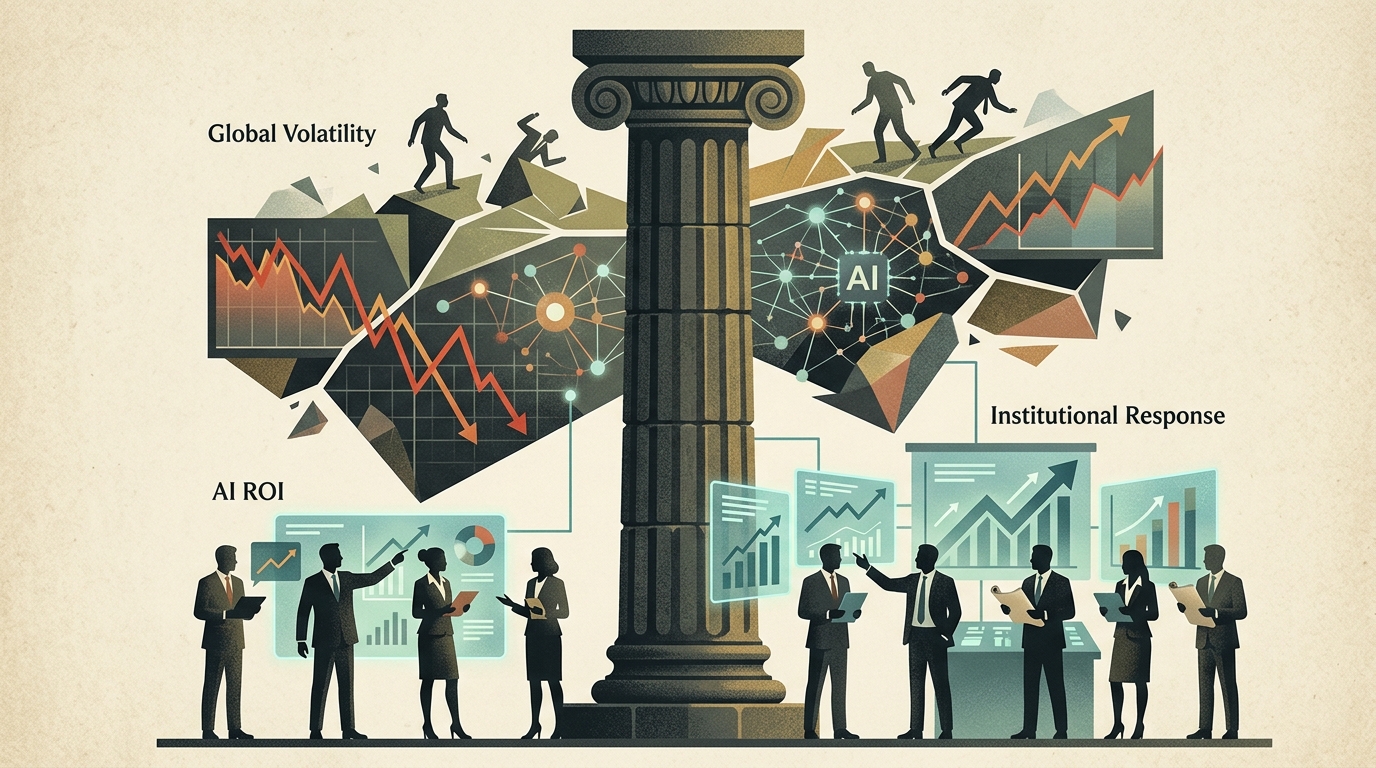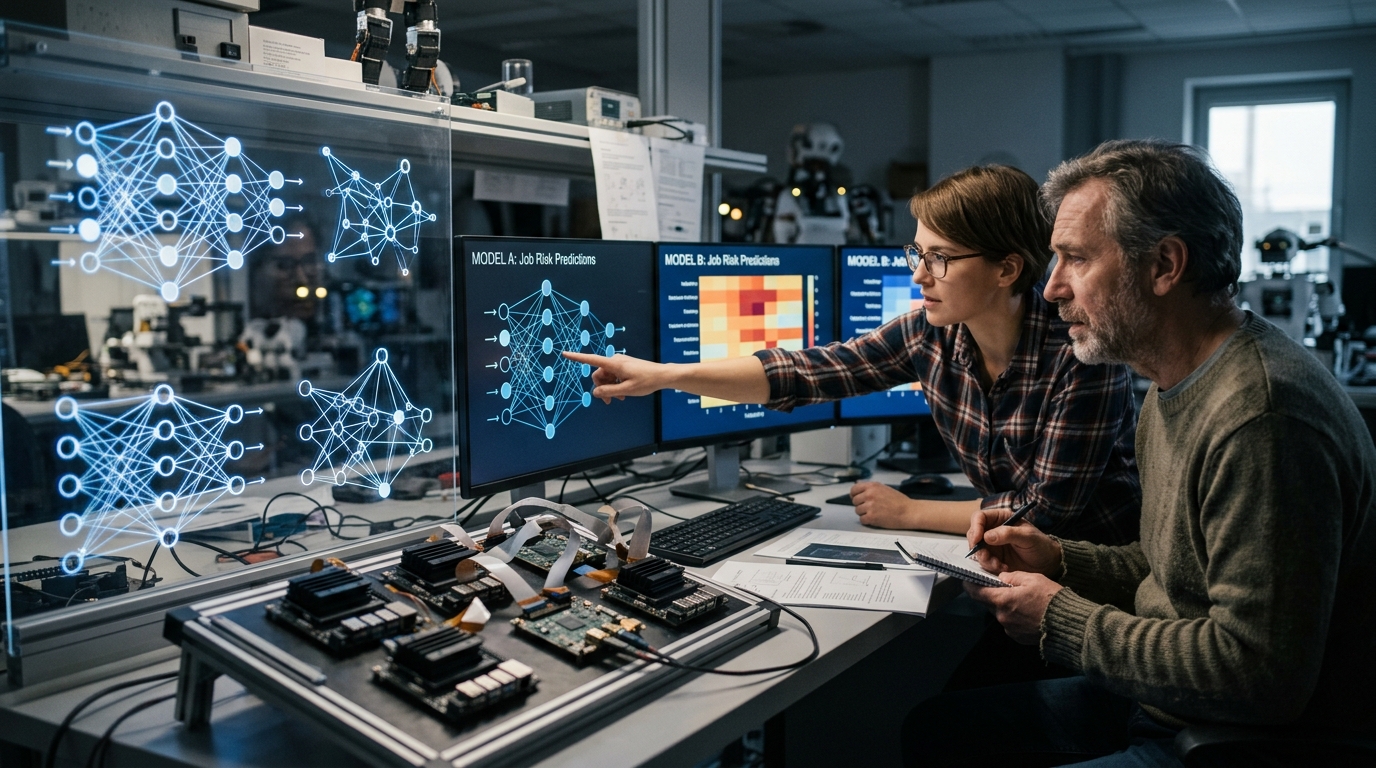
In an era where governments and corporations worldwide are turning to Artificial Intelligence (AI) to map the future of the economy, a new study has emerged to disrupt the narrative. The paradox is almost ironic: the very tools supposed to reshape the labor market cannot agree among themselves on which professions are in the crosshairs of automation. The research, which analyzed predictions from leading AI models such as OpenAI’s GPT-4, Anthropic’s Claude, and Google’s Gemini, reveals a deep methodological and conceptual divergence that renders current forecasts precarious at best.
Methodological Confusion and the 'Black Box' Problem
The core issue lies in how each AI model perceives the concept of 'work.' In traditional economic analysis, an occupation is defined as a bundle of tasks. AI models are asked to evaluate which of these tasks can be performed by algorithms. However, the research shows that answers vary dramatically depending on how the question is framed and which model is used. For instance, while GPT-4 might categorize legal research as high-risk for automation, Claude might emphasize the creative synthesis required, placing it lower on the risk scale.
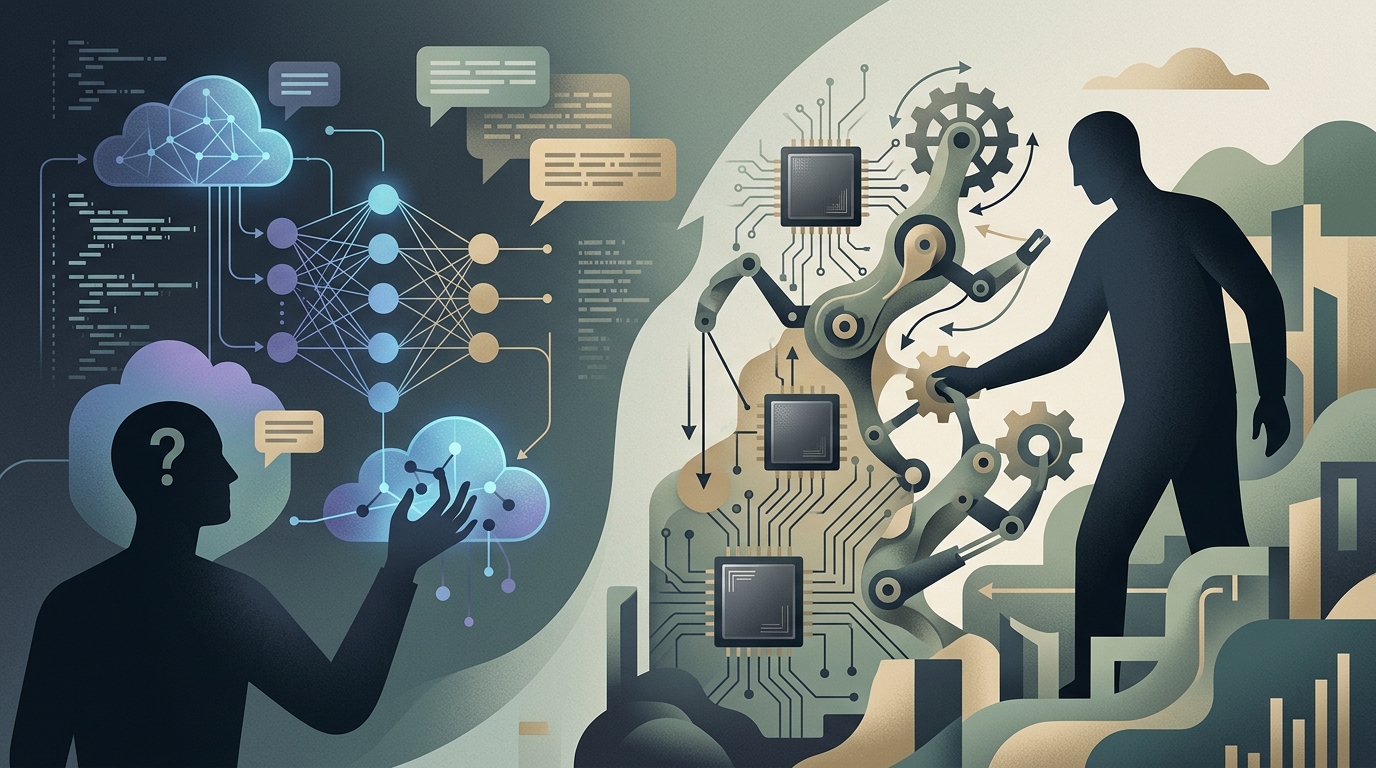
This discrepancy is not merely technical; it is philosophical. Models are trained on different datasets and reflect the biases of their creators or their sources. When one model 'reads' that coding is vulnerable, it relies on thousands of articles and forums. If another model has been trained more on academic studies emphasizing the need for human oversight in programming, its prediction will be entirely different. The result is an 'algorithmic pluralism' that, instead of providing clarity, creates confusion for policymakers trying to navigate the transition.
White Collars vs. Blue Collars: A Shifting Line
Historically, automation threatened repetitive manual labor. Generative AI has flipped this narrative, targeting cognitive labor. The research highlights that this is where the greatest disagreement between models occurs. Professions such as translators, data analysts, and graphic designers find themselves in a 'gray zone.' Some models predict full replacement within the next five years, while others see a long-term symbiosis where AI acts merely as an assistant.
- Creative Writing: Significant divergence in estimates regarding whether AI can substitute human empathy and nuance.
- Legal Services: Disagreement over the extent to which strategic thinking in courtrooms can be codified.
- Education: Some models see personalized tutoring as the next frontier, while others view the social role of the teacher as irreplaceable.
This lack of consensus underscores a critical risk: businesses basing their hiring or firing strategies solely on AI analytics risk making decisions based on flawed or one-sided data. 'Blind trust' in the algorithm could lead to the loss of valuable human capital that AI is not yet truly ready to replace.
Sociopolitical Implications of Uncertainty
The inability of models to reach a consensus has a direct impact on social cohesion and economic stability. If we cannot accurately identify which sectors are threatened, how can states design effective reskilling programs? The danger is twofold: billions might be wasted on training for jobs that won't be affected, or conversely, workers in sectors facing sudden collapse might be left unprotected.
"Artificial Intelligence is a mirror of our own uncertainties. When we ask it to predict the future, it returns a noise of statistical probabilities, not a crystal ball," the study notes.
In conclusion, the research calls for a return to human judgment. AI may be a powerful analytical tool, but the complexity of human work—incorporating ethics, judgment, social interaction, and improvisation—remains, for now, beyond the full grasp of algorithms. The disagreement among models is not a failure of technology, but a reminder that the future of work is still in our hands and has not been pre-written by any code.