The traditional process of drug discovery is often compared to finding a needle in a haystack, where the "haystack" consists of billions of potential chemical combinations and the "needle" is the molecule that will cure a disease. Today, a new study published in the journal Nature is set to change the game, introducing an AI-driven virtual screening platform that promises to accelerate this process with unprecedented precision.
The Challenge of Chemical Space
The so-called "chemical space" of small molecules that could potentially become drugs is estimated to include up to 10^60 possible compounds. To put this into perspective, this number is larger than the number of atoms in our solar system. Until recently, pharmaceutical companies relied on High-Throughput Screening (HTS), a physical process where thousands of compounds are manually or robotically tested against biological targets. This method is extremely expensive, time-consuming, and often inefficient.
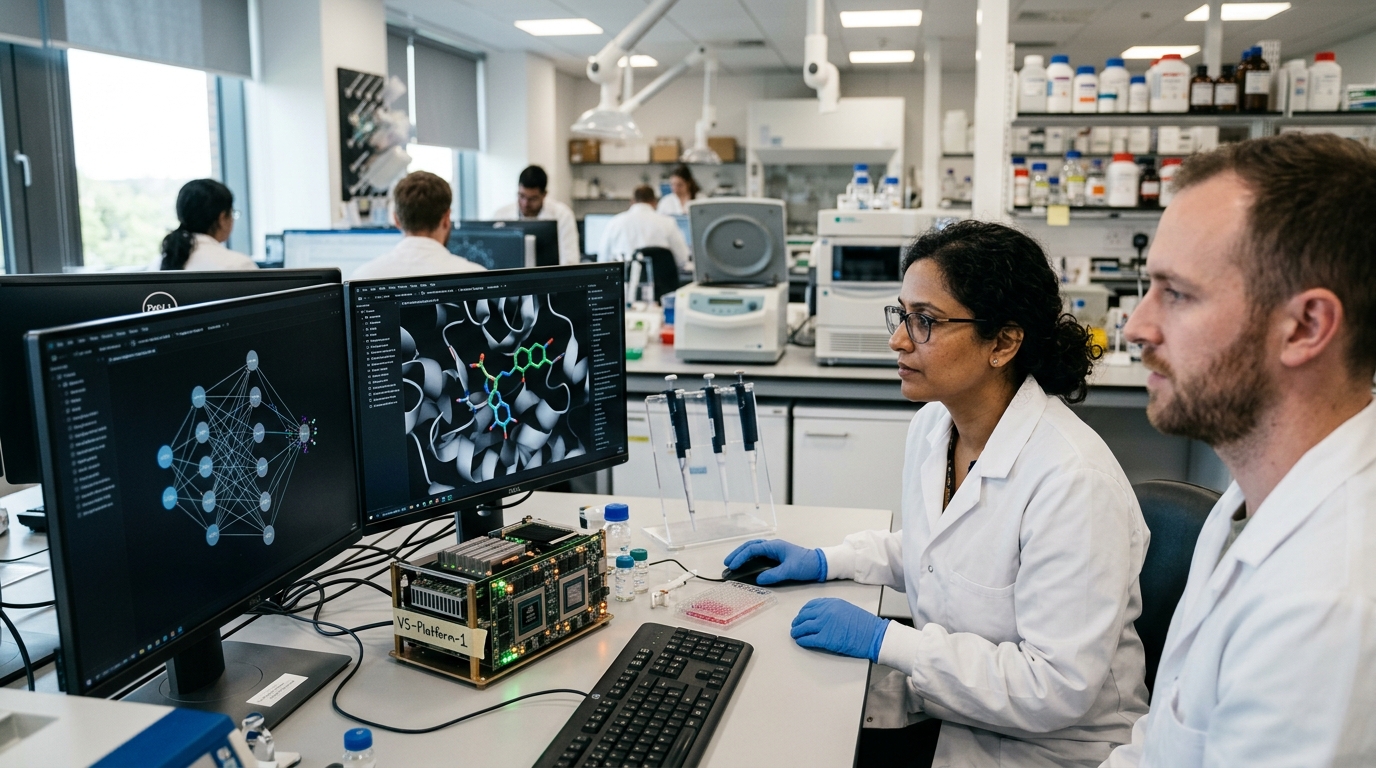
The new platform described in Nature uses deep learning to predict how a molecule will interact with a target protein. Instead of physically testing every compound, the system is "trained" on the three-dimensional structures of proteins and "guesses" with a high probability of success which molecules will fit correctly into the receptor, like a key in its lock.
From Theory to Clinical Practice
The significance of this development lies not only in speed but also in the AI's ability to identify entirely new chemical structures that human researchers might have overlooked. Algorithms are not limited by the biases of traditional chemistry. According to the researchers, the platform managed to reduce the number of compounds that need to be synthesized in the lab from millions to just a few dozen, while maintaining high success rates.
"This is not just an improvement of existing technology, but a paradigm shift. We are moving from serendipitous discovery to deliberate design," the study notes.
This model of structure-based drug discovery allows scientists to target diseases that were previously considered "undruggable" because we could not find molecules that bound effectively to the complex surfaces of their proteins.
Implications for the Healthcare System
Reducing R&D (Research and Development) costs is the "Holy Grail" of the pharmaceutical industry. Today, developing a new drug costs an average of $2.6 billion and takes over a decade. AI-driven virtual screening can compress the pre-clinical research stage from years to months. This means faster responses to future pandemics, as well as the ability to develop drugs for rare diseases that were previously deemed economically unviable.
However, challenges remain. The quality of AI predictions depends directly on the quality of the training data. If the crystallographic structures of proteins are flawed, the system will produce flawed results. Furthermore, the need for human oversight remains critical, as AI might suggest molecules that are toxic or impossible to synthesize in a laboratory setting.
The Future of Pharmacology
In the near future, we expect to see the integration of these platforms with quantum computers, which will be able to simulate chemical reactions with absolute precision at the atomic level. The Nature study is only the beginning of an era where medicine will be personalized and discovering treatments will be as fast as a Google search. The challenge now shifts from the lab to ethics and regulation: how will we ensure that these drugs are accessible to everyone and not just to those who can afford the price of high technology?