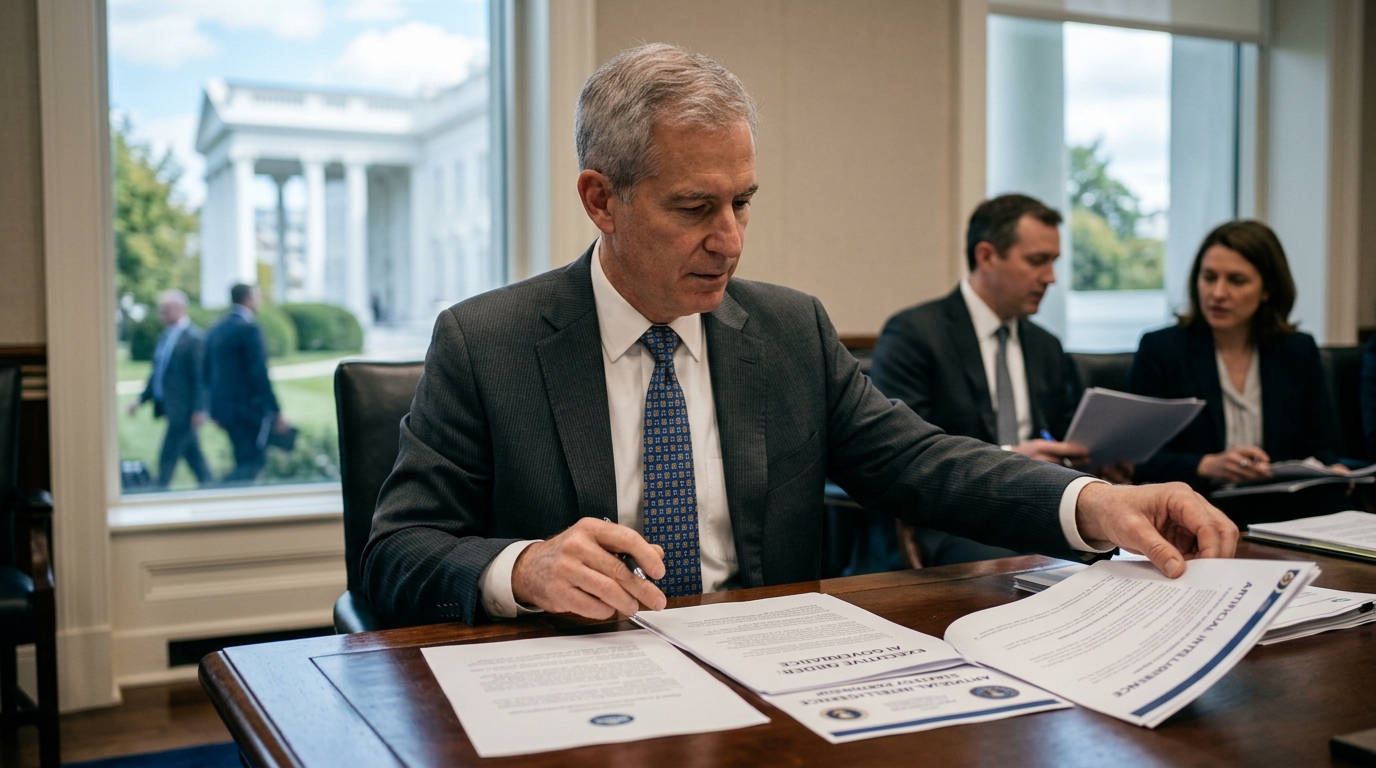
In a watershed moment for the trajectory of technological development in the United States, the White House is signaling that the era of "voluntary commitments" for Artificial Intelligence giants is drawing to a close. As we move through July 2026, the federal government is adopting a significantly more assertive and interventionist posture, seeking to tighten its grip on AI systems deemed "high-risk" or of "national significance."
This strategic pivot is no coincidence. Following years of deliberation and the initial rollout of the 2023 Executive Order, regulators in Washington have concluded that the risks inherent in the unchecked development of large-scale models—ranging from cybersecurity vulnerabilities to biological threats—require more than mere pledges of goodwill from corporate boardrooms.
From Voluntary Pledges to Mandatory Frameworks
The bedrock of this new approach lies in the full mobilization of mechanisms under the Defense Production Act (DPA). This Cold War-era statute is now being leveraged to compel companies to disclose safety testing results—commonly known as "red-teaming"—prior to the public release of frontier models. Sources close to the Department of Commerce suggest that the White House is laying the groundwork for a permanent reporting structure, effectively creating a de facto licensing regime for models exceeding specific computational thresholds.
This "hands-on" approach represents a fundamental break from the traditional American philosophy of laissez-faire in the tech sector. While the European Union moved early with its comprehensive AI Act, the U.S. had previously preferred to let innovation lead. However, the sheer velocity of Generative AI's advancement and its integration into critical infrastructure has forced the Biden-Harris administration to recalibrate its priorities.
National Security as the Primary Catalyst
A central pillar of the new policy is the explicit linkage between AI and national security. The White House no longer views AI solely as an engine of economic growth, but as a strategic asset—or threat—on par with nuclear energy or advanced cryptography. The strengthening of the AI Safety Institute (AISI) under the National Institute of Standards and Technology (NIST) serves as the operational heart of this oversight effort.
- Mandatory reporting for models trained using computing power exceeding 10^26 FLOPs.
- Stricter export controls on high-end semiconductors and limitations on foreign entities' access to domestic cloud infrastructure.
- Implementation of state-mandated watermarking protocols to combat deepfakes and disinformation during election cycles.
"Safety is not an obstacle to innovation; it is the prerequisite for its sustainable growth," a senior National Security Council official recently stated during a closed-door briefing.
Silicon Valley's Reaction and Economic Stakes
Unsurprisingly, this shift has elicited a polarized response from the tech industry. Companies like OpenAI and Anthropic, which have already invested heavily in internal safety divisions, appear more amenable to cooperation. Critics argue this is a form of "regulatory capture," where incumbents welcome regulation to raise the barrier to entry for smaller competitors. Conversely, the open-source community is sounding the alarm, fearing that onerous reporting requirements will stifle independent research and decentralization.
The lingering question is whether this heightened oversight will prompt American firms to migrate portions of their R&D to more "permissive" jurisdictions, or if the sheer gravity of the U.S. market and infrastructure will compel the rest of the world to adopt Washington's standards. What is certain is that the days of "move fast and break things" without government supervision are effectively over.
Conclusion and Future Outlook
The White House's decision to take a more active role is an admission that Artificial Intelligence is too consequential to be left entirely to the private sector. As we look toward the end of 2026, the success of this policy will be measured by the government's ability to balance public safety with the maintenance of American technological hegemony against global rivals, most notably China. AI is no longer a futuristic promise; it is a primary theater of political and regulatory conflict in the here and now.