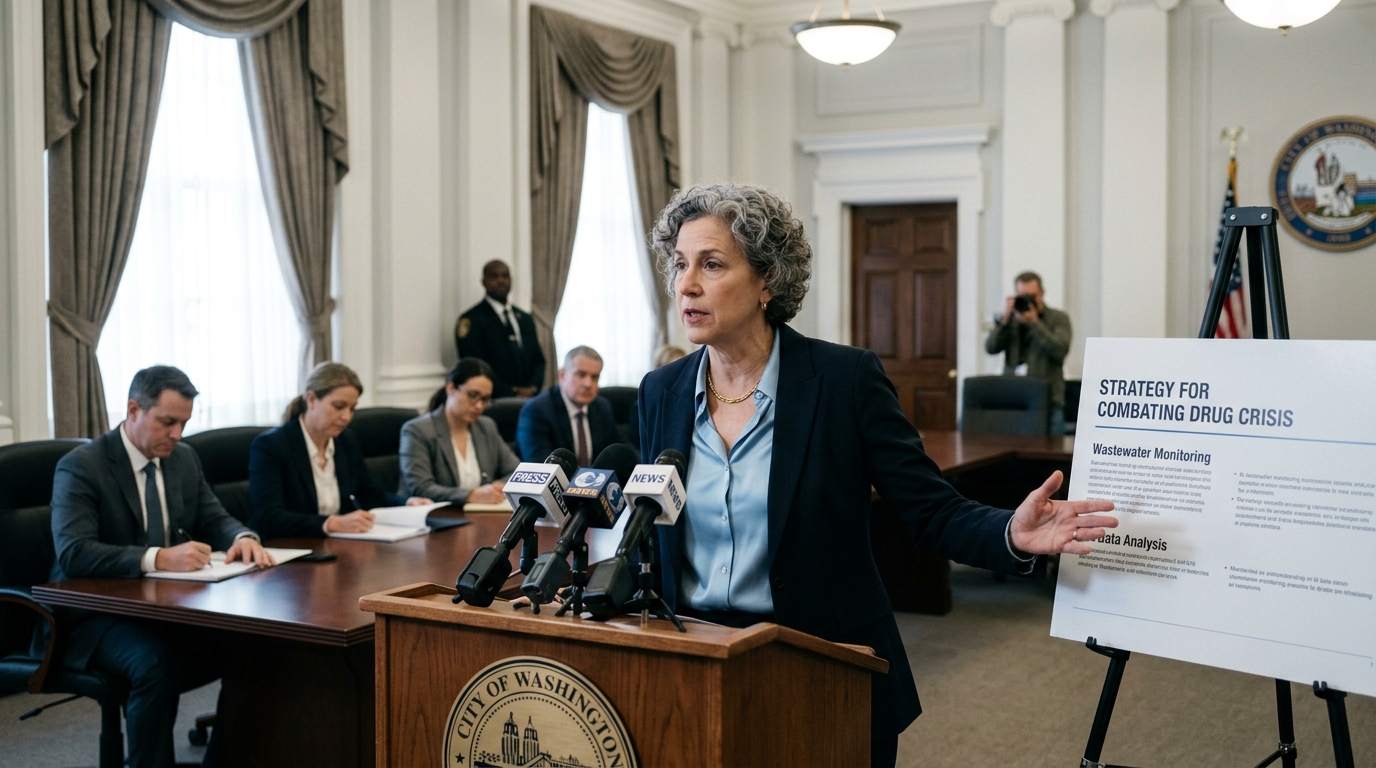
The United States government, facing one of the deadliest public health crises in its modern history, has unveiled a new, multi-dimensional National Drug Control Strategy. This plan, recently released by the White House, marks a significant pivot from traditional punitive measures toward a data-driven approach that leverages cutting-edge technology and enhanced social support systems. At the core of this initiative lies the integration of Artificial Intelligence (AI) and systematic wastewater analysis—tools that promise to provide a real-time snapshot of the crisis, a feat previously deemed impossible.
The Technological Shield: Wastewater and AI
One of the most innovative, albeit provocative, proposals in the new strategy is the nationwide expansion of wastewater testing. This methodology, which proved its worth during the COVID-19 pandemic for identifying viral hotspots, is now being repurposed to detect the presence of substances like fentanyl and methamphetamine. By analyzing the chemical signatures left by users in urban sewage systems, authorities can map drug consumption patterns without infringing on individual privacy, accurately identifying which neighborhoods are at the highest risk.
Simultaneously, Artificial Intelligence is stepping in as the ultimate analyst. AI predictive models will be utilized to process vast amounts of data from hospitals, law enforcement agencies, and wastewater labs. The goal is to create an "early warning system" that alerts local authorities and healthcare providers to impending spikes in overdose incidents. This preemptive capability could save thousands of lives by allowing for the timely distribution of naloxone (an opioid reversal agent) and the mobilization of addiction recovery units before a situation escalates beyond control.
A Holistic Approach and Faith-Based Options
Beyond the hardware and software, the White House acknowledges that the drug crisis is a deeply rooted social issue. The new strategy places a unprecedented emphasis on diversifying treatment options, formally integrating faith-based initiatives into the recovery framework. The rationale behind this move is to tap into existing support networks provided by churches and community organizations, which often have better access to marginalized populations than government agencies do.
- Expanding access to harm reduction programs, such as syringe exchange services.
- Increasing funding for recovery centers in rural areas that are disproportionately affected.
- Partnering with religious leaders to dismantle the stigma associated with substance use disorders.
This "meeting people where they are" philosophy is a tacit admission that the punitive policies of past decades failed to curb demand. Instead, the focus on treatment and social reintegration is now seen as the only sustainable path toward reducing fatalities, which in the U.S. currently exceed 100,000 annually.
Geopolitics and the Supply Chain Battle
Of course, no domestic strategy can be complete without addressing the international dimension of the problem. Fentanyl, a synthetic opioid 50 times more potent than heroin, is primarily manufactured in illicit labs in Mexico using precursor chemicals sourced from China. The White House is committing to stricter border surveillance and intensified diplomatic pressure on Beijing and Mexico City to disrupt the flow of these chemical building blocks.
"We cannot solve this problem alone. We need a global coalition to dismantle the networks that traffic in death," the administration's statement emphasized.
In conclusion, the new strategy represents a bold experiment. It combines the cold logic of algorithms with the moral commitment of local communities. While challenges regarding data privacy and funding adequacy remain, the shift toward science-backed interventions and empathy offers a glimmer of hope for a nation that has paid a heavy price in the opioid epidemic.