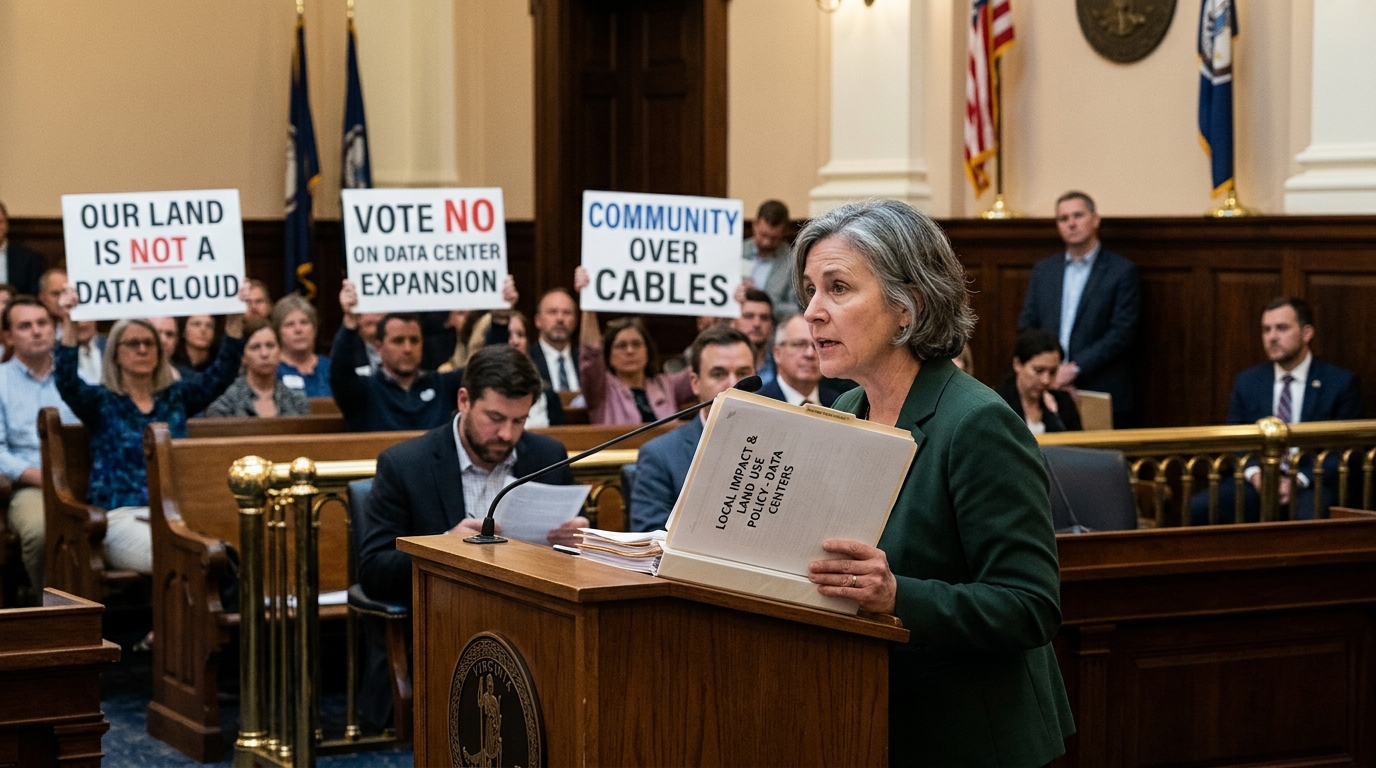
In the heart of Northern Virginia, where 70% of global internet traffic flows through opaque, concrete monoliths, a new social conflict is erupting. The region, famously known as "Data Center Alley," is no longer just a technological hub; it has become a battlefield between tech giants and local citizens who feel their quality of life is being sacrificed at the altar of the cloud.
The Rise of Data Center Alley and the AI Shadow
For decades, Loudoun County and neighboring Prince William County were the ideal sanctuaries for companies like Amazon Web Services, Google, and Microsoft. Proximity to Washington D.C., generous tax incentives, and pre-existing fiber infrastructure created an unprecedented ecosystem. However, the explosion of Generative AI in 2024 and 2025 shifted the paradigm. AI requires computational power many times greater than traditional cloud services, leading to a frenzy of new construction.
These buildings, often the size of several football fields, are no longer confined to industrial zones. They are now rising adjacent to schools, historic Civil War battlefields, and quiet suburban neighborhoods. Residents describe a sense of being "under siege" as bulldozers level forests to make room for the next clusters of power-hungry GPUs.
The Hum of Progress: Environmental and Social Costs
The primary grievance of residents isn't merely aesthetic. Data centers require massive cooling systems to prevent servers from overheating. These giant fans produce a constant, low-frequency hum that residents claim makes outdoor activities impossible and causes sleep deprivation. "It's like living next to a jet engine that never takes off," one resident noted during a public hearing.
Furthermore, the water consumption for cooling and the staggering demand for electricity have pushed the local grid to its breaking point. Dominion Energy, the primary utility provider, warns that demand from data centers will double in the coming years, forcing the construction of new high-voltage transmission lines through private properties and protected lands. There is also the looming threat of a return to fossil fuels to meet this insatiable demand, potentially negating the green pledges of the very tech companies building these facilities.
"We aren't against technology, but we are against the destruction of our communities so that someone halfway across the world can generate AI avatars in seconds," says a spokesperson for a local citizens' coalition.
Political Implications and the Future of Infrastructure
Resistance has now become politically organized. In recent local elections, the data center issue was central, with candidates winning or losing seats based on their stance on zoning expansions. The Virginia state government finds itself in a precarious position: on one hand, data centers contribute billions in tax revenue, funding schools and public works. On the other, public outcry threatens political stability.
The Virginia case study serves as a warning for the global stage. As AI becomes the new "oil," the infrastructure supporting it will require more space and resources. The challenge for 2026 and beyond will be finding a balance: how to continue the digital revolution without turning human neighborhoods into vast, noisy data factories. Solutions may lie in more remote locations or innovative cooling technologies, but for Virginia's residents, the time for intervention is now.