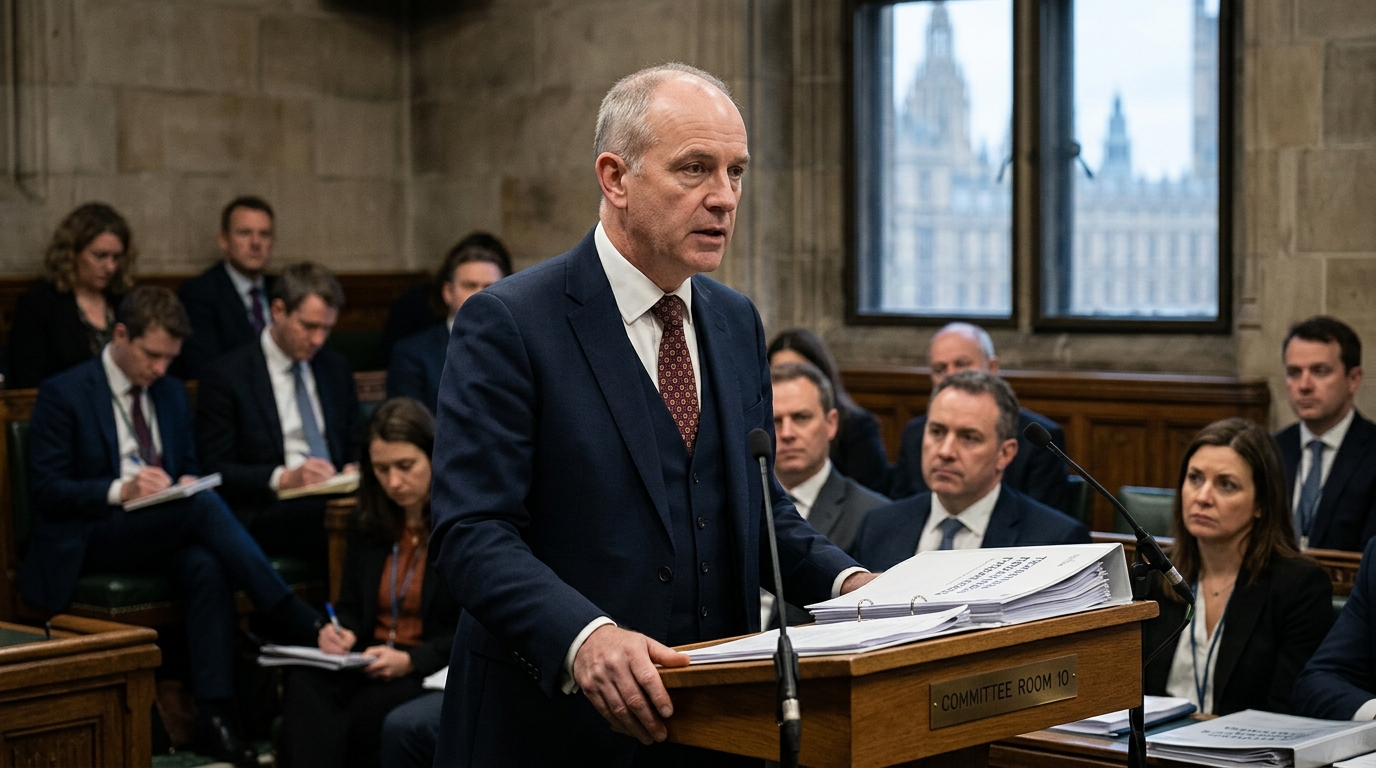
In an era where humanity balances between technological euphoria and existential dread, a recent intervention by the British Foreign Secretary has sent ripples through international diplomacy. Comparing Artificial Intelligence (AI) to a "digital Hiroshima" is not merely a rhetorical flourish; it is a profound warning from the heart of London, seeking to lay the foundations for a new global security architecture.
The Nuclear Analogy Explained
The choice of Hiroshima as a reference point is deliberate and calculated. Just as the world entered the nuclear age in 1945 without being prepared for the consequences of splitting the atom, today, the rapid evolution of Generative AI and Artificial General Intelligence (AGI) threatens to outpace the regulatory capacity of sovereign states. The Foreign Secretary emphasized that AI, if left unchecked, could be weaponized to design biological agents, launch catastrophic cyberattacks on critical infrastructure, or automate lethal decision-making on the battlefield.
This comparison underscores the urgent need for a "Non-Proliferation Treaty" for AI. London, having hosted the first global AI Safety Summit at Bletchley Park, is now positioning itself to lead the creation of an international oversight body, modeled after the International Atomic Energy Agency (IAEA). The message is clear: the risks are no longer theoretical; they are systemic and imminent.
Geopolitical Stakes and the Western Stance
This warning is directed not only at the tech titans of Silicon Valley but also at the West’s geopolitical rivals. The anxiety is twofold: the possibility of an accident from a misaligned AI system, and the deliberate use of the technology by adversarial states to destabilize democracies through sophisticated deepfakes and disinformation campaigns.
- The necessity for transparency in algorithms used within military contexts.
- The establishment of "red lines" for the development of Lethal Autonomous Weapons Systems (LAWS).
- Engagement with China, despite political friction, acknowledging that a global threat requires a unified global response.
The Secretary argued that failing to act today could lead to a scenario where the technology becomes "irreversible," creating facts on the ground that no government can rectify. This rhetoric reflects a growing consensus among security experts that the "window of opportunity" for meaningful AI regulation is rapidly closing as models become more autonomous and opaque.
Regulation vs. Innovation: The Great Debate
However, this alarmist approach is not without its detractors. Critics argue that excessive focus on "doomsday scenarios" might stifle innovation and hand a competitive advantage to nations that ignore ethical constraints. The balance between safety and economic growth remains the central challenge of the decade. Yet, the Secretary’s stance was uncompromising: "There is no prosperity without security. A technology that threatens the very fabric of our society cannot be classified as progress."
"We are at an 'Oppenheimer moment.' The creators of this technology must grasp the weight of their responsibility before history is written in the shadows of a catastrophe."
In conclusion, the UK's intervention signals a shift toward a more interventionist state role in technology. Artificial Intelligence is no longer viewed as a mere productivity tool but as a strategic power factor requiring the same level of scrutiny as weapons of mass destruction during the Cold War. The question remains: can the international community find common ground before the "digital blast" occurs?