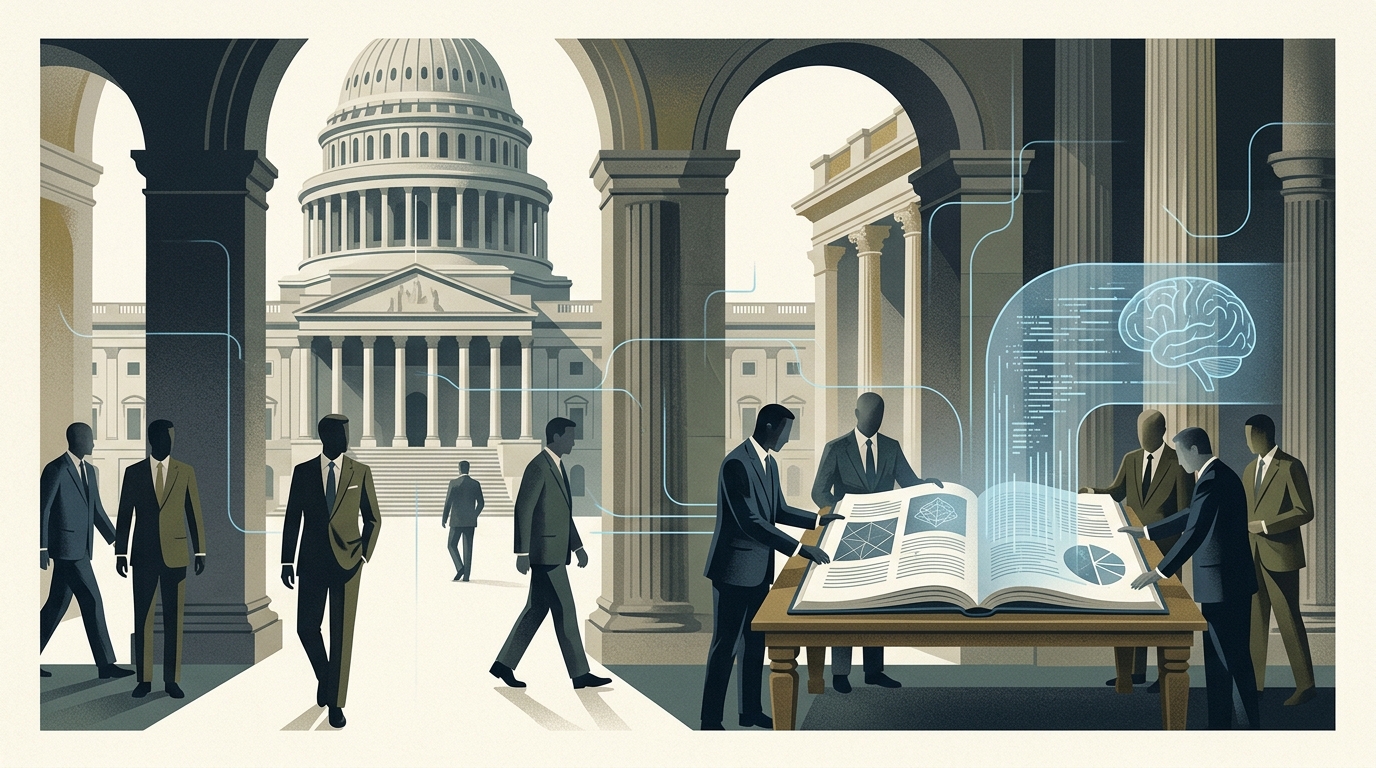
Donald Trump’s relationship with technology has always been tumultuous, often defined by a deep-seated suspicion of Silicon Valley’s "Big Tech" giants, while simultaneously relying on them for his political survival. However, as Artificial Intelligence (AI) emerges as the central pillar of global geopolitical power, the former President’s stance has undergone a remarkable evolution. Moving away from an initial "anything goes" approach aimed at rapid innovation, we are now seeing a more structured, albeit highly polarizing, political agenda that blends deregulation with economic nationalism.
The Break with the Biden Legacy
The core of Trump’s current AI rhetoric revolves around the repeal of Joe Biden’s Executive Order 14110. For the Trump camp, the safety standards and ethical commitments imposed by the Biden administration are nothing more than "censorship by another name." They argue that the focus on "algorithmic fairness" and preventing discrimination hinders American innovation and grants China valuable time to close the gap.
The promise to dismantle these restrictions aims to unleash market forces. However, this "deregulation" does not mean the absence of the state. On the contrary, a model is proposed where the government actively supports infrastructure development while setting aside concerns about model safety that are deemed "woke" by the conservative wing. The stakes are clear: AI must be "American" and must not be limited by social sensitivities that, according to Trump, weaken the national spirit.
The Alliance with Silicon Valley’s "Techno-Optimists"
Despite traditional feuds, a significant portion of Silicon Valley – led by figures such as Elon Musk and venture capitalists Marc Andreessen and Ben Horowitz – has aligned itself with Trump’s vision. This group of "accelerationists" (e/acc) believes that AI is an existential tool for economic dominance and that any regulation is tantamount to national betrayal.
- Energy Sovereignty: Trump’s strategy places immense emphasis on energy production. AI requires massive amounts of electricity, and the promise of "drill, baby, drill" and a return to nuclear energy is seen as the key to powering the data centers of tomorrow.
- Support for Open Source: In an interesting twist, some Trump advisors, including J.D. Vance, advocate for open-source software as a counterweight to the monopolies of Google and Microsoft, which they view as ideologically hostile.
- Military Application: AI is treated as a new "Manhattan Project," where U.S. military superiority will depend on autonomous systems and algorithmic decision-making.
The Danger of the "Wild West" and Internal Contradictions
The transition from a laissez-faire approach to a structured nationalist policy carries significant risks. While deregulation may accelerate growth, the lack of safeguards regarding deepfakes, misinformation, and system security could backfire. The irony is that while Trump denounces state control, his policy necessitates heavy state intervention to exclude foreign competitors and subsidize domestic energy grids.
"Artificial Intelligence is not just a productivity tool; it is the battlefield where global hegemony for the next century will be decided," say sources close to his campaign team.
In this context, regulations do not disappear; they change focus. Instead of user protection regulations, we see national industry protection regulations. This model of "Techno-Nationalism" promises to rewrite the rules of global trade, transforming technology from a global good into a strictly controlled national asset.
Conclusion: A New Era of Competition
Trump’s AI policy marks the end of technology’s perceived neutrality. For Europe, this shift serves as a warning. If the United States abandons shared ethical and safety frameworks in favor of aggressive competition with China, the EU will find itself in a difficult position, struggling to balance its own values with the need to remain competitive. The era of innocence for AI is over; the era of power has begun.