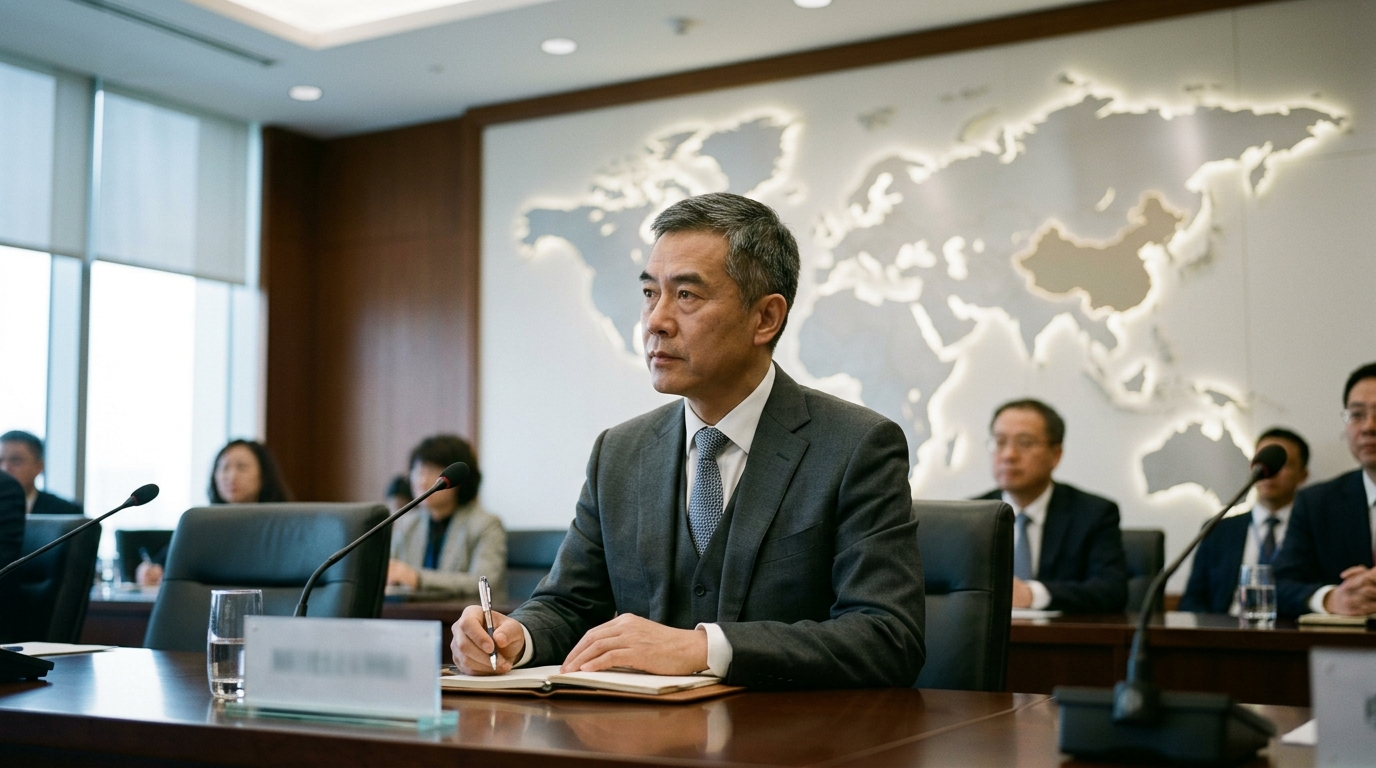
In a move that underscores Beijing’s resolve to lead the global AI race, the National Development and Reform Commission (NDRC)—China’s premier economic planning body—has issued a definitive directive for “stronger coordination and top-level planning.” The announcement, surfacing on Saturday, May 9, 2026, signals a pivot from the “wild growth” phase of the Chinese tech sector toward a new era where the state dictates the allocation of critical technological resources.
The End of the AI 'Wild West'
For years, China’s AI ecosystem was characterized by explosive, often chaotic competition between giants like Baidu, Alibaba, and Tencent, alongside hundreds of ambitious startups. However, the NDRC now views this fragmentation as a liability, leading to resource wastage, redundant investments, and inconsistent data standards. The new approach seeks to align private sector vigor with national strategic priorities, ensuring that every yuan invested in AI directly bolsters the nation’s economic and military standing.
According to analysts in Beijing, this shift is as much about survival as it is about efficiency. Amidst ongoing U.S. export restrictions on advanced semiconductors, China cannot afford to squander its computing power. The coordination called for by the NDRC includes the creation of unified cloud computing platforms and the optimization of domestic chip usage to bypass Western-imposed bottlenecks.
Computing Power as a National Strategic Asset
A central pillar of the NDRC’s proposal is the further reinforcement of the “East Data, West Computing” project. This initiative aims to funnel data from economically developed but energy-strapped eastern provinces to China’s western regions, which boast abundant renewable energy and space for massive data centers. The NDRC emphasizes that AI requires a “national chessboard” of computing power, where energy and technology work in tandem to lower the cost of training Large Language Models (LLMs).
- Unification of national data sets for training standardized AI models.
- Centralized oversight of IT infrastructure investment to prevent overcapacity.
- Strengthening state-supervised collaboration between academia and industry.
- Promoting 'Sovereign AI' models that reflect Chinese social and political values.
This central planning strategy stands in stark contrast to the more fragmented, market-driven model of the United States. While Silicon Valley relies on venture capital and free-market competition, Beijing is betting on its ability to mobilize an entire nation toward a singular objective.
Geopolitical Implications and the Tech Cold War
The NDRC’s intervention suggests that China views AI not merely as a tool for economic growth, but as the ultimate frontier of geopolitical power. In Washington, this news is expected to heighten concerns over China’s “state-capitalist” approach. Beijing’s ability to direct vast capital into specific sectors without the friction of parliamentary debates or shareholder dissent gives it a speed advantage—though critics argue that central planning may stifle the disruptive creativity that AI fundamentally requires.
“Coordination is not an option; it is a necessity in the era of global competition,” the NDRC report states. “We must ensure that AI development serves the public interest and national security.”
In conclusion, the NDRC’s move is a clear signal to Chinese tech titans: the era of total autonomy is over. From here on, innovation must follow the blueprint of state planning. Whether this results in a high-efficiency innovation machine or a bureaucratic bottleneck that stifles the very creativity it seeks to harness remains the defining question for the coming years.