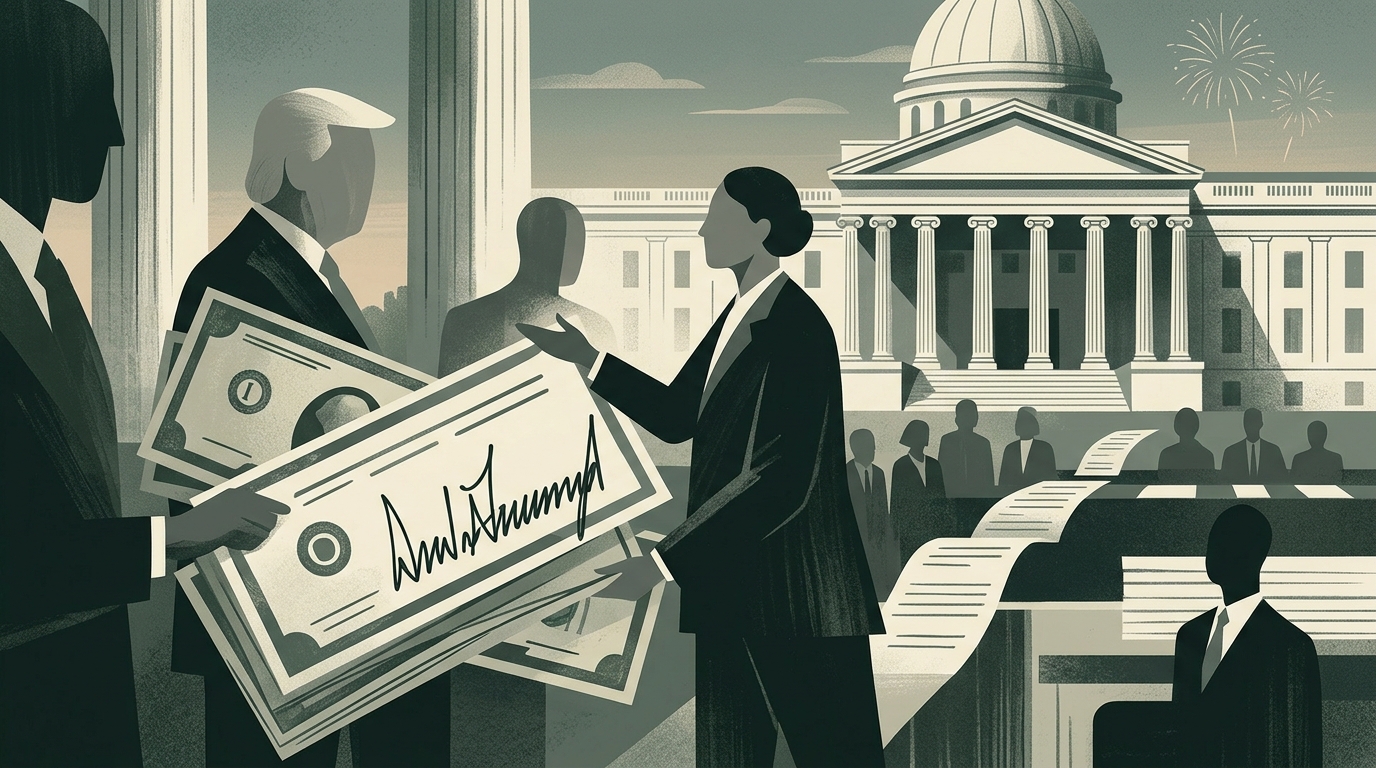
In a move that signals one of the most radical shifts in the symbolism of the American state, the U.S. Department of the Treasury announced today, on the anniversary of Independence, the release of a new series of $100 bills bearing the signature of President Donald Trump. This decision overturns a centuries-old tradition where Federal Reserve notes are signed by the Secretary of the Treasury and the Treasurer of the United States, maintaining an institutional character that transcends any single political administration.
A Historic Break with Institutional Tradition
Since the establishment of the federal monetary system, the signatures on U.S. currency have served as a guarantee of the state's institutional continuity. The presence of the Treasury Secretary and the Treasurer symbolized technocratic governance and the independence of monetary policy from the direct political influence of the White House. Today's move, however, transforms the national currency into a tool of personal political branding, sparking intense reactions in Washington circles and international markets.
Proponents of the move argue that the President's signature brings a new sense of accountability and national sovereignty to the currency. "It is a return to an era where the leader of the nation personally guarantees the value of the citizens' wealth," a Treasury spokesperson stated. Conversely, critics speak of a slide toward "monarchism," noting that historically, only emperors and absolute monarchs placed their names or likenesses on currency as a sign of absolute power.
Legal and Political Implications
The legality of this move is already under the microscope of legal analysts. Although the President holds broad powers through executive orders, the Coinage Act and subsequent amendments define specific procedures for the design of banknotes. The Treasury Department claims the change is within the Secretary's discretion, who "authorized" the addition of the presidential signature as a symbolic gesture for the country's ongoing 250th-anniversary celebrations in 2026.
- The move initially affects only the $100 bill, which is the most internationally recognized denomination.
- Reports suggest the series will be of limited circulation, though administration officials hint it may become the new standard.
- Democrats in Congress have already announced legal challenges, citing a violation of the separation of powers.
Market Reaction and Global Impact
For the rest of the world, the dollar is not just the currency of the U.S. but the global reserve currency. The introduction of such a highly politicized change could shake the confidence of foreign central banks. If the dollar begins to be viewed as a "personal currency" of a specific administration rather than an institutional tool of the American economy, its long-term stability may be questioned.
"The dollar derives its strength from the belief that the U.S. is a nation of laws with stable institutions. When you turn currency into a political flyer, you risk the trust premium the country has enjoyed for decades," says a senior Wall Street analyst.
On the domestic front, the move is expected to rally Trump's base, who see it as further proof of the "destruction of the Deep State." For the average American, using a banknote with the President's signature will be a daily reminder of his presence in power, something many communication experts describe as the ultimate form of political penetration into private life.
Conclusion: A New Chapter in American History
As the first bills roll off the presses at the Bureau of Engraving and Printing, the U.S. enters uncharted territory. July 4, 2026, will be remembered not just for Independence Day celebrations, but as the day the American dollar changed its character. Whether this is a move of national pride or a dangerous personalization of power, one thing is certain: the "greenback" will never be the same again.