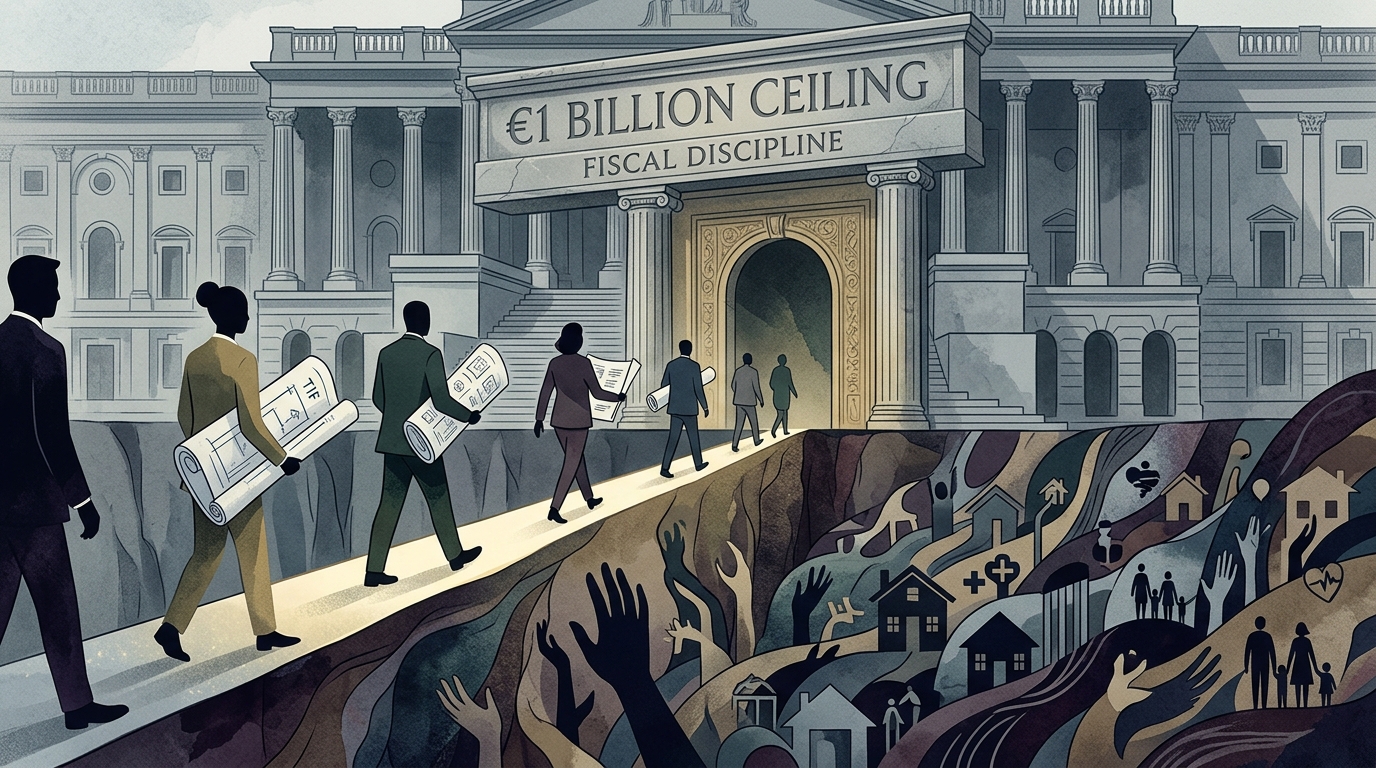
The countdown to the 90th Thessaloniki International Fair (TIF) has begun, but the atmosphere within the Maximos Mansion and the Ministry of National Economy is markedly different from the more "generous" eras of the past. As of June 2026, the Greek economy stands at a critical crossroads. Despite growth rates remaining above the European average, the new EU fiscal framework imposes an iron discipline that leaves no room for traditional election-style promises. The €1 billion "ceiling" for the Prime Minister’s package of announcements is not just a number; it is the symbol of a new normal.
The New European Framework and the Expenditure "Cutter"
The fundamental shift from previous years lies in the transition from monitoring deficits to monitoring net primary expenditures. Under the European Union's revised rules, Greece is obliged to adhere to a strict limit on state spending increases, expected to be capped near 3% for 2027 onwards. This means that even if revenues from tourism or the crackdown on tax evasion exceed expectations, the surplus cannot be freely funneled into consumption or subsidies; it must be directed toward debt repayment or saved for future stability.
The government is now searching for what technocrats call "fiscal space." This space is no longer created by "printing money" but through the structural reshaping of the economy. The successful integration of POS terminals with cash registers and the expansion of electronic invoicing have borne fruit, providing a steady stream of revenue that allows for targeted interventions. However, Athens must convince the European Commission that any benefits will not jeopardize long-term debt sustainability.
Housing and Demographics: The Pillars of the Next Four Years
If €1 billion is the limit, the question is where it will be allocated. Reports suggest the government will prioritize two "open wounds" of Greek society: the housing crisis and demographic decline. The "Spiti Mou 2" (My Home 2) program is expected to be the flagship announcement at TIF, featuring expanded income criteria and low-interest loans for thousands of young couples. The rent crisis has evolved into a major political issue, and the government knows that without drastic intervention, social discontent will swell.
- Expansion of the birth allowance and tax breaks for families with children.
- Incentives for renovating closed apartments to be made available for long-term rental.
- A further reduction of social security contributions by 0.5% to 1%, aimed at boosting the disposable income of employees.
These moves are not merely social in nature but developmental. Reducing non-wage labor costs is considered essential for maintaining the competitiveness of Greek businesses in a global environment that remains volatile due to geopolitical tensions in Ukraine and the Middle East.
The Challenge of Tax Evasion and Structural Reforms
To find the necessary space for the aforementioned actions, the economic team is betting heavily on further reducing the "VAT gap." Greece has made significant progress but remains above the European average. The digitalization of audits by the Independent Authority for Public Revenue (AADE) and the use of Artificial Intelligence to detect suspicious transactions are the new weapons in the government's arsenal.
"We do not promise money we do not have. Every euro returned to society is a product of growth and the fight against tax evasion,"
government sources state, aiming to send a message of seriousness to the markets. The investment-grade status, which the country regained with great effort, acts as an invisible but powerful supervisor. Any deviation from fiscal sobriety could lead to increased borrowing costs, canceling out the benefits of growth.
In conclusion, the 2026 TIF will not be an exhibition of promises, but an exercise in realism. The government is called to prove that it can produce social policy within a tight fiscal suit, transforming structural reforms into tangible benefits for citizens' daily lives. The success of this endeavor will largely determine the political dominance of the ruling party on the road to the next elections.