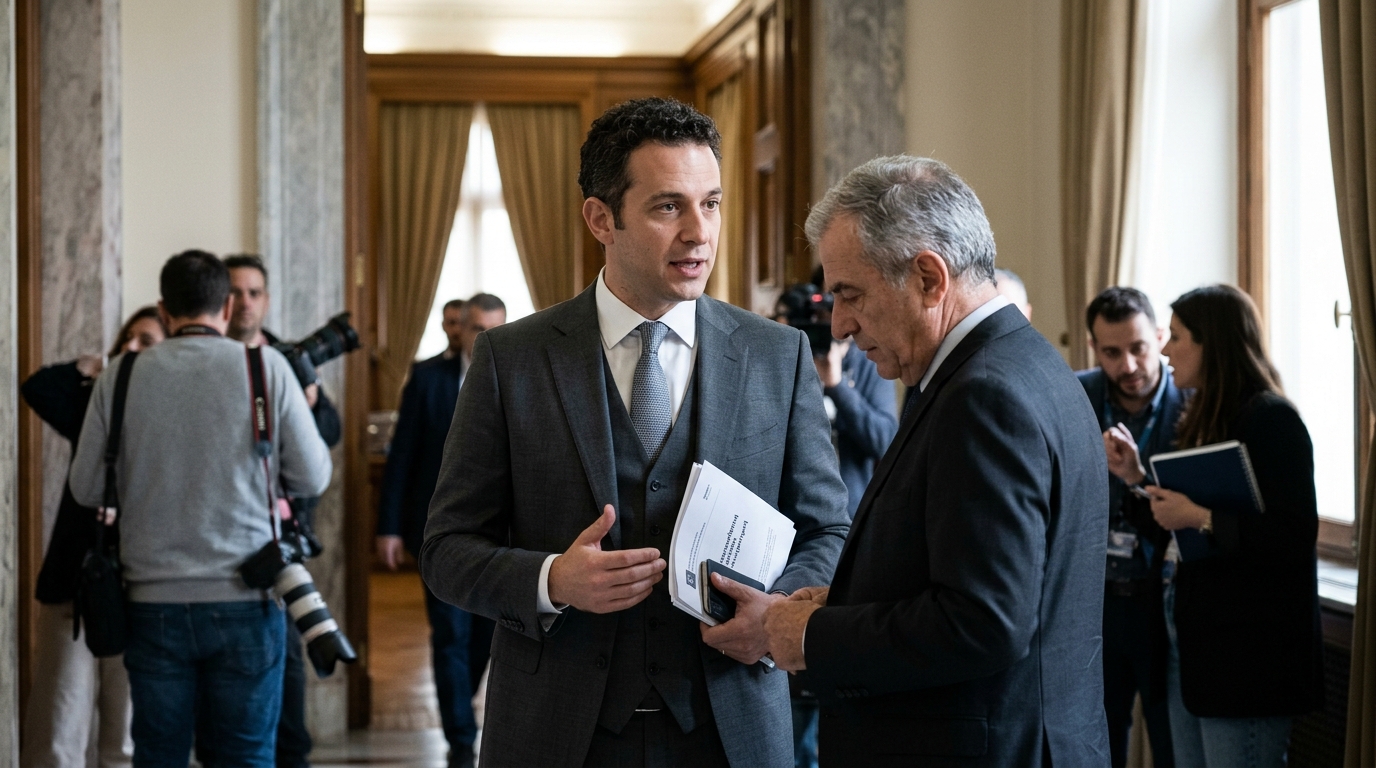
In a move that signals the further deepening of European cooperation in the energy sector, Spain has announced its intention to actively participate in an emerging European Union plan for the sharing and procurement of aviation fuel. This declaration, coming from government officials in Madrid, is not merely a technical proposal but a strategic positioning at a time when geopolitical instability threatens global supply chains.
The Geopolitics of the Skies and the Need for Stability
The aviation industry remains one of the sectors most vulnerable to fluctuations in oil prices. For countries like Spain, and similarly Greece, where tourism is the backbone of the economy, any disruption in supply or a sharp increase in the cost of jet fuel translates directly into a loss of competitiveness. The Spanish government, recognizing this risk, views joint purchasing and reserve management as a protective "shield."
The proposed EU plan draws inspiration from the joint gas procurement mechanism established following Russia's invasion of Ukraine. The logic is simple yet powerful: the Union's collective bargaining power can secure better prices and, more importantly, a guaranteed flow of fuel during times of crisis. Spain, possessing one of Europe's most sophisticated fuel storage and distribution networks through Exolum (formerly CLH), is well-positioned to play a central role in this endeavor.
Joint Purchasing: An Option with Challenges
Despite the enthusiasm, implementing such a plan is not without its difficulties. Sharing reserves requires a strict legislative framework and the harmonization of national strategic safety stocks. Currently, each EU member state maintains its own emergency reserves, often managed by private companies under state supervision. Transitioning to a "common pool" model will require protocols on how and when these reserves are released.
- Coordination of national reserve management bodies.
- Creation of a digital platform for real-time monitoring of fuel levels.
- Definition of priority criteria in the event of a widespread shortage.
Furthermore, Spain emphasizes that joint purchases should be voluntary, allowing member states to maintain their autonomy while benefiting from economies of scale. This model of "variable geometry" seems to be gaining ground in Brussels, as it avoids the bureaucratic entanglements that often accompany mandatory policies.
The Green Transition and the Future of Fuel
A critical parameter being discussed in Madrid is the link between this plan and Sustainable Aviation Fuels (SAF). The EU has already set ambitious targets through the ReFuelEU Aviation initiative, which mandates the gradual blending of traditional fuels with biofuels or synthetic fuels. Spain argues that the sharing mechanism should be adapted to include SAF, which is currently much more expensive and scarce.
"Europe's energy sovereignty depends on cooperation. We cannot leave our continent's connectivity at the mercy of international speculators," government sources state.
In conclusion, Spain's initiative to lead the discussion on aviation fuel highlights a new direction in European policy: the recognition that transport security is an integral part of national and Union security. If the plan moves forward, it will represent another step toward a true Energy Union, capable of withstanding the shocks of an increasingly unpredictable world.