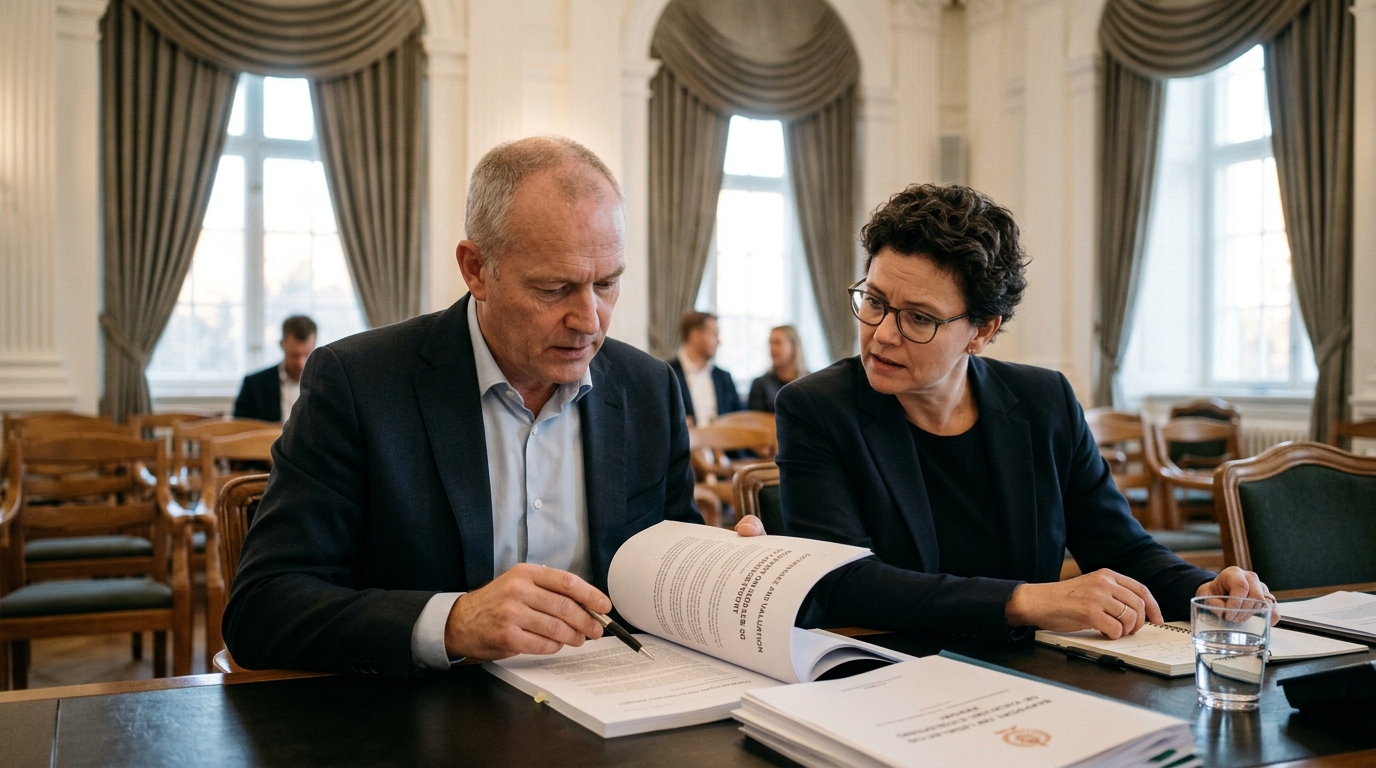
In the global investment firmament, few companies enjoy the prestige and undisputed dominance of SpaceX. However, as Elon Musk's aerospace giant reaches valuation levels that defy gravity, concerns about its structure and decision-making processes are shifting from whispers to loud warnings. Anders Schelde, Chief Investment Officer (CIO) of AkademikerPension —a $25 billion Danish pension fund— addressed the issue with disarming honesty in a recent appearance on Bloomberg Television.
According to Schelde, SpaceX's governance standards are "too weak" for a company of its scale and strategic importance. His critique does not target the technological prowess of the Falcon or Starship rockets, but rather the "institutional skeleton" supporting the enterprise. For Northern European institutional investors, who traditionally place immense weight on ESG (Environmental, Social, and Governance) criteria, SpaceX represents an enigmatic and potentially hazardous case.
The Governance Deficit and Key Person Risk
Schelde's primary argument centers on the extreme concentration of power in the hands of Elon Musk. While SpaceX's private status allows it to move with agility and take risks that a public company would never dare, this lack of checks and balances creates an accountability vacuum. Schelde points out that the company's fate is inextricably linked to the personal choices and controversial public persona of a single individual.
In the investment world, this is known as "Key Person Risk." In the case of SpaceX, this risk is amplified by the fact that Musk simultaneously manages Tesla, X (formerly Twitter), and xAI. Conflicts of interest, the dilution of his focus, and the absence of an independent board capable of providing pushback are red flags for AkademikerPension. Schelde argues that without robust governance structures, the company is vulnerable to arbitrary decisions that could harm minority shareholders.
- Lack of truly independent board members.
- Opacity in financial reporting due to its private status.
- Conflicts of interest with Musk's other business ventures.
- Absence of a clear leadership succession plan.
The Threat of a 'Sharp Repricing'
Perhaps the most alarming prediction from Schelde is the potential for a "sharp repricing" of the company's value. SpaceX is currently valued at levels exceeding many of the world's largest industrial powers. However, this valuation is heavily predicated on future expectations for Starlink and Mars colonization, rather than traditional, audited financial metrics typical of public markets.
"The risk of a repricing is definitely on the table," Schelde stated. If the market loses confidence in SpaceX's ability to self-regulate, or if a significant governance scandal emerges, the drop in valuation could be precipitous. For a pension fund managing the savings of thousands of academics, such a scenario is unacceptable. AkademikerPension has a history of divesting from companies that do not meet its ethical and administrative standards, and SpaceX appears to be under the microscope.
"We don't question the technology; we question the structure. A company touching $200 billion cannot be run like a family garage business," the Danish analyst noted pointedly.
European Perspectives vs. Silicon Valley Ethos
Schelde's critique also highlights a deeper cultural and economic divide between Europe and the United States. While "founder worship" is often accepted in the U.S. as the price of innovation, European institutional stability is viewed as a prerequisite for long-term success. AkademikerPension is not alone in this approach; many European funds are pushing for stricter regulation of private tech giants.
At a time when SpaceX is becoming a critical partner for NASA and the U.S. Department of Defense, the argument that the company should operate with "public-level" transparency standards gains new weight. If SpaceX wishes to maintain access to global capital, it may need to sacrifice some of Musk's autocratic freedom in favor of a more traditional and stable corporate structure. Otherwise, the stars of its valuation may soon begin to flicker.