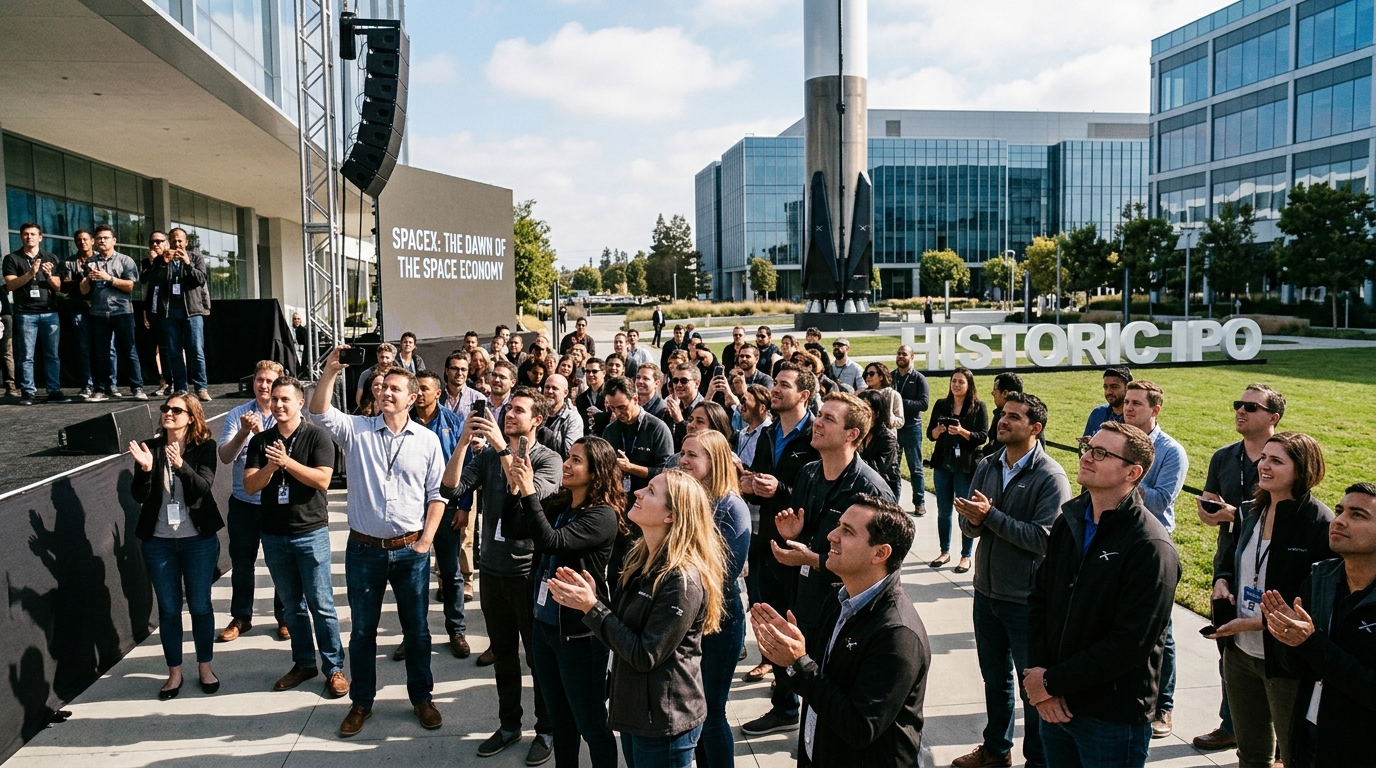
On June 12, 2026, the world's financial epicenter shifted from Earth toward the stars. SpaceX, a company once dismissed as a reckless gamble by an eccentric billionaire, completed its initial public offering (IPO), shattering every previous record in the history of capital markets. By raising $75 billion and pricing 555.6 million shares at $135 each, SpaceX didn’t just enter the stock market; it established a new world order in the global economy.
The Financial Anatomy of a Historic Achievement
The scale of the SpaceX IPO exceeds even the most optimistic forecasts from Wall Street analysts. To put the magnitude into perspective, the previous world record for an IPO, held by Saudi Aramco in 2019, raised $29.4 billion. SpaceX nearly tripled that figure, reflecting the immense confidence institutional investors have in Elon Musk’s vision. The company’s valuation now places it within the elite ranks of multinational giants, rivaling the market capitalization of tech titans like Apple and Microsoft.
This success is no accident. SpaceX has managed to monopolize the launch market with its reusable Falcon 9 rockets, while the Starship program promises to reduce the cost of space transport to levels previously deemed impossible. However, the true "crown jewel" for investors is Starlink. The satellite internet constellation now boasts millions of subscribers worldwide, providing steady revenue streams that balance the high risks associated with deep-space exploration.
Elon Musk and the Trillion-Dollar Threshold
Perhaps the most discussed aspect of this IPO is Elon Musk’s personal net worth. With the surge in SpaceX’s value, Musk is now on the verge of crossing the $1 trillion threshold. This is a milestone that evokes both awe and intense skepticism. Never before in human history has a private individual amassed such economic power, coupled with unprecedented geopolitical influence.
"SpaceX is no longer just a rocket company; it is the infrastructure for the future of humanity," said Matthew Bloxham of Bloomberg Intelligence. "This IPO marks the moment space became commercially viable on a mass scale."
Musk’s ascent to the pinnacle of global wealth brings questions regarding the regulation of private space enterprises to the forefront. When one man controls the communications network (Starlink), the means of transport to the Moon and Mars (Starship), and simultaneously holds the largest fortune on the planet, the lines between corporate power and state sovereignty begin to blur.
Industry Implications and the Path Ahead
SpaceX’s public debut is expected to trigger a domino effect across the aerospace industry. Traditional players like Boeing and Lockheed Martin must now compete with a behemoth that possesses not only technological superiority but also virtually unlimited access to working capital. The transparency required of a public company will also offer a rare glimpse into the financials of the Starship program, which until now has been shrouded in mystery.
Furthermore, the IPO paves the legal and financial way for Musk’s ultimate goal: the colonization of Mars. The $75 billion raised will largely be funneled into developing the infrastructure required for permanent bases on the Moon and, eventually, the Red Planet. For investors, this represents a long-term bet; while the returns from an interplanetary economy are currently theoretical, they are potentially infinite.
- Starlink’s dominance as the primary revenue engine supporting R&D.
- The transition from a state-contract model to a free-market space services economy.
- SpaceX’s role as the "gatekeeper" for other companies wishing to operate in orbit.
In conclusion, June 12, 2026, will be remembered as the day space ceased to be the "final frontier" and became the "new commercial hub." The success of SpaceX is no longer judged solely by its rockets' ability to land, but by its stock's ability to perform. The world watches with bated breath as Elon Musk leads humanity—and his shareholders—into the great unknown.