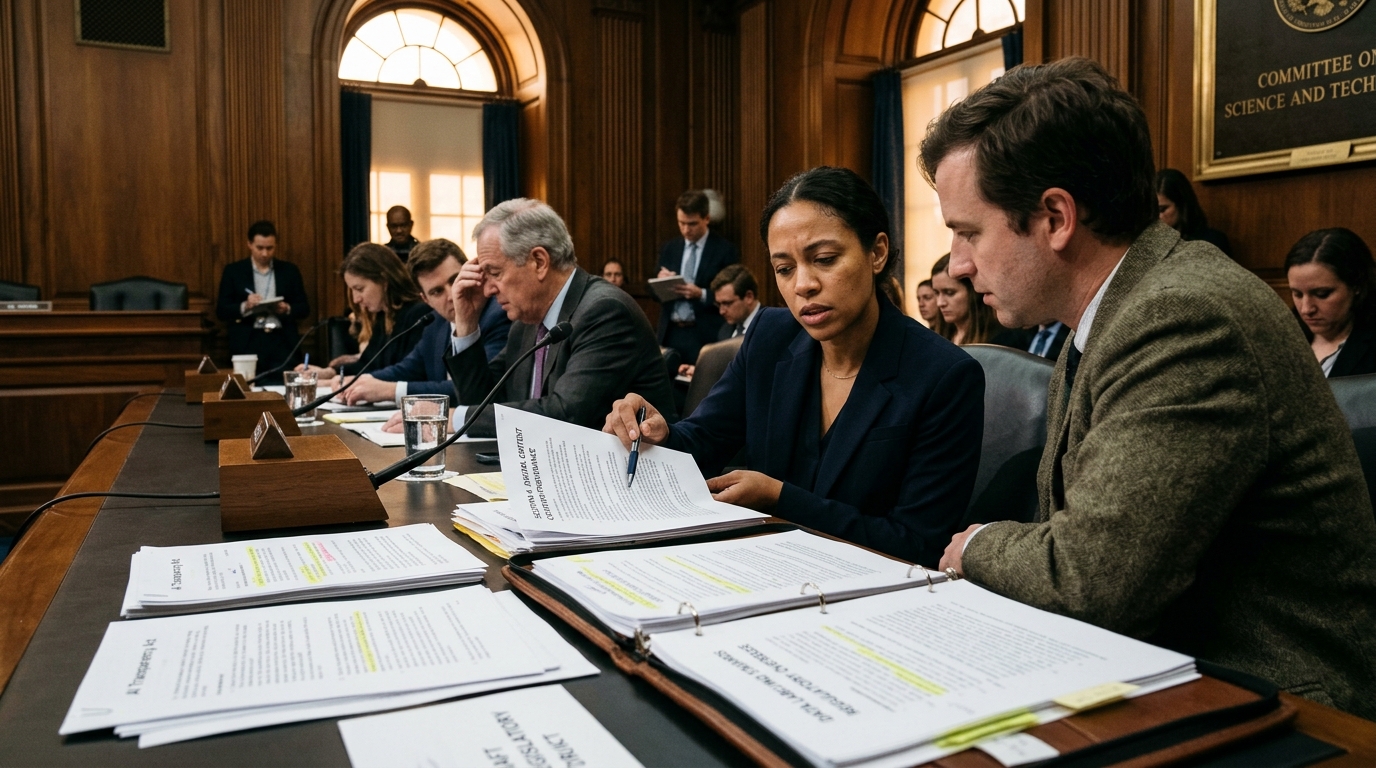
The digital landscape has reached a precipice where the line between reality and fabrication is becoming perilously thin. As generative artificial intelligence advances at a pace that defies traditional regulatory cycles, Washington D.C. is signaling a renewed determination to intervene. A bipartisan coalition of senators, led by Amy Klobuchar (D-Minn.) and John Thune (R-S.D.), has revived a critical legislative push to mandate the labeling of AI-generated content—a move seen as a cornerstone for maintaining public trust.
The Legislative Counter-Offensive and the Electoral Shadow
The "AI Labeling and Consumer Protection Act" is far more than a technical requirement; it is a strategic fortification against a new breed of existential threat to democratic institutions. With upcoming election cycles looming and deepfakes proliferating across social media platforms, lawmakers are increasingly concerned that the absence of clear provenance will lead to an irreversible erosion of civic trust. The proposed bill requires tech companies to embed permanent, detectable watermarks into any image, video, or audio produced by their generative models.
This strategy is rooted in the principle that consumers have an inalienable right to know whether the media they consume is a product of human creativity or algorithmic synthesis. However, translating this principle into practice remains a technological and political minefield. Critics argue that malicious actors will invariably find ways to circumvent or strip these labels, while strict domestic enforcement might place American firms at a competitive disadvantage against international rivals who operate without such constraints.
Technical Hurdles and the 'Liar’s Dividend'
A central challenge in this legislative push is the technical efficacy of current labeling methods. Protocols like C2PA (Coalition for Content Provenance and Authenticity), backed by giants such as Adobe and Microsoft, represent the current gold standard but are not foolproof. Metadata can be scrubbed with simple edits, and visible watermarks can be cropped out. Senators are calling for "durable" solutions, yet the technical community warns of a perpetual arms race between content creators and sophisticated counterfeiters.
"Transparency is not a luxury; it is a prerequisite for the functioning of markets and society in the age of AI," stated a senior counsel for the Commerce Committee.
Furthermore, there is the growing concern of the "liar’s dividend." In a world where all legitimate AI content is labeled, public figures could plausibly claim that any authentic but damaging footage of them is a "deepfake" simply because it lacks a definitive watermark of authenticity. This paradox complicates the regulatory landscape, making the legislative task a delicate balancing act between preventing fraud and inadvertently providing a shield for actual misconduct.
The Collision with Silicon Valley
The response from Big Tech remains calculated and cautious. While companies publicly endorse the spirit of transparency, behind-the-scenes lobbying efforts are focused on ensuring that labeling requirements do not carry prohibitive legal liabilities. Google and Meta have already begun deploying internal AI detection systems, but the lack of a unified federal standard has created a fragmented regulatory environment that complicates cross-platform compliance.
The Klobuchar-Thune bill seeks to establish this elusive unified framework. If successful, it would mark the most significant US intervention in the AI sector to date, echoing the ambitions of the European Union’s AI Act. The American approach, however, remains distinct in its focus on consumer protection and free speech, attempting to navigate a path that avoids the kind of heavy-handed regulation that might stifle domestic innovation.
Conclusion: A Battle for the Foundation of Truth
The revival of this legislative push indicates that the US political establishment is finally internalizing the gravity of the synthetic media era. Labeling AI is not a panacea for the broader problem of misinformation, but it is an essential first step. In a world increasingly saturated with synthetic data, our ability to distinguish the human from the artificial will define the quality of public discourse and, ultimately, the resilience of our democratic foundations.