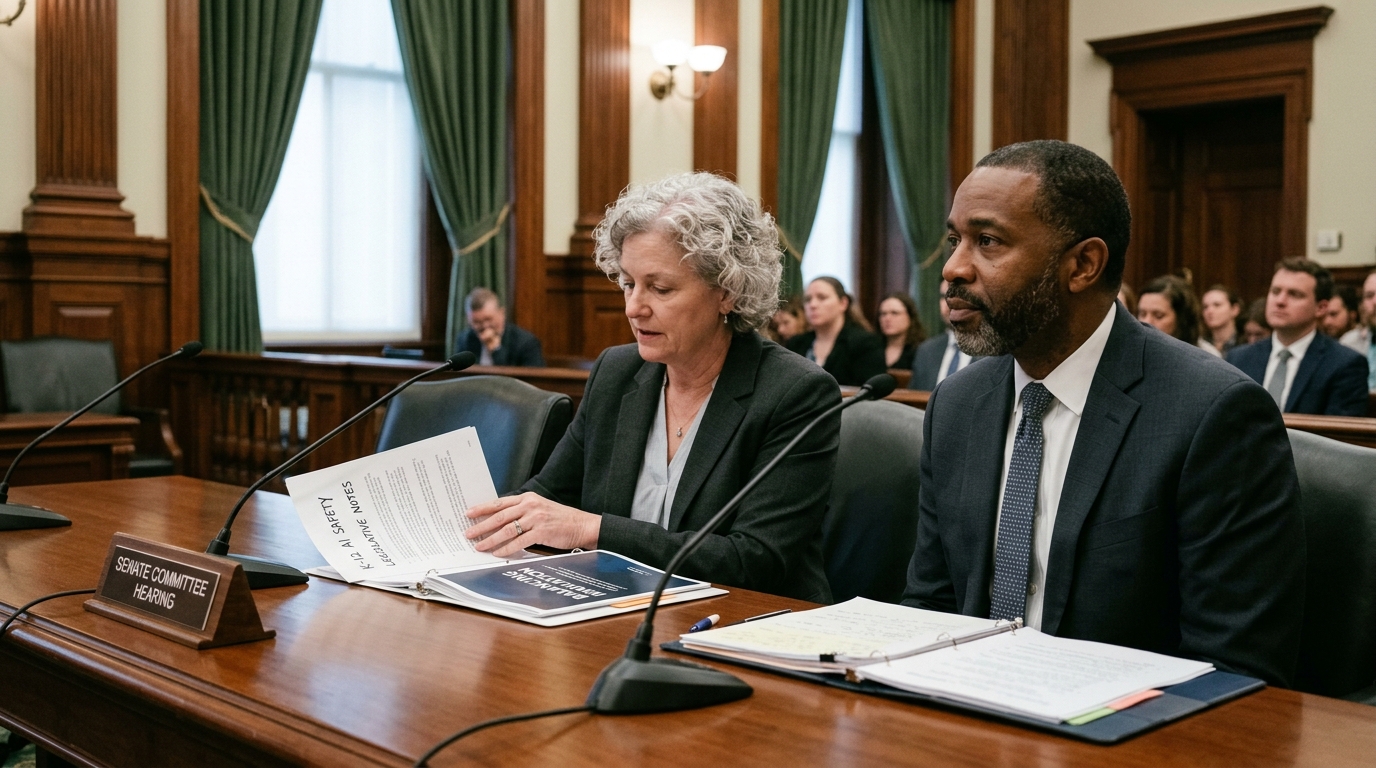
In the hallowed halls of the U.S. Senate, a pivotal conversation is unfolding that will define the educational landscape for the next generation. The recent hearing by the Senate panel on Artificial Intelligence (AI) in K-12 education was more than a routine legislative session; it was a confrontation with the reality of a digital revolution that has already permeated the classroom. As we navigate mid-2026, AI is no longer a futuristic novelty but a daily utility used by millions of students and educators, often operating in a regulatory vacuum.
The Promise of Personalized Learning vs. Systemic Risks
During the hearing, lawmakers scrutinized testimonies from educational technology experts, school administrators, and industry stakeholders. The primary argument in favor of AI remains its capacity for "hyper-personalized" learning. AI systems can adapt curriculum materials to each student's pace, identifying knowledge gaps in real-time and providing the kind of tailored support that a single teacher in a classroom of thirty would find impossible to maintain.
However, this optimism is tempered by profound concerns. Senators voiced fears regarding the widening "digital divide." If advanced AI tools are only accessible to affluent school districts, the technology risks entrenching social inequalities rather than bridging them. Furthermore, the protection of minors' personal data took center stage. With AI collecting vast amounts of data on student behavior, performance, and cognitive patterns, the question of who owns this data and how it is shielded from commercial exploitation remains a critical point of contention.
Data Privacy and the Shadow of Algorithmic Bias
One of the most complex issues discussed was algorithmic bias. The panel examined how AI models, trained on historical datasets, might inadvertently replicate racial or socioeconomic prejudices. In an educational context, this could manifest as flawed assessments or the "tracking" of students based on biased predictions about their future potential. The demand for transparency in the algorithms used within schools was deemed an absolute necessity by both sides of the aisle.
- Stricter federal mandates for parental consent regarding data harvesting.
- Required periodic audits of educational software to detect and mitigate bias.
- Ensuring AI functions as a supportive tool rather than a replacement for human educators.
Witnesses emphasized that AI must not lead to social isolation. Learning is an inherently social process, and over-reliance on screen-based interaction could atrophy children's interpersonal skills. The challenge for legislators is to find the "Golden Mean": encouraging the innovation that keeps the nation globally competitive while safeguarding the mental health and privacy of its youngest citizens.
The Evolving Role of the Educator
A significant portion of the debate focused on teacher burnout. AI promises to alleviate administrative burdens—such as grading and lesson planning—allowing teachers to focus on the human element of instruction. However, this transition requires a massive overhaul of professional development. Senators discussed the allocation of federal funding for training programs to ensure that educators are not threatened by technology, but rather empowered by it.
"Artificial intelligence in the classroom is not a choice we can defer. It is a reality we must shape with ethics and prudence," remarked a committee member during the closing statements.
In conclusion, the Senate hearing marks the beginning of a long legislative journey. As 2026 progresses, the pressure for a federal framework to protect K-12 schools is mounting. The success of this endeavor will be judged by whether AI is utilized to unlock the latent potential of every child or whether it devolves into a mechanism for surveillance and rigid standardization.