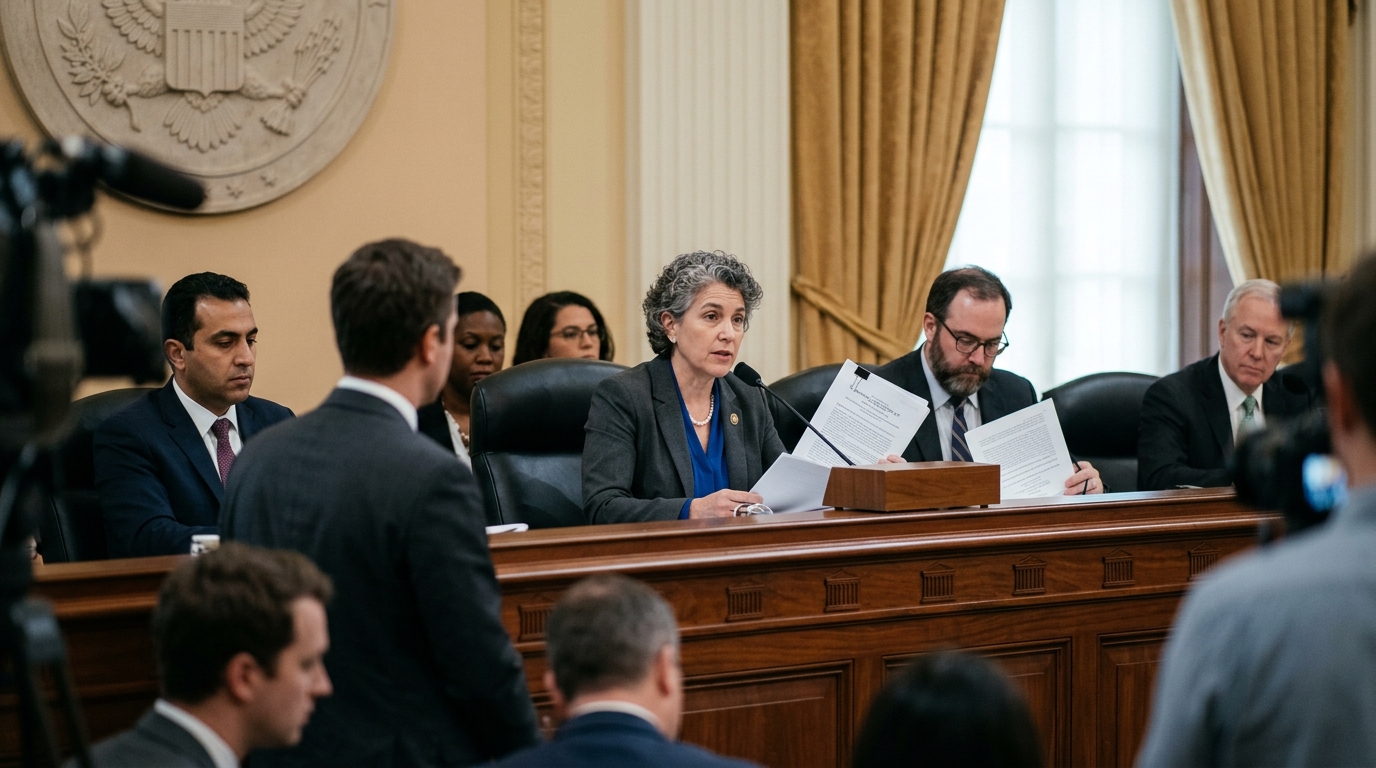
In a move marking the dawn of a new era for technological governance in the United States, Senate Democrats have introduced a series of ambitious bills aimed at regulating Artificial Intelligence (AI). As we navigate the midpoint of 2026, the pressure to establish "guardrails" around technologies that are reshaping the global economy and social cohesion has reached a breaking point. This legislative initiative, led by key party figures, seeks not only to mitigate risks but also to lay the groundwork for ethical technological development that safeguards citizens' rights.
The Fight Against Misinformation and Deepfakes
At the heart of the new legislative agenda is the protection of the democratic process. With elections looming and deepfake technology reaching levels of chilling realism, Democrats are proposing the "AI Disclosure Act." This bill would require every platform and content creator to clearly watermark any audiovisual material produced or modified by artificial intelligence. The logic is straightforward: citizens have a right to know whether what they are seeing is a product of human agency or algorithmic synthesis.
Furthermore, the legislation mandates strict penalties for using AI to generate fake news intended to suppress voters or mislead the public about voting procedures. As one of the bill's sponsors stated, "Truth cannot be a casualty of computational power." The challenge, of course, remains technical enforcement, as generative algorithms evolve faster than detection tools.
Corporate Accountability and the End of Algorithmic Immunity
Another critical aspect of the bills concerns the liability of tech companies. For years, Silicon Valley giants enjoyed a form of immunity for the content their platforms generated or amplified. The new proposal seeks to upend this status quo by introducing the doctrine of "algorithmic accountability." If an AI system causes proven harm—whether through hiring bias, financial fraud, or privacy violations—the creators of the model will be held legally responsible.
- Mandatory safety testing (red-teaming) before the release of new models.
- Transparency in training data to prevent inherent biases.
- The establishment of a federal AI oversight body.
This approach has sparked intense pushback from the tech sector, with many arguing that over-regulation will stifle innovation and hand an advantage to geopolitical rivals like China. However, Democrats counter that public trust is the essential prerequisite for sustainable market growth.
Labor Rights and the Social Dimension of Automation
No comprehensive regulation could ignore the labor market. The new package includes provisions for the "Right to Retrain," requiring companies that replace human labor with AI systems to fund vocational transition programs. Concurrently, it prohibits the use of AI for monitoring employees' psychological states or for automated firing without human intervention.
"Artificial intelligence must be a tool for worker empowerment, not a weapon in the hands of management to dismantle labor rights," the introductory report notes.
In conclusion, the move by Senate Democrats represents the boldest step yet toward controlling the digital revolution. While the path to passage remains arduous due to political divisions, the debate has shifted from "if" we should regulate AI to "how" we do so in a way that protects humanity without sacrificing the future.