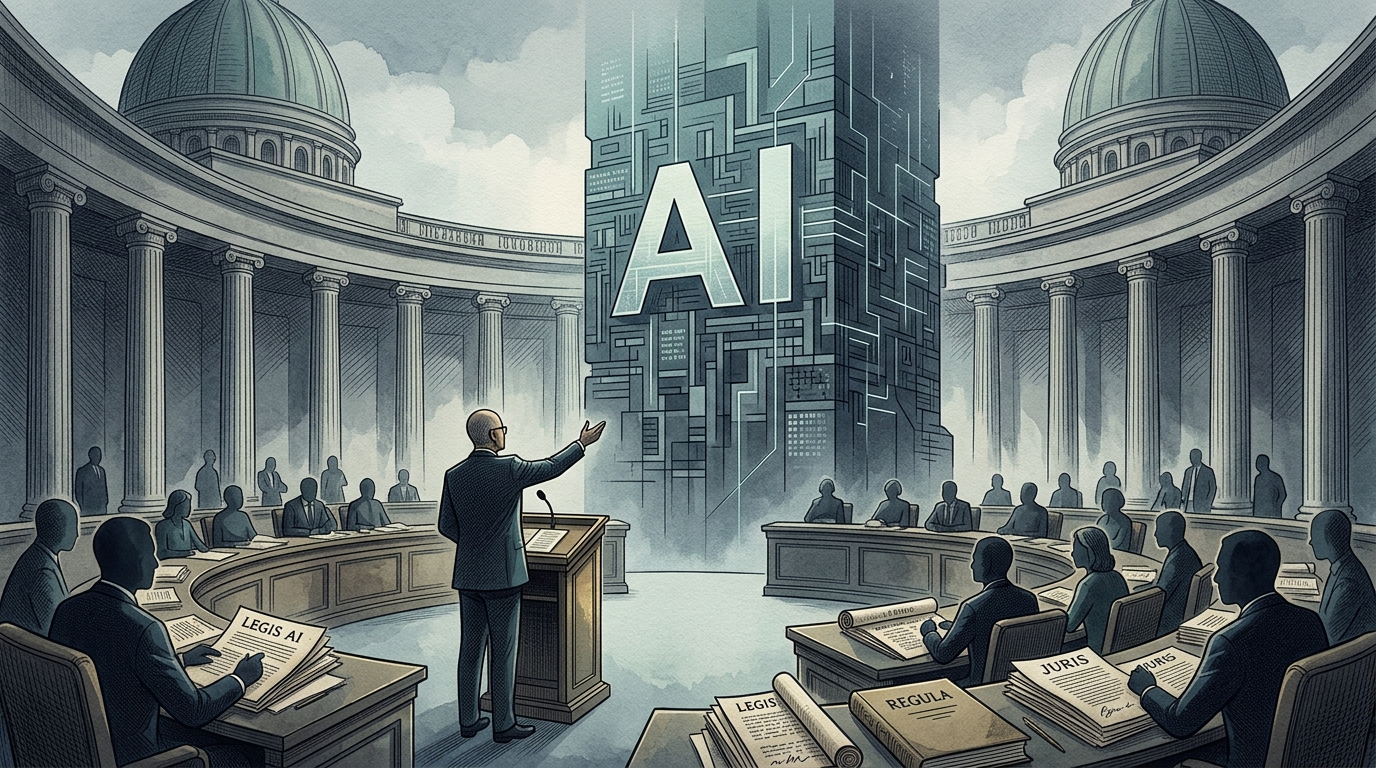
In an era where Artificial Intelligence (AI) is transforming from a mere technological promise into an existential necessity for the global economy, Satya Nadella, CEO of Microsoft, has issued a statement that resonated across the industry. Despite leading one of the primary contenders in the AI arms race, Nadella emphasized that the future of this technology cannot and must not be monopolized by a small subset of powerful corporations. This stance, while appearing altruistic, masks deeper geopolitical and strategic maneuvers as the world enters a new phase of 'digital sovereignty.'
The Giant’s Paradox and the Strategy of 'Open' Access
Microsoft, through its strategic alliance with OpenAI and its massive Azure infrastructure, sits at the epicenter of what many perceive as the burgeoning AI oligopoly. However, Nadella argues that the true value of the technology will only materialize if there is a broad dissemination of its tools. According to him, the concentration of power in a few hands risks stifling innovation before it even has the chance to flourish on a global scale.
This rhetoric is far from accidental. As the European Union and the U.S. Federal Trade Commission (FTC) scrutinize Microsoft’s multi-billion dollar investments in OpenAI, the company is attempting to redefine itself as an 'enabler' rather than a 'gatekeeper' of technology. Nadella stresses that access to compute power and data must be democratic, allowing smaller nations and enterprises to develop their own 'sovereign AI' models.
The Infrastructure Barrier and AI Geopolitics
The core of Nadella’s argument focuses on the astronomical costs of entry. Developing Large Language Models (LLMs) requires billions of dollars in specialized hardware (GPUs) and immense energy resources. If the market is left unchecked, only companies with trillion-dollar market caps will be able to play. This creates a new form of digital feudalism, where all other players are merely tenants of foreign-owned technology.
Nadella pointed to the necessity of a 'global consensus' to ensure AI operates as a public good. "We don't want a world where AI is the privilege of the few," he stated. This sentiment finds a strong echo in nations fearing technological dependency on Silicon Valley. Countries like France, India, and the UAE are already investing in their own domestic infrastructures, pursuing what is increasingly called 'Sovereign AI'—the ability of a nation to produce AI that reflects its own culture, language, and legal standards.
Regulatory Oversight and the Path Ahead
Nadella’s warning comes at a pivotal moment. Global regulators are no longer easily swayed by the promises of Big Tech. The prevailing concern is that Microsoft, Google, and Amazon simultaneously control the cloud, the hardware, and the models, creating an impenetrable ecosystem. The call to avoid monopolies could be interpreted as a preemptive strike to demonstrate that competition is still possible, thereby averting more drastic regulatory actions, such as forced divestitures.
Ultimately, the battle for the future of AI will be fought not just in coding labs, but in courtrooms and diplomatic chambers. If Nadella’s vision holds true, we will see a shift toward more open, collaborative models. However, if the logic of profit and infrastructure control prevails, his warning may remain an ironic footnote in the history of the digital age.
"The democratization of AI is not just a moral imperative; it is a structural necessity for a functioning global market."
Key Implications for the Future
As we look toward 2027 and beyond, the industry faces several critical challenges that will determine whether Nadella's warning is heeded:
- The necessity for interoperability between different AI systems to prevent silos.
- The risk of 'vendor lock-in' where businesses become tethered to a single provider's ecosystem.
- The importance of ethical development that includes the voices of the Global South.
- The delicate balance between protecting intellectual property and fostering open-source innovation.