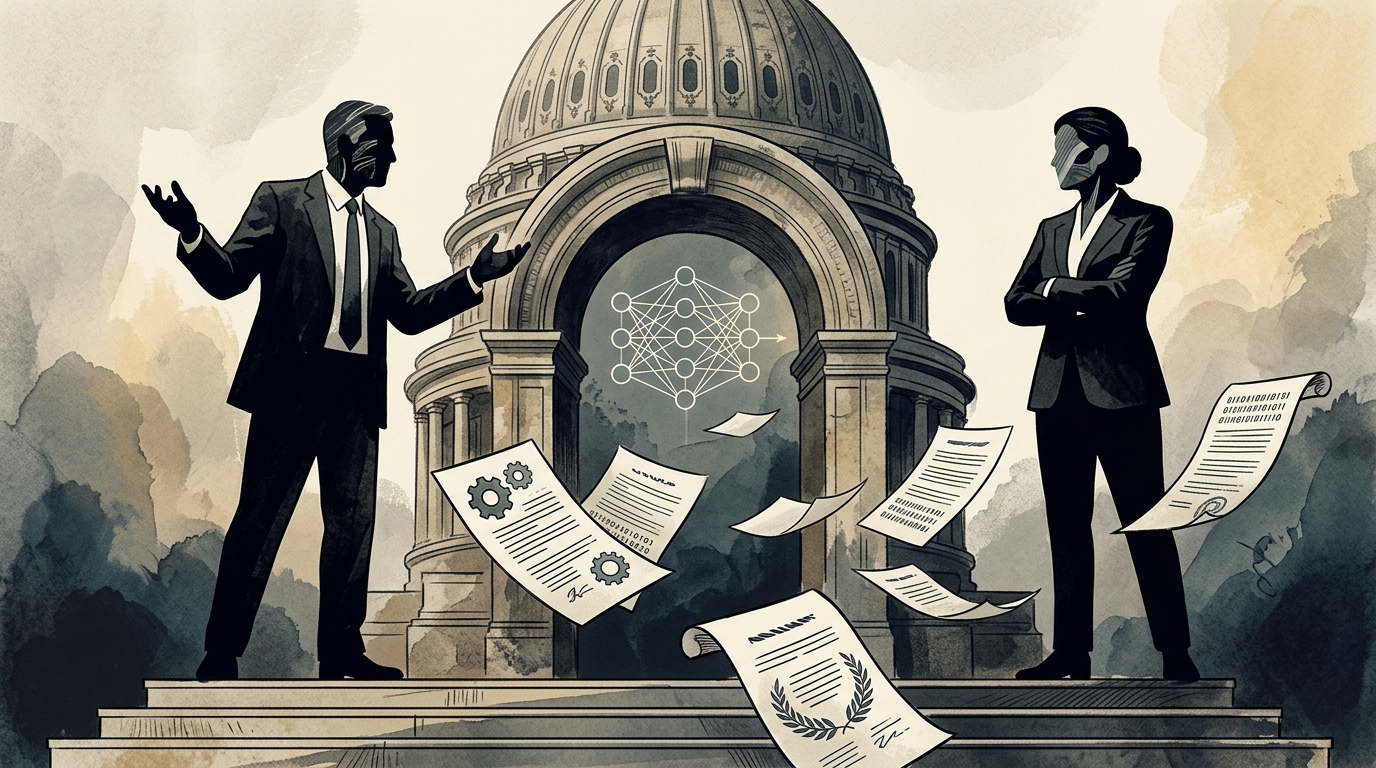
As we navigate the midpoint of 2026, Artificial Intelligence has long ceased to be viewed as a mere technological advancement. It has evolved into the primary engine of the global economy, generating wealth comparable only to the discovery of oil in the previous century. Against this backdrop, the U.S. political landscape is being rocked by a radical proposal that aims to fundamentally alter the relationship between the state, citizens, and tech giants.
Senator Bernie Sanders has filed a landmark bill that mandates the transfer of 50% of equity in U.S. AI firms to a public fund. The proposal goes even further: this fund would distribute annual dividends of $1,000 to every American citizen, acting as compensation for the use of public data on which these models were trained. This move has sent shockwaves through Silicon Valley, but the reaction from the Republican camp—specifically from Vice President JD Vance—is equally intriguing and unexpected.
The Sanders Plan: AI as a Public Good
Sanders argues that the algorithms currently generating billions of dollars in profit would not exist without the "collective intelligence" of humanity. "Every book, every article, every social media post written by ordinary people was used to train these models without any compensation," the Senator stated during the bill's introduction. His logic is straightforward: if the raw material is public, then the ownership of the final product must be partially public as well.
The proposed "National AI Dividend Fund" would operate similarly to the Alaska Permanent Fund for oil. Companies such as OpenAI, Google, and Meta would be required to issue new shares owned by the state, giving citizens a direct stake in the profitability of automation. For Sanders, this is the only antidote to the "technological feudalism" that threatens to concentrate all wealth in the hands of a few billionaires while AI displaces millions of jobs.
The Trump-Vance Response: 'Pre-distribution' Over Cash
In a surprising turn, the right wing of American politics has not rejected the idea of state intervention but has instead proposed a different philosophical approach. Vice President JD Vance, echoing Donald Trump’s positions, stated that the administration supports the idea of Americans having a "stake" in AI companies but disagrees with the model of direct cash handouts.
Vance introduced the term "pre-distribution." Rather than the state taxing profits and distributing welfare—which he believes creates dependency on the state—he proposes creating structures where citizens have ownership rights in AI infrastructure and data from the outset. The Trump-Vance approach focuses on strengthening national power and ensuring AI remains American-centric, using state power to break Silicon Valley monopolies without necessarily imposing a socialist-style redistribution of cash.
Economic Implications and Market Reaction
Markets reacted with significant volatility to the news. Analysts warn that a mandatory 50% public stake could lead to a massive capital flight from the U.S. to more "friendly" jurisdictions. However, supporters of the bill point out that access to the U.S. market and its specialized computing infrastructure is too valuable for companies to abandon.
- Innovation Risk: Critics argue that state intervention will stifle innovation, as investors may hesitate to fund companies that will eventually become half-state-owned.
- Social Stability: Conversely, providing a steady income in an era of rapid automation is seen by many economists as the only way to prevent widespread social unrest.
- Geopolitical Competition: There is fear that if the U.S. "nationalizes" AI, China might gain an edge through a more centralized but entrepreneurially aggressive model.
"This isn't just about taxes. It's about who owns the future. If AI is owned by five people, democracy is over," Sanders remarked pointedly.
Conclusion: Toward a New Social Contract?
The debate ignited in 2026 suggests that humanity is on the verge of a new social contract. Whether through Sanders' "AI Dividend" or Vance's "Pre-distribution," a consensus is forming: the free market, in its traditional form, is unable to manage the immense concentration of power brought by AI. The battle over who will own the "digital brains" of the 21st century has only just begun, and the outcome will define the global economy for decades to come.