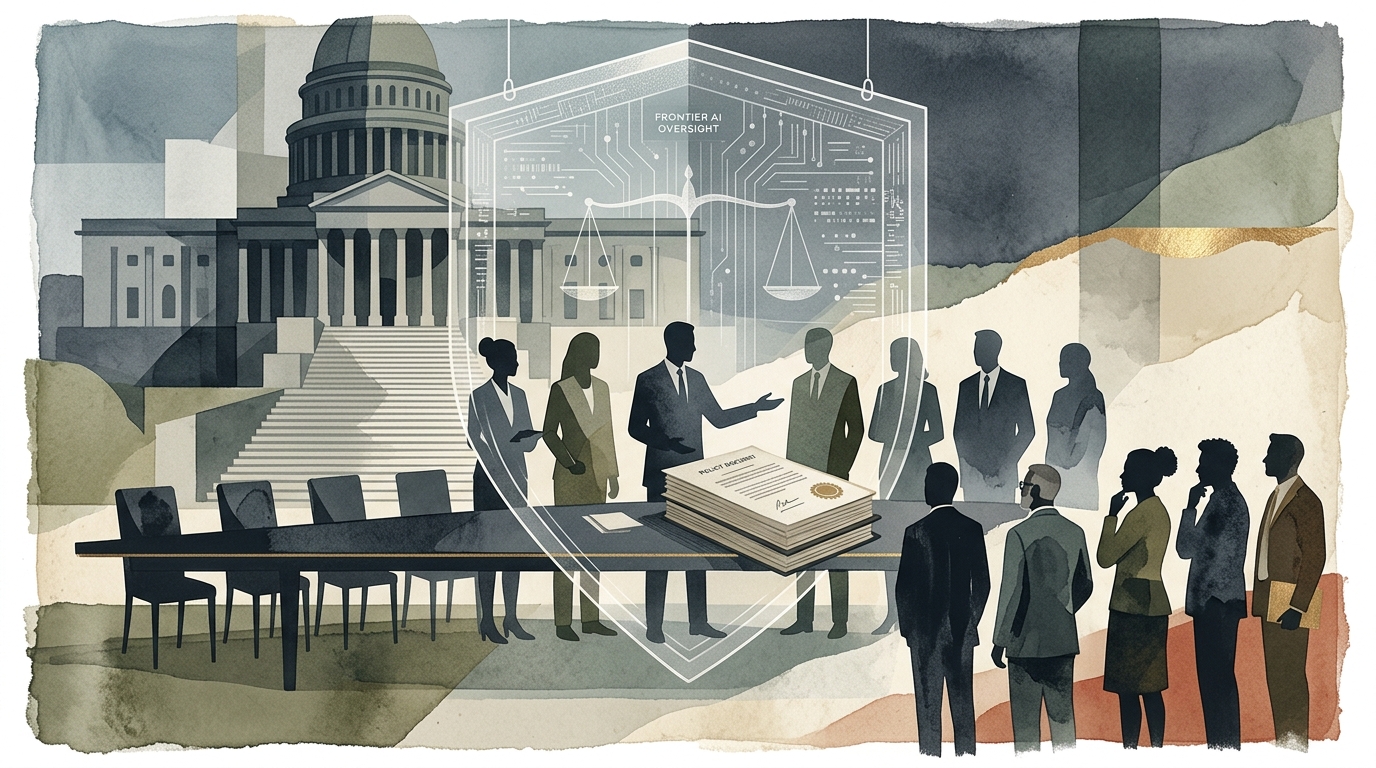
In a move poised to send shockwaves through the American political and corporate landscape, Senator Bernie Sanders has unveiled an exclusive proposal targeting the very heart of Silicon Valley. His plan, revealed via the Washington Post, goes beyond mere regulation, calling for direct public ownership of artificial intelligence companies. The central premise is as simple as it is radical: since AI was trained on the collective data of humanity, its rewards should belong to everyone, not just a handful of billionaires.
The Philosophy of the 'Public Commons'
Sanders argues that the current trajectory of AI development is leading toward an unprecedented concentration of wealth and power. The proposed legislation, titled the 'AI for the People Act,' mandates that any AI firm with a valuation exceeding $100 billion must transfer 2% of its equity annually to a 'National AI Wealth Fund' for a period of ten years. Dividends from these shares would be used to fund a Universal Basic Income (UBI) or retraining programs for workers displaced by automation.
- Mandatory worker representation on the boards of major AI corporations.
- Taxation of automation-driven profits to bolster the social safety net.
- Full transparency of algorithms that impact public life and resource allocation.
'We cannot allow artificial intelligence to become the tool that obliterates the middle class,' Sanders stated. 'If this technology is going to replace human labor, then the ownership of that technology must be shared across society.' This rhetoric leans heavily on the concept of 'data debt'—the idea that companies like OpenAI, Google, and Microsoft have scraped the entirety of human knowledge from the internet without compensation, effectively privatizing a public resource.
Backlash from Silicon Valley and Wall Street
Predictably, the proposal has been met with skepticism and hostility from the tech sector. Executives argue that such a mandate would stifle innovation and trigger a massive flight of capital to jurisdictions with fewer restrictions, such as China or certain parts of Europe. They contend that the threat of state-mandated equity transfers would discourage venture investment and render American firms uncompetitive on the global stage.
'The Sanders proposal is a direct assault on the fundamental principles of private property and entrepreneurial risk,' noted a leading Wall Street analyst.
However, proponents of the plan point out that these companies have benefited from massive indirect subsidies through public infrastructure, government-funded research, and the use of public data. The debate is shifting from *whether* to regulate AI to *who* should own the means of production in the digital age. Sanders is effectively setting the stage for a grand ideological conflict that will likely dominate the political agenda for years to come.
The Future of Work and Social Cohesion
Beyond the balance sheets, the plan addresses the deep existential anxiety of the modern workforce. As AI penetrates fields like law, medicine, and software engineering, the traditional link between labor and income is fraying. The Sanders plan offers an alternative: instead of leading to mass poverty, automation could usher in a society of abundance—provided the wealth isn't hoarded in private portfolios. The struggle over AI is no longer just a technical challenge; it is a battle for democracy and the distribution of power in the 21st century.