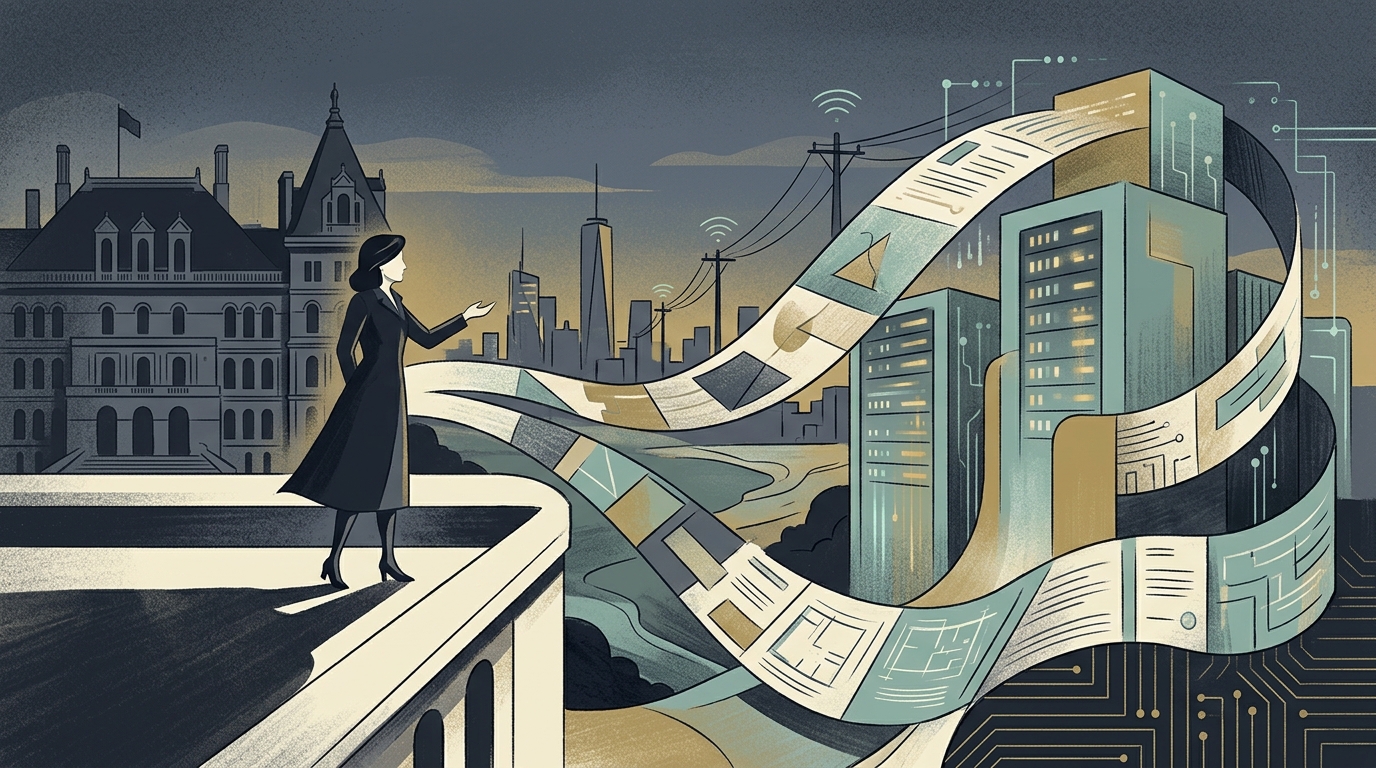
The management of private debt in Greece is entering a new, more mature phase as the Ministry of National Economy and Finance implements a comprehensive suite of seven key interventions. Following a decade of crisis and the painful transition of non-performing loans (NPLs) from banks to credit management companies (servicers), the new legislative framework aims to balance the relationship between debtor and creditor through technology and stricter oversight. More than 2 million debtors now face a landscape that, while not erasing debt, provides clearer rules of engagement and digital tools that reduce bureaucracy and arbitrary actions.
The Out-of-Court Mechanism and Automation
Perhaps the most significant change is the enhancement of the Out-of-Court Debt Settlement Mechanism. Under the new regulations, accepting the proposal generated by the algorithm is now mandatory for creditors (banks and servicers) when dealing with vulnerable debtors. This eliminates the phenomenon of unjustified rejections that plagued thousands of households in previous years. Furthermore, debt write-offs (haircuts) can reach up to 28% depending on the debtor's financial status, while the interest rate for settlements is fixed at 3%, offering protection against international market fluctuations.
Digitalization plays a central role. The out-of-court platform has been upgraded to automatically retrieve all financial data, eliminating the need to submit hundreds of documents. For the average debtor, this means the process from application to final settlement can now be completed in less than two months, compared to the endless legal battles of the past.
Transparency and Rules of Conduct for Servicers
One of the constant social demands was the oversight of debt management companies. The new framework imposes strict communication and information rules. Servicers are now required to maintain digital systems where the borrower can view their debt balance, paid installments, and the applied interest rate in real-time. The lack of such information was a "black hole" in the system, often leading to misunderstandings or even abusive practices.
- Mandatory operation of an electronic information platform by every servicer.
- Strict fines ranging from 5,000 to 500,000 euros for violations of the code of conduct.
- Revocation of operating licenses in cases of recidivism.
This institutional shielding aims to transform servicers from "collection agencies" into management organizations seeking sustainable solutions, as debt recovery is in the interest of both parties, provided it is done transparently.
Protection of the Vulnerable and the 'Hercules III' Scheme
For the truly vulnerable—those objectively unable to service any settlement—the Asset Acquisition and Leaseback Entity is being activated. This entity will purchase the debtor's primary residence and lease it back to them for 12 years, with a right to repurchase at the end of the period. Simultaneously, the state subsidizes the rent, ensuring that no family ends up homeless due to debt.
On a macroeconomic level, the extension of the "Hercules III" program provides the necessary state guarantees for further loan securitization. This allows banks to fully clean up their balance sheets, approaching the European average of single-digit NPL ratios. This development is crucial for channeling liquidity into the real economy, as banks can now focus on financing new investments and healthy businesses.
Analysis and Future Challenges
Despite these positive changes, challenges remain. Total private debt remains high, and the rising cost of living limits the disposable income available for servicing settlements. The success of the new framework will be judged by the speed of implementation and the willingness of financial institutions to propose truly sustainable solutions rather than mere "band-aids" that push the problem into the future. Transitioning to a healthy payment culture, supported by a fair and efficient state, is the only way to definitively overcome the remnants of the economic crisis.
The Role of Interest Rates and Inflation
While the legislative framework provides the tools, the broader economic environment remains a variable. With the European Central Bank maintaining a cautious stance on interest rates, the 3% fixed rate offered in the Greek settlement mechanism is a significant subsidy. However, if inflation persists, the real value of debt might decrease, but the pressure on household budgets to cover basic needs will increase. The government's challenge is to ensure that these 7 reforms are not just legal texts but active lifelines for the 2 million citizens they target.