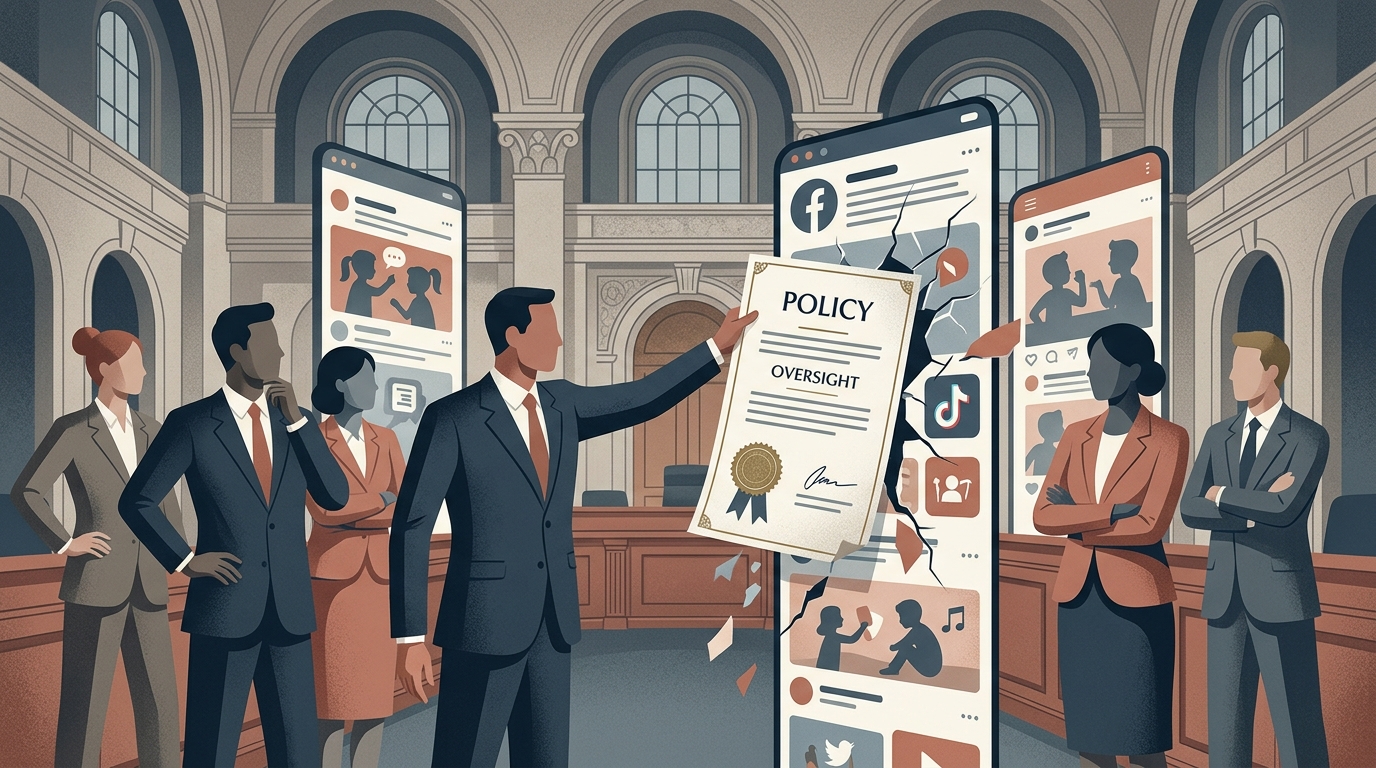
The digital age has brought humanity face-to-face with an unprecedented challenge: protecting the most vulnerable segment of the population—minors—in an environment designed by adults for profit. A new, extensive academic study, highlighted by Fortune Greece, effectively dismantles the narrative of tech giants regarding a 'safe digital environment.' The findings are staggering: more than half of the safety features touted by platforms like TikTok, Instagram, Snapchat, and YouTube fail miserably to provide the protection they promise.
The Phenomenon of 'Safety Washing'
The term 'greenwashing' has long been used to describe companies that pretend to be environmentally conscious. Today, this research essentially introduces the term 'safety washing.' Researchers analyzed dozens of tools—from content filters and time limits to age verification systems—and found that most are either easily bypassed or intentionally designed in a way that does not hinder prolonged usage. For instance, TikTok's 'time limits' often require only a simple passcode that a teenager can set themselves, while algorithms continue to serve addictive content even after the time limit notification appears.
The study emphasizes that companies invest more in marketing these features than in their substantive effectiveness. This creates a false sense of security for parents, who believe that by enabling certain settings, their children are shielded from harmful content, cyberbullying, or predators. In reality, platform architecture remains oriented toward maximum engagement, a goal that stands in direct conflict with user safety.
Structural Flaws and Algorithmic Bias
One of the most concerning aspects of the research involves how recommendation algorithms bypass protective filters. Even when an account is registered as belonging to a minor, the system tends to promote 'borderline content'—material that sits just at the edge of being prohibited. On Instagram, for example, the study showed that teenagers are still exposed to body image ideals that reinforce eating disorders, despite Meta's official assurances to the contrary. The AI used to detect such content appears to be desperately slow or inadequate in the face of massive data volumes.
- Age verification remains the 'Achilles' heel,' with most systems relying on user honesty.
- Privacy settings are often buried in complex menus, discouraging young users from utilizing them.
- Ad targeting continues through indirect means, collecting behavioral data even from 'protected' accounts.
Furthermore, the research highlights a lack of cooperation between platforms. A minor banned from one platform for violating rules can find refuge on another within seconds, with no information transfer regarding their behavior. This 'digital hopping' renders the individual measures of each company mere half-measures.
The Need for Rigorous Regulatory Frameworks
With the European Digital Services Act (DSA) in full effect, these findings act as a bombshell for tech giants. The study argues that self-regulation has failed. Regulators must enforce independent audits of algorithms rather than accepting the companies' internal reports as gospel. Political pressure is mounting as the mental health consequences for an entire generation become measurable and undeniable.
"We cannot trust the architects of addiction to be the guardians of our children's health," noted one of the study's lead researchers.
In conclusion, protecting minors on social media requires a radical redesign of the digital economy. As long as profit is measured in minutes of screen time, safety will remain a secondary feature—a communication facade hiding systemic failures. Society, parents, and legislators must demand transparency and accountability before the digital gap between promise and reality becomes unbridgeable.