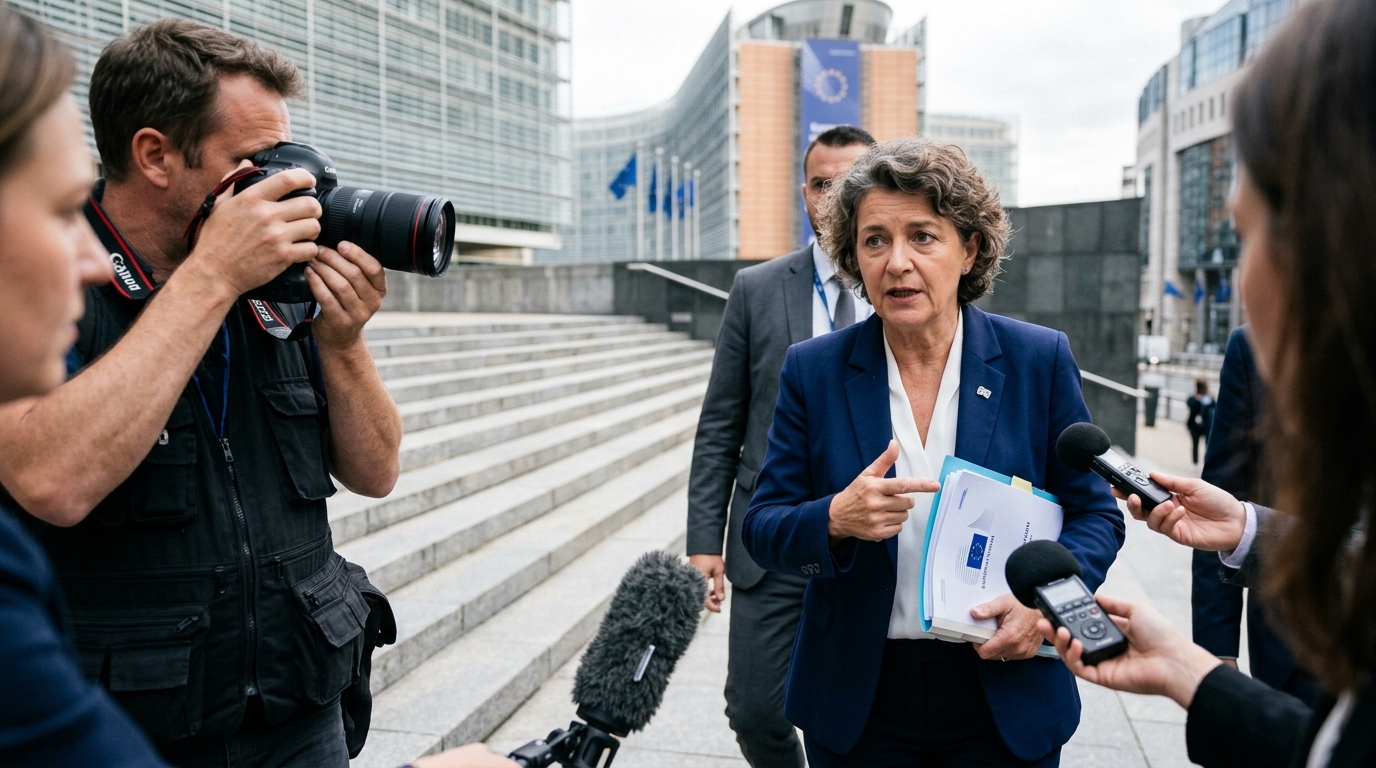
In an era where digital borders are as critical as physical ones, the European Union is taking a bold step toward securing its digital sovereignty. The new EU plan for cybersecurity in the age of Artificial Intelligence (AI) is not merely an addition to the existing regulatory framework, but a fundamental overhaul of how the continent perceives defense in cyberspace. The European Commission, in collaboration with ENISA (the European Union Agency for Cybersecurity), recognizes that advanced AI is a "double-edged sword": a tool that can fortify our infrastructure, but also a weapon that can level it with unprecedented speed.
The Dual Nature of AI in Security
The core challenge addressed by the new plan is the dual-use nature of Large Language Models (LLMs) and generative AI systems. On one hand, attackers are already utilizing AI to automate the creation of highly convincing phishing campaigns, develop polymorphic malware that alters its code to evade detection, and identify vulnerabilities in critical infrastructure in fractions of a second. Traditional defense, reliant on human intervention and static rules, is becoming increasingly inadequate.
On the other hand, AI offers unique opportunities for defenders. The EU plan emphasizes the development of "self-healing networks" that can identify and patch security gaps before they can be exploited. The ability of AI to analyze vast volumes of network traffic data in real-time allows for the prediction of attacks before they even manifest, transforming cybersecurity from a reactive process into a proactive strategy.
Pillars of the New Strategic Roadmap
The roadmap is structured around three central pillars. The first concerns enhancing the resilience of critical infrastructure. The EU intends to impose stricter security standards for companies managing energy, water, and healthcare networks, requiring the integration of AI tools to monitor their systems. The second pillar focuses on building a European cybersecurity ecosystem, reducing dependence on third-country technologies, such as those from the US or China. "Strategic autonomy" is no longer a political ambition but a security imperative.
The third pillar involves international cooperation and the establishment of global standards. As seen with the General Data Protection Regulation (GDPR) and the AI Act, the EU seeks to become the global regulator, defining what constitutes "responsible use" of AI in security. This includes banning certain offensive uses of AI and ensuring that defensive systems remain under human oversight, avoiding the scenario of a fully automated "war of algorithms."
Challenges and Geopolitical Context
The implementation of this plan is not without hurdles. The shortage of skilled personnel in Europe remains an open wound. Without engineers who understand both cybersecurity and deep learning, even the most sophisticated tools will remain underutilized. Furthermore, there is a risk that over-regulation could stifle innovation in European startups, leaving the field open to Silicon Valley's tech giants.
On a geopolitical level, the plan responds to increasing threats from state-sponsored actors. The use of AI for disinformation and the destabilization of democratic processes is a central concern for Brussels. Protecting electoral processes through AI-based deepfake detection systems is an immediate priority, given the heavy electoral cycle in Europe over the coming years.
Conclusion
The new EU plan for AI and cybersecurity is an acknowledgment that the world has changed irreversibly. Security is no longer a matter of firewalls, but a matter of intelligence. Europe's success will be judged by its ability to balance the need for strict rules with the imperative for technological leadership. In this digital race, the EU does not just seek to survive but to set the rules of the game for the 21st century.