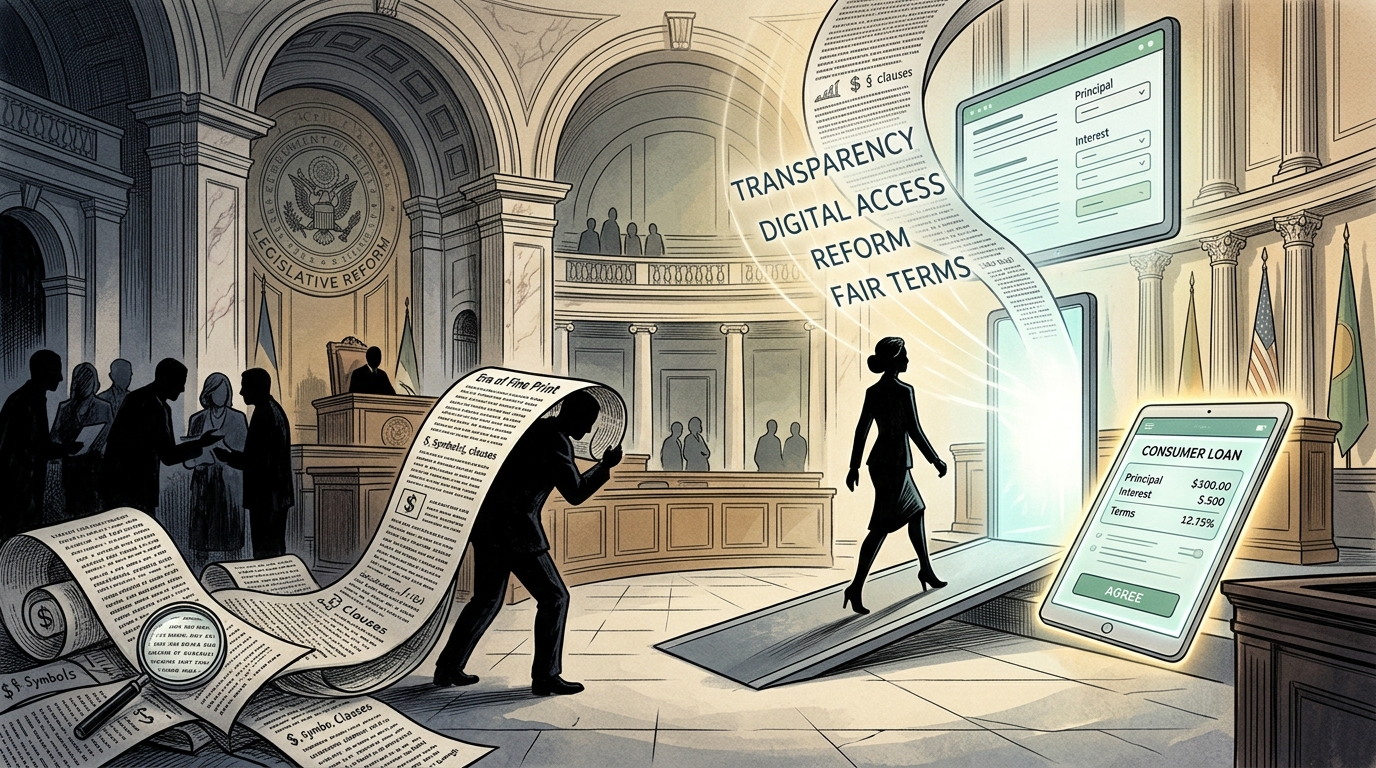
The Greek consumer credit market is standing at a historic crossroads. By transposing the relevant European Union directive, the Ministry of Development is introducing a legislative intervention aimed at fundamentally altering how citizens borrow money—ranging from traditional bank loans to modern "Buy Now Pay Later" (BNPL) digital platforms. This new bill is not merely a bureaucratic adjustment; it is a structural response to decades of systemic issues that left thousands of households trapped in unsustainable debt cycles.
Capping Costs and Enforcing Transparency
Perhaps the most significant change is the imposition of a ceiling on the total cost of credit. Until now, many consumer credit products, despite being advertised with low nominal interest rates, ended up burdening borrowers with disproportionate file fees, insurance premiums, and other commissions. The new framework dictates that the Annual Percentage Rate of Charge (APR) must be clearly defined and must not exceed specific limits designed to protect consumers from predatory lending practices.
Furthermore, the infamous "fine print" of contracts is being targeted. Banks and financial institutions are now required to provide the "Standard European Consumer Credit Information" in a prominent manner, using font sizes and layouts that make reading easy and comprehensible. The logic is straightforward: a consumer must know the exact amount they will be required to repay before they even sign the contract, ensuring there are no unpleasant surprises during the repayment period.
Regulating the BNPL "Wild West"
Another critical aspect of the bill is bringing BNPL services under the supervision of the Bank of Greece. These services, which saw explosive growth during the pandemic, previously operated in a regulatory grey area. Often, consumers—particularly younger demographics—were lured into a cycle of micro-indebtedness for purchases of clothing or electronics without realizing that missed installments could cause costs to skyrocket.
Under the new law, BNPL providers are mandated to perform stricter creditworthiness assessments. It will no longer be sufficient to grant approval in seconds based solely on a card number. Providers must ensure that the borrower has the actual financial capacity to repay the debt, thereby preventing over-indebtedness before it occurs. This is particularly vital in an era where inflation is squeezing disposable income across the board.
Artificial Intelligence as a Safety Valve
Within the context of these reforms, Artificial Intelligence (AI) is expected to play a leading role. Banks are already developing algorithms capable of predicting the likelihood of default with much higher precision than traditional models. However, the bill sets clear boundaries here as well: the use of AI must be transparent and must not lead to discriminatory outcomes. Consumers have the right to request human intervention if a loan application is rejected solely by an automated system.
Ethical questions also arise regarding the data used for these assessments. The new legislation ensures that personal data from social media or health records cannot be utilized to evaluate creditworthiness. AI must function as a tool for financial solvency, not as an instrument for social stratification or invasive profiling.
Conclusion: Towards a Healthy Credit Market
The consumer loan bill represents a necessary step toward modernizing the Greek economy. In a country still healing from the wounds of the financial crisis and the trauma of non-performing loans (NPLs), prevention is the best cure. By enforcing caps, ensuring advertising transparency, and regulating new digital credit forms, the government is creating a safety net that protects the weakest link in the chain: the consumer. The ultimate success of this measure will, of course, depend on its implementation and the ability of regulatory authorities to crack down on malpractice in the real world.