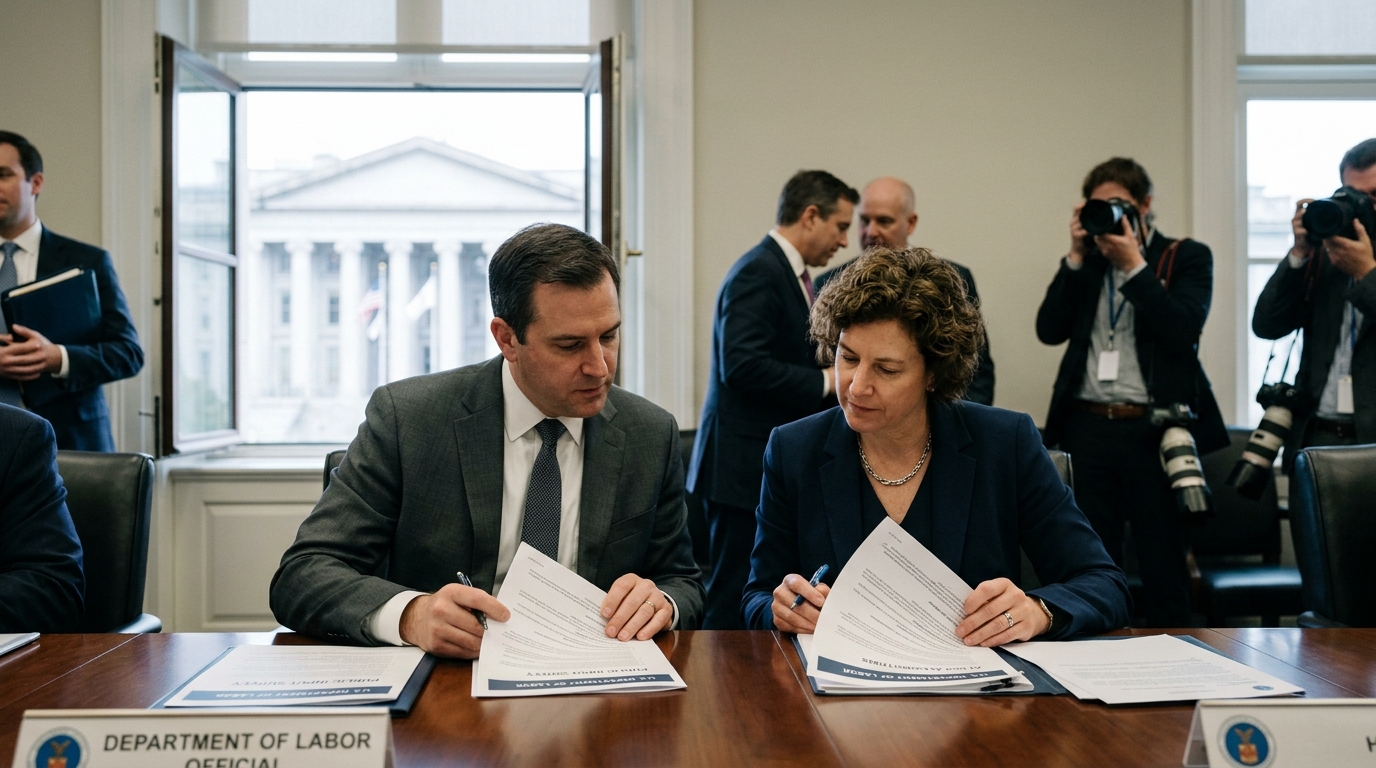
At a critical juncture for the Greek labor market, where demographic aging and the shortage of skilled personnel are two sides of the same coin, Minister of Labor and Social Security Niki Kerameus presented a suite of interventions aimed at boosting employment and rationalizing the social security system. The Minister's agenda focuses on three key pillars: the reintegration of unemployed individuals over 55, resolving the long-standing issue of widow pensions, and the full digitization of labor relations through the Digital Work Card.
The 55+ Program: Investing in Experience
The announcement of a new cycle of subsidized employment for 8,000 unemployed persons aged 55 to 67 (and up to 74 for those who have not completed the required insurance time) is a direct response to the problem of long-term unemployment among older age groups. This program is not merely a social benefit; it is a strategic choice to leverage the "silver economy."
According to Ministry data, workers in this category often face ageism in the free market, despite the valuable experience and stability they offer. The program will offer a subsidy reaching 75% of wage and non-wage costs, with a maximum cap of 750 euros per month. The subsidy lasts for 12 months, with the possibility of extension for another 12, providing businesses with the incentive to integrate experienced staff at a reduced cost.
"Work has no age. Our goal is to give another opportunity to people who still have much to offer, while simultaneously ensuring their dignified living and the completion of their pension rights," stated Ms. Kerameus.
Widow Pensions: A Socially Conscious Solution
One of the most sensitive issues the Ministry leadership had to manage is that of widow pensions in the private sector. The pending implementation of the law providing for a reduction of the pension from 70% to 50% of the original after three years (if the beneficiary works or receives their own pension) had created significant concern.
The new proposed approach operates on the logic of "free choice." Beneficiaries will have the option to choose which pension will be cut by 50% after the three-year period – their own or the deceased spouse's. This allows retirees to minimize financial losses by choosing the reduction on the smaller amount. Furthermore, regulations for the retroactive collection of amounts that were not withheld are being examined, with installments that will not overly burden the monthly budget of the beneficiaries.
Digital Card and the Battle Against Under-declared Work
The expansion of the Digital Work Card to sectors such as tourism and catering is the big bet for 2024 and 2025. Ms. Kerameus emphasized that digitization is the only effective weapon against undeclared and, primarily, under-declared work – where an employee appears to work four hours but actually works eight.
- Transparency: Real-time recording of work start and end times.
- Protection: Ensuring overtime pay and premiums for holiday work.
- Fair Competition: Protecting compliant businesses from those profiteering at the expense of workers.
At the same time, the "Rebrain Greece" program is being strengthened with new incentives for the repatriation of Greeks living abroad. The Minister referred to the need to link education with the labor market, noting that businesses are now looking for skills that the educational system often fails to provide on a sufficient scale.
Conclusions and Challenges
Ms. Kerameus's strategy shows an attempt to balance fiscal discipline and social cohesion. However, challenges remain. The success of the 55+ program will depend on the response of businesses, which often prefer younger, "cheaper," and more technologically savvy staff. Similarly, the Digital Work Card requires strict inspections by the Labor Inspectorate to avoid becoming a mere bureaucratic formality bypassed in practice. Greece must prove it can turn announcements into tangible results for the average worker and retiree.