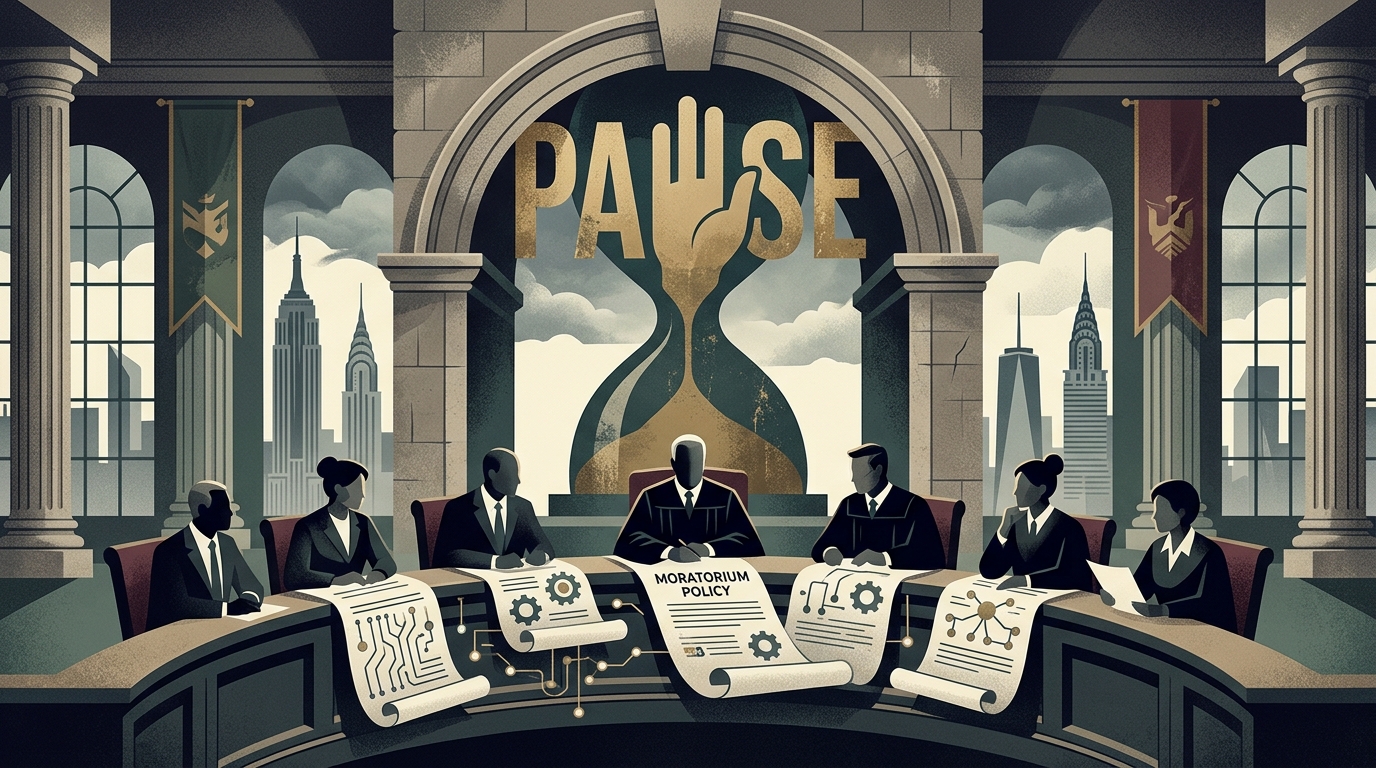
The history of legislation is filled with attempts to constrain concepts that are inherently fluid, but the case of Artificial Intelligence (AI) presents an unprecedented challenge. As we move into the latter half of 2026, the international community faces a paradox: everyone agrees that AI must be regulated, but no one can agree on exactly what it is we are regulating. This ambiguity is not merely an academic exercise; it is a regulatory time bomb affecting everything from billion-dollar investments to fundamental human rights.
A Clash of Regulatory Philosophies
At the heart of the issue lies the divergence between major economic blocs. The European Union, through its AI Act, attempted to provide an exhaustive definition, largely based on OECD guidelines. However, even this definition has faced criticism for being overly broad, risking the inclusion of simple statistical tools or software that has been in use for decades.
On the other hand, the United States follows a more functional approach. White House executive orders focus less on the ontology of AI and more on its impacts. For Washington, AI is often defined through the lens of computational power (compute) required to train a model. This creates a loophole: if a company manages to create an exceptionally powerful model using less compute, it could theoretically escape oversight, even though the risks remain the same.
The Moving Goalpost Problem
One reason governments struggle is the so-called "AI effect." As soon as a technology becomes widely understood and used daily, it ceases to be considered "artificial intelligence" and becomes just "software." Optical Character Recognition (OCR) or computer chess were once considered the cutting edge of AI; today they are seen as mundane applications. Lawmakers fear that if they define AI too narrowly, the law will be obsolete before the ink is dry. If they define it too broadly, they will stifle innovation in sectors that have nothing to do with the risks they are trying to prevent.
- Geopolitical Expediency: Some nations deliberately choose vague definitions to shield domestic industries from international sanctions.
- Technical Complexity: The distinction between an advanced machine learning algorithm and a traditional statistical model is often indistinguishable to non-experts.
- Economic Costs: Businesses face a compliance nightmare when they must adhere to different definitions in every jurisdiction.
Strategic Ambiguity as a Power Tool
Not all confusion is unintentional. On the global chessboard, the definition of AI is inextricably linked to export controls and national security. If China and the US cannot agree on a common definition for "autonomous weapons systems," it is because ambiguity allows both sides to develop technologies in a gray zone. The lack of consensus at the UN on this matter is not a technical failure, but a political choice.
"When we cannot name the beast, we can neither tame it nor protect it," state tech policy analysts.
The need for a "living definition" is becoming urgent. Experts suggest creating international technical bodies that would update definitions in real-time, rather than relying on static legislative texts. However, this requires a level of global trust that currently seems absent from the international stage. The result is a fragmented digital world, where the same technology can be considered "high risk" in Paris and "simple code" in Texas.