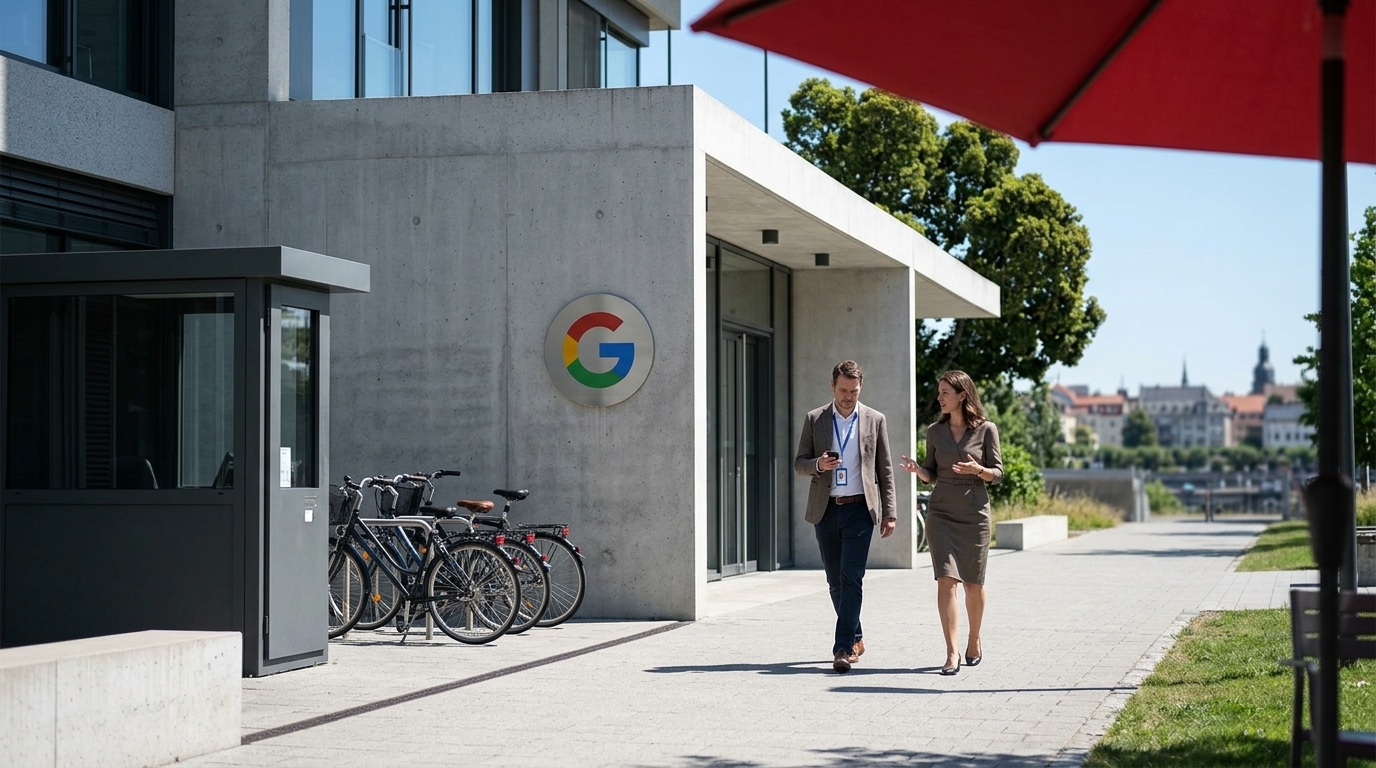
The long-standing confrontation between the European Union and Google is entering a new, critical phase that could redefine the continent's digital landscape. Against the backdrop of the strict enforcement of the Digital Markets Act (DMA), EU regulators are now pushing the tech giant to share its valuable search query data with smaller competitors and to allow third-party Artificial Intelligence (AI) systems to integrate deeply into the Android operating system. However, Google is striking back, using user privacy as its primary line of defense.
The Data Sharing Mandate and the Anonymity Dilemma
At the heart of the dispute is the EU's demand that Google provide access to search query data to rival search engines like DuckDuckGo and Ecosia. Brussels' goal is to break the "network effect" that allows Google to continuously improve its algorithms through a massive influx of data, making it nearly impossible for any new player to compete on equal terms.
Google, however, warns that even "anonymized" data can reveal user identities.
"Search queries are often as unique as a fingerprint,"a company executive stated. For example, a user searching for their own name combined with a rare medical condition or a specific location can easily be identified. Google argues that mandatory sharing of this data with third parties, who may not have the same rigorous security protocols, exposes millions of European citizens to the risk of "de-anonymization."
AI on Android: A New Backdoor?
The second aspect of the EU's pressure concerns Android, the world's most popular mobile operating system. As Google integrates Gemini—its advanced AI model—into every facet of the OS, regulators are demanding "interoperability." This means Google would have to allow competing LLMs (Large Language Models), such as OpenAI's ChatGPT or Anthropic's Claude, the same system-level access to hardware and data that Gemini enjoys.
Google's security engineers argue that this could create severe security vulnerabilities. Deep AI integration requires access to sensitive data, such as messages, calendars, and location, to be useful. If Google is forced to open these "silos" to third-party applications, it claims it can no longer guarantee the integrity of the device's Secure Element—the area where the user's most sensitive data is stored.
Political Expediency or Real Protection?
Critics of Google, however, view these warnings as fearmongering aimed at maintaining a monopoly. The European Commission argues that technological solutions, such as "differential privacy," exist to allow for the sharing of statistical data without revealing personal information. They accuse Google of using privacy as a "shield" to protect its advertising profits, which are built precisely on this data monopoly.
The situation is further complicated by the geopolitical context. With Europe striving to develop its own technological sovereignty, weakening American giants is seen by many in Brussels as a necessary condition for European startups to flourish. On the other hand, Washington is watching closely, with some U.S. officials speaking of "protectionism under the guise of regulation."
Conclusion: The Future of the Open Internet
The decision made in the coming months will determine whether the internet remains a collection of "walled gardens" controlled by a few companies or transforms into a more open, but perhaps less controlled, ecosystem. Google must prove that its concerns are technically grounded and not just legal maneuvers. At the same time, the EU must ensure that in its attempt to punish the monopoly, it does not sacrifice the data security of its own citizens.
The question remains: Can we have both competition and absolute privacy? The answer may not be ethical or political, but purely technical, and both sides seem far from a common consensus.