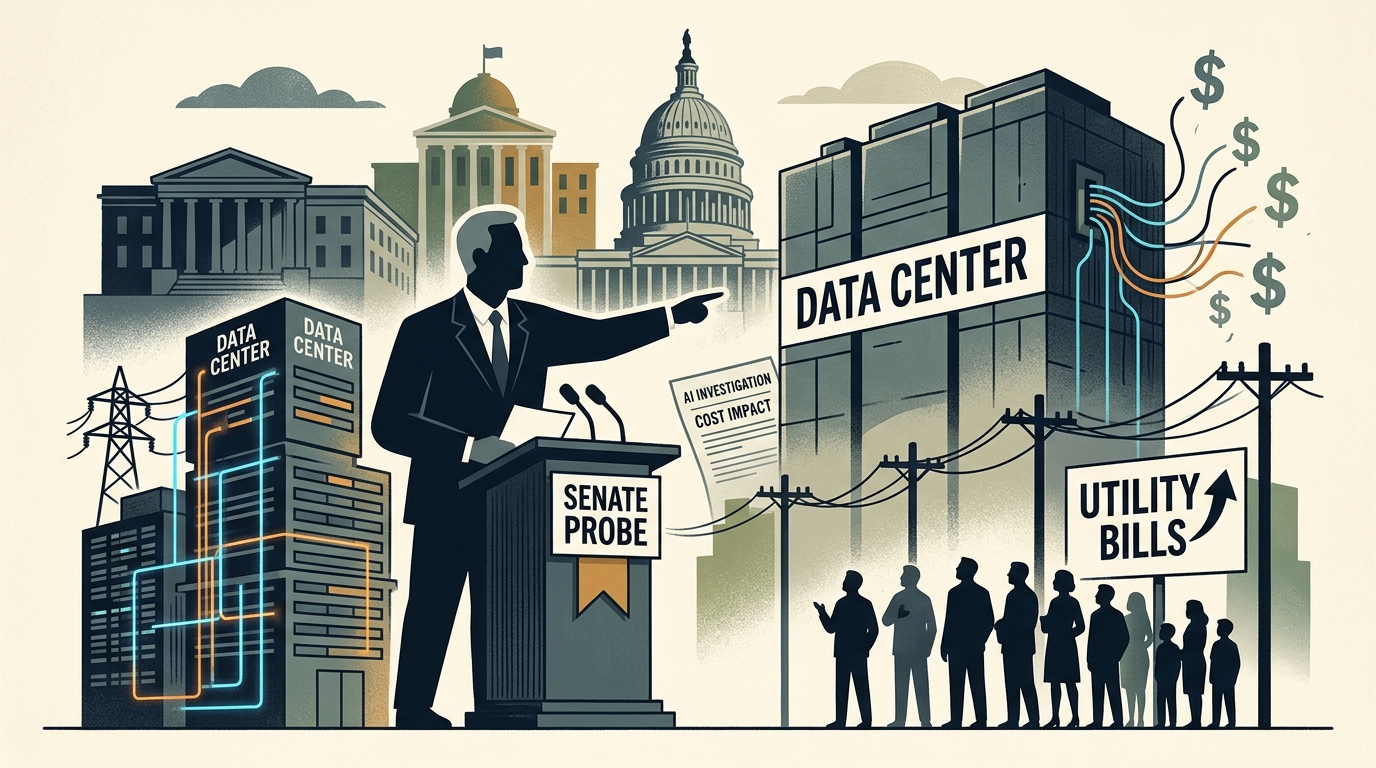
The state of Georgia has become a primary battleground for a conflict that is resonating globally: the tension between the exponential growth of Artificial Intelligence and the energy security of local communities. U.S. Senator Jon Ossoff has formally launched an investigation into the impact of AI data centers on residential electricity bills, raising a fundamental question for the modern era: Who truly pays for the digital revolution?
The Insatiable Appetite of AI
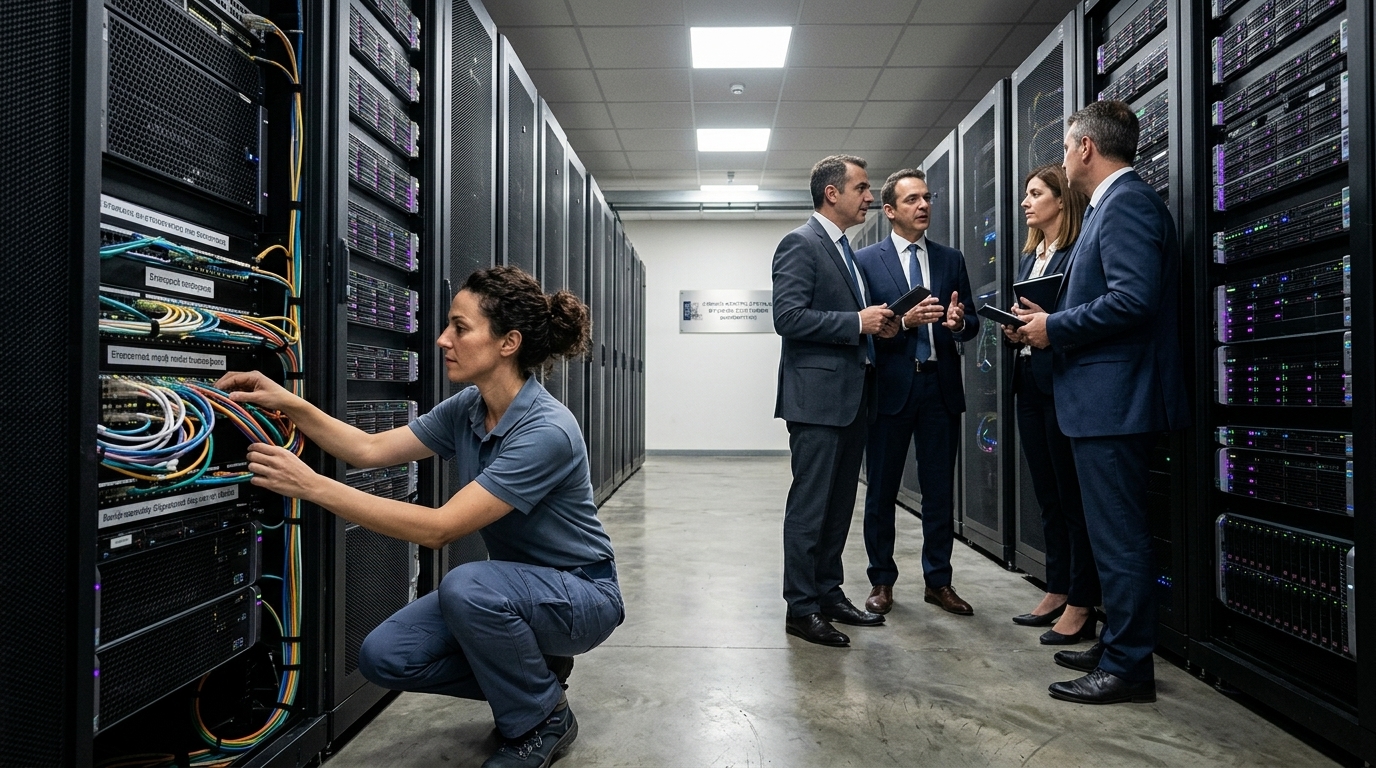
Artificial Intelligence is often discussed as an abstract entity living in the "cloud," but its reality is rooted in massive physical infrastructure. Data centers housing high-performance GPUs, like those from Nvidia, operate 24/7, consuming electricity at a scale that often rivals mid-sized cities. In Georgia, which has become a magnet for these facilities due to favorable tax policies and grid access, the demand for power has surged beyond all previous projections.
According to Ossoff’s probe, Georgia Power, the state’s primary utility provider, has repeatedly sought rate hikes to accommodate this "unforeseen" demand. The Senator argues that while Big Tech companies reap the rewards of the AI boom, everyday citizens are being asked to subsidize the necessary grid upgrades through their monthly utility bills. "It is not fair for Georgia families to bear the burden of the energy needs of multi-billion dollar corporations," Ossoff stated in his communication to utility regulators.
Social Equity and Energy Policy
The issue Ossoff is raising is not merely economic; it is a matter of social justice. At a time of persistent inflationary pressure, the rising cost of utilities is a major concern for households. The investigation will scrutinize the agreements between Georgia Power and data center operators, seeking evidence of whether industrial clients are paying their fair share for the infrastructure they necessitate.
- Billing Transparency: The probe demands full disclosure of load growth projections and cost-sharing models.
- Protecting Vulnerable Consumers: Assessing whether rate hikes disproportionately affect low-income residents.
- Incentives vs. Public Cost: Evaluating whether state-level tax breaks for data centers are ultimately detrimental to the public interest.
Critics point out that Georgia attracted these businesses with the promise of economic development, yet data centers are notorious for requiring very few permanent employees once construction is complete, while their energy footprint remains permanent and growing.
Environmental Impact and the Return to Fossil Fuels
Another alarming dimension of this surge is its impact on climate goals. To meet the voracious demand of AI data centers, many utilities are being forced to delay the retirement of coal plants or construct new natural gas facilities, stalling the transition to clean energy. Georgia, despite its significant investment in nuclear energy via the new Vogtle reactors, is struggling to balance the supply-demand equation without reverting to carbon-intensive sources.
"We are at a crossroads where the pursuit of technological supremacy is in direct conflict with environmental responsibility and the economic survival of the average citizen," says an energy analyst involved in the preliminary data review.
Conclusion: A Global Warning
Senator Ossoff’s move serves as a warning for the rest of the world. As Europe and Asia also scramble to build AI infrastructure, the model of subsidized energy for Big Tech is being challenged. Transparency, equitable cost distribution, and a requirement for tech giants to invest directly in renewable energy for their own needs appear to be the only sustainable path forward. Georgia may well be the first laboratory where the new social contract of the AI age is written, determining whether progress will benefit the many or be funded by them for the benefit of the few.