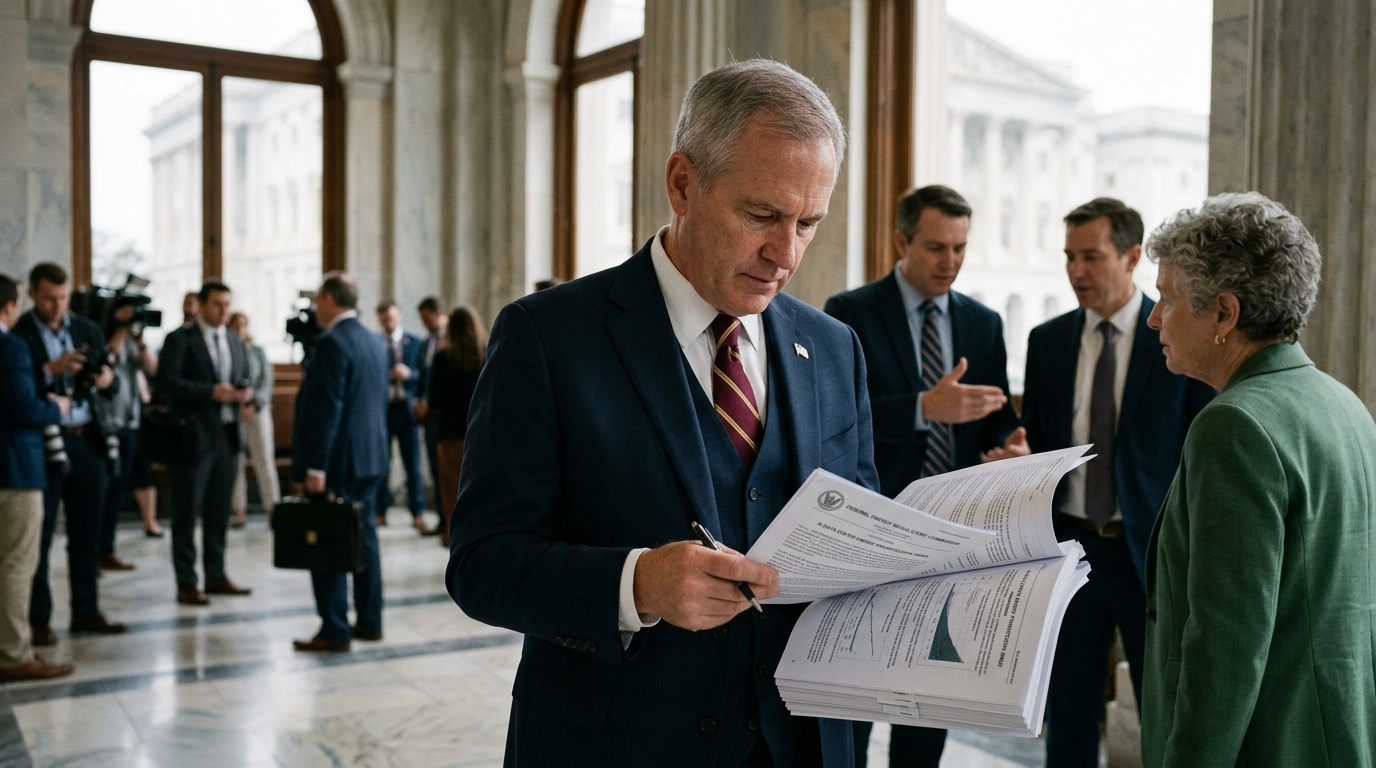
The AI era is no longer being defined solely in the research labs of Silicon Valley, but in electrical substations and high-voltage transmission lines. In a move that underscores the criticality of digital sovereignty, U.S. federal regulators have issued clear directives to grid operators: the delivery of power to the massive data centers fueling AI must be accelerated, bypassing years of bureaucratic red tape.
The Collision of Digital Ambition and Physical Constraints
For decades, electricity demand in developed economies remained relatively flat. However, the advent of Large Language Models (LLMs) and the mass adoption of generative AI have upended every forecast. A single request to an AI model consumes up to ten times more energy than a standard Google search. As tech giants like Microsoft, Google, and Amazon pour billions into new infrastructure, the U.S. electrical grid—an aging system designed for another era—is reaching its breaking point.
The new mandate from regulators, centered on the Federal Energy Regulatory Commission (FERC), aims to resolve the notorious "interconnection queue"—the waiting list for grid connection that exceeds five years in some states. Regulators argue that delaying the development of AI data centers poses a threat to national security and economic competitiveness. However, this decision is not without significant pushback.
The Cost of Speed: Who Pays the Bill?
The central question hovering over Washington and local governments is financial. Upgrading the grid to support data centers requires massive investments in transformers, cabling, and new power sources. Critics of the directive fear that these costs will be passed on to ordinary consumers through their utility bills, while the profits from AI remain in the pockets of Big Tech.
- Grid operators are being urged to adopt "cluster" models for connections, replacing the traditional "first-come, first-served" methodology.
- Pressure to utilize nuclear power and natural gas is mounting, as renewables often struggle to meet the 24/7 baseload requirements of data centers.
- There is profound concern regarding "energy equity," as industrial and residential areas may face shortages or price hikes due to the priority given to tech infrastructure.
"We cannot build a 21st-century economy on a 20th-century grid. Artificial Intelligence is the catalyst forcing us to modernize, but the transition must be equitable," a senior regulatory official stated.
The Environmental Paradox
While AI promises to find solutions for climate change through production optimization and the discovery of new materials, its very existence exacerbates the problem in the short term. The need for stable, reliable power is leading many tech companies to extend the life of coal plants or invest heavily in Small Modular Reactors (SMRs). The regulators' decision to fast-track processes may bypass certain environmental impact studies, drawing the ire of ecological organizations.
In this landscape, Europe and the rest of the world are watching closely. As nations vie to become regional data center hubs, energy management is emerging as a top-tier political issue. The balance between digital progress and the energy security of citizens will be the defining challenge of the coming years. The grid is no longer just infrastructure; it is the new frontline of the global tech race.