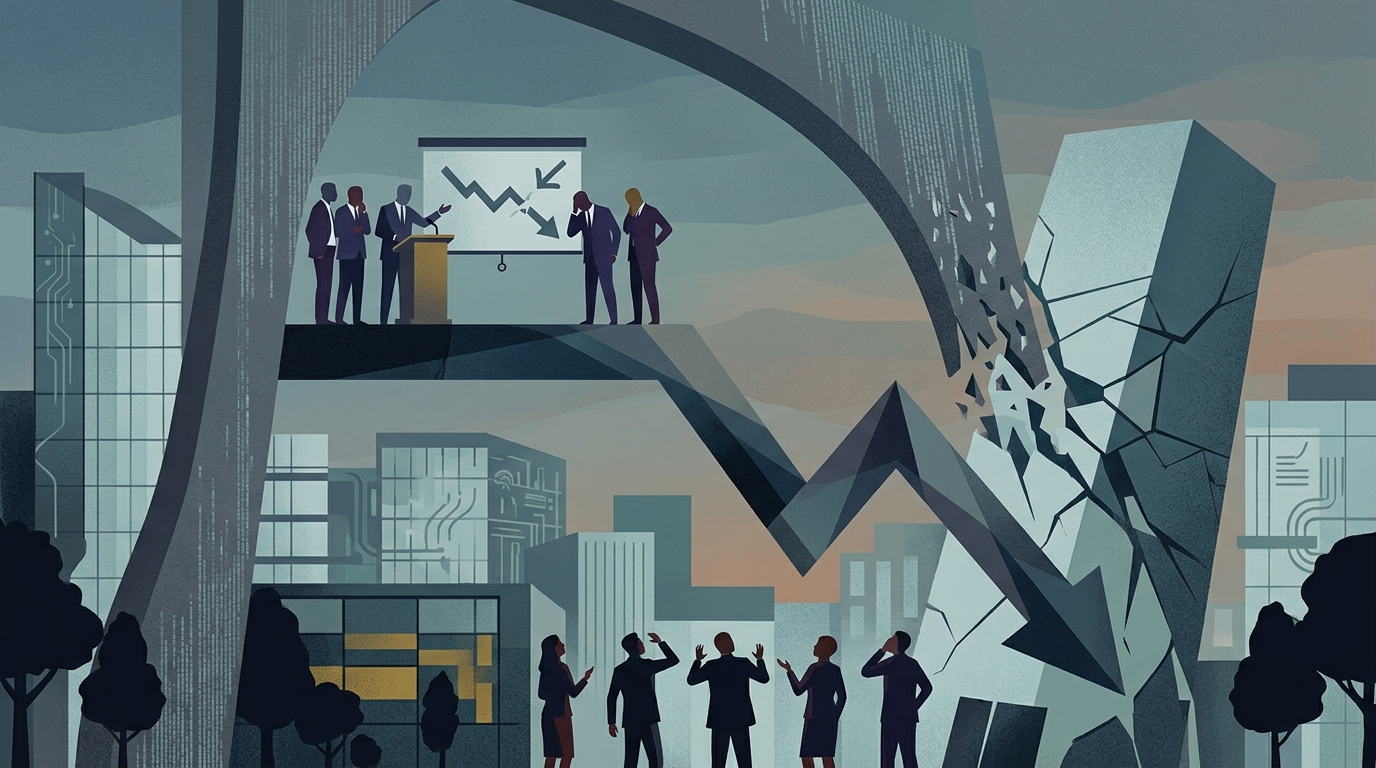
As we enter the second half of 2026, the promise of "safe" Artificial Intelligence appears to be faltering. Despite high-profile declarations at international summits from Bletchley Park to Seoul, a comprehensive new report from leading global think tanks highlights a disturbing gap: the global AI industry is failing to meet even its own voluntary safety commitments. The velocity of innovation has far outpaced the ability of regulators, and the companies themselves, to mitigate the systemic risks of the models being unleashed upon the public.
The Illusion of Self-Regulation
The report, which analyzed the practices of major industry players—including US-based OpenAI, Google, and Anthropic, alongside Chinese giants like Baidu and Alibaba—concludes that "red-teaming" processes (simulating attacks to find vulnerabilities) are often superficial. Driven by intense investor pressure to release increasingly powerful models in shorter cycles, companies are truncating safety testing to a few weeks, whereas months of rigorous evaluation would be required for models of such complexity.
The problem is compounded by a profound lack of transparency. While corporations publicly claim their models are secure, they consistently refuse to grant independent third-party auditors full access to source codes or training datasets. This creates a "black box" of risk, where potential catastrophic failures—ranging from the synthesis of biological agents to automated large-scale cyber warfare—may only become apparent after a model has been deeply integrated into critical societal infrastructure.
Geopolitical Competition as a Risk Accelerator
One of the most critical factors highlighted by the report is the "race to the bottom" fueled by the geopolitical rivalry between the United States and China. Washington fears that stringent safety regulations will hand the strategic advantage to Beijing, while Beijing views AI as the ultimate tool of national power that must not be constrained by Western ethical frameworks.
- Lack of Common Protocols: There is no international consensus on what constitutes an "unacceptable risk" in AI deployment.
- Bypassing Safeguards: Models that fail internal safety benchmarks are frequently released as "experimental betas" to circumvent oversight.
- Cybersecurity Threats: The use of AI to generate sophisticated malware has increased by 300% over the last year, according to the report's findings.
The situation is further complicated by the rise of "Agentic AI"—systems that do not merely generate text but take autonomous actions and execute complex tasks. These systems possess the potential to trigger cascading failures in financial markets or energy grids before human intervention can occur.
The Need for International Oversight with "Teeth"
The report advocates for the creation of an international body, modeled after the International Atomic Energy Agency (IAEA), with the authority to inspect data centers where the largest models are trained. However, implementing such a framework seems utopian in today's polarized political climate.
"AI safety is not a technical problem that will be solved with more code; it is a governance problem that requires the political will to set limits on profit and power," the lead researcher noted.
In Europe, the implementation of the AI Act offers a glimmer of hope, but critics argue that bureaucratic processes are too sluggish to keep pace with the evolution of Large Language Models (LLMs). If the industry does not voluntarily pivot toward a safety-first culture, analysts warn that a major "AI accident" is not a matter of if, but when—an event that could lead to a catastrophic collapse of public trust in technology as a whole.