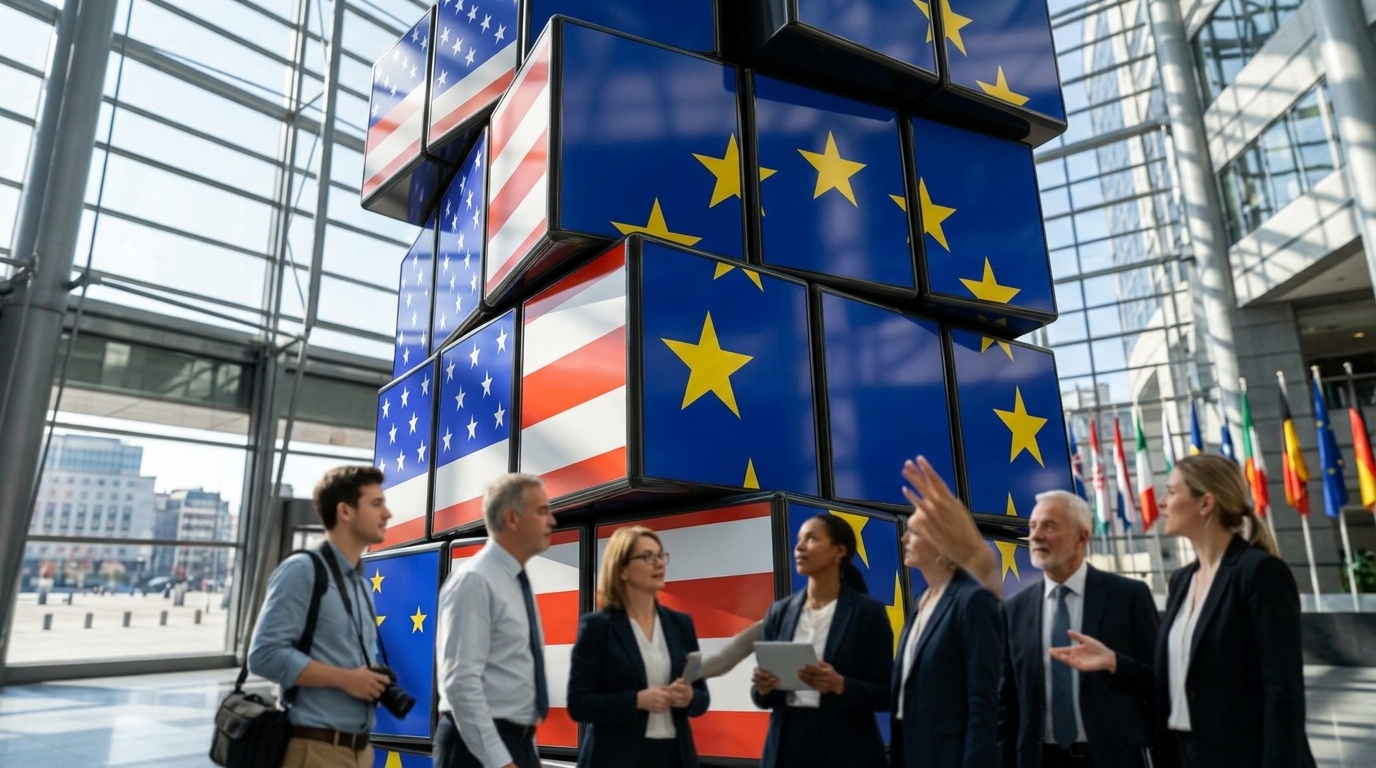
In a landmark session in Strasbourg, the European Parliament has granted its final approval to the new trade agreement between the European Union and the United States. This move, following months of arduous negotiations, is far more than a mere technical adjustment of tariffs; it represents a strategic realignment of the West's two most formidable economic blocs. At a time when the global geopolitical landscape is shifting rapidly, this agreement seeks to bolster economic resilience and diminish dependence on third-party powers, most notably China.
The Architecture of the Deal: Practical Changes
The core of the agreement focuses on the elimination of tariffs across a broad spectrum of industrial goods, ranging from heavy machinery to advanced electronic components. What makes it particularly significant is the inclusion of 'critical minerals'—a point of contention that arose following the passage of the U.S. Inflation Reduction Act (IRA). Under the new provisions, European firms engaged in the extraction and processing of materials like lithium and cobalt will gain access to U.S. subsidies, effectively leveling the playing field with American domestic industries.
Furthermore, the deal promises to slash bureaucratic red tape through mutual recognition of standards. For instance, a medical device manufacturer in Greece or Germany will no longer need to undergo double certifications to export products to the U.S., saving both time and millions of euros in operational costs. This regulatory convergence is often hailed as the 'holy grail' of international trade, as it lowers costs without compromising safety or quality standards.
Strategic Autonomy and the Technology Factor
One of the most vital chapters of the agreement concerns high-tech sectors and Artificial Intelligence. Both sides have agreed on a shared framework for data security and AI ethics, aiming to prevent market fragmentation. This is especially crucial for European startups, which often struggle to scale across the Atlantic due to divergent legal landscapes. The creation of a 'Western innovation ecosystem' is now the stated objective of both Brussels and Washington.
However, the agreement is not without its detractors. Agricultural sectors in countries like France and Greece have voiced concerns regarding the potential influx of American products that may not meet the EU's stringent pesticide regulations. Although the European Parliament has offered assurances that food standards remain non-negotiable, skepticism persists. Balancing free-market ideals with the protection of local producers will be the primary challenge over the next two years.
Geopolitical Implications: A Message to the East
Beyond the figures and tariffs, this approval sends a resounding political message. In an era where globalization is under fire and trade wars are becoming the norm, the EU and the U.S. have chosen the path of cooperation. The deal serves as a bulwark against China's growing economic influence, particularly in green technologies and semiconductors. 'De-risking' is now the official policy line, and the transatlantic alliance serves as the cornerstone of this strategy.
In conclusion, the European Parliament's approval is a victory for pragmatism over protectionism. While challenges remain—particularly regarding the implementation of specific clauses—the path toward a more integrated and resilient economic relationship is now clear. For the broader European economy, this translates into new opportunities for export-oriented businesses and increased interest from U.S. investors in sectors such as energy and digital infrastructure.