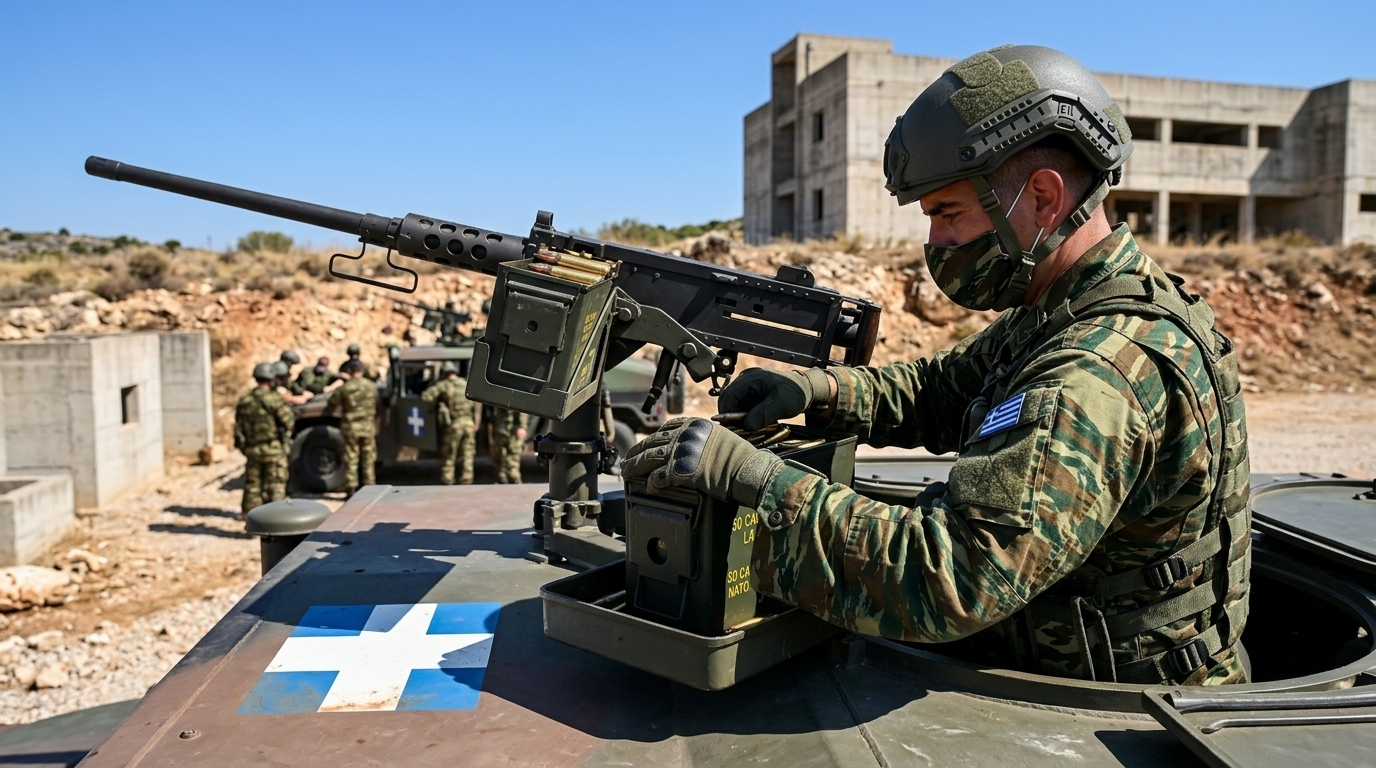
In an era where Europe's geopolitical tectonic plates are shifting violently, Greece has managed to secure a critical financial "breather" for its armament program. The announcement of the country's inclusion in the European SAFE (Security and Armed Forces Enhancement) financing tool with an amount of €700 million is not merely an accounting entry; it is a clear indication of the maturation of European defense strategy. For the first time, Greece—a country that traditionally invests disproportionately large percentages of its GDP in defense due to its geographical location—is seeing the European Union assume part of this burden through common financing schemes.
The Strategic Significance of the SAFE Program
The SAFE program was created in response to Europe's need to achieve "strategic autonomy." After decades of reliance on the US protective umbrella, the EU decided to invest in its own tools that would allow member states to modernize their armed forces with common specifications. The €700 million allocated to Greece is intended for upgrading systems that enhance deterrent power on the Union's eastern borders, indirectly recognizing that Greek security is an integral part of European stability.
This funding is not a "blank check." It comes with strict conditions regarding the European added value of the equipment. This means that expenditures must be directed toward programs that promote interoperability between European armies. For Athens, this represents an opportunity to break free from the vicious cycle of purely national expenditures and integrate into broader supply chains of the European defense industry.
Fiscal Space and National Defense
From an economic perspective, joining SAFE acts as a pressure relief valve. Greece, despite exiting the memoranda and regaining investment grade status, remains under the watchful eye of the markets regarding its public debt. Defense spending, which often exceeds 3% of GDP, has always been a "thorn" in negotiations with Brussels over primary surpluses. With the €700 million from SAFE, the government gains the necessary fiscal space to fund other social needs without undermining the country's defense shield.
- Strengthening cyber defense and surveillance systems.
- Upgrading logistical infrastructure on the Aegean islands.
- Participation in joint European drone development programs.
- Training personnel in new AI technologies for the battlefield.
Furthermore, this move sends a message to allies and neighbors: Greek defense is no longer a solitary path but a collective European investment. Legitimizing these expenditures through a European program also shields Greece politically against those who question the necessity of its armament programs.
Challenges for the Domestic Defense Industry
However, the big question remains the participation of the Greek defense industry. The €700 million could act as a catalyst for the revitalization of companies like HAI (Hellenic Aerospace Industry) or ELVO, provided there is a clear strategic plan. Europe demands collaborations. Greece can no longer operate as a mere buyer of "off-the-shelf" weapon systems. It must become a co-creator.
"Europe's security begins at Greece's borders. The SAFE program is the practical recognition that defense is a public good that must be funded collectively," sources from the Ministry of National Defense state.
In conclusion, the inclusion in SAFE is a victory for Greek diplomacy and a necessary adjustment to the new reality. In a world that is becoming increasingly unpredictable, transforming defense spending from a national burden into a European investment is the only path to sustainable security. The challenge now lies in the effective absorption of these resources and their conversion into real power in the field.