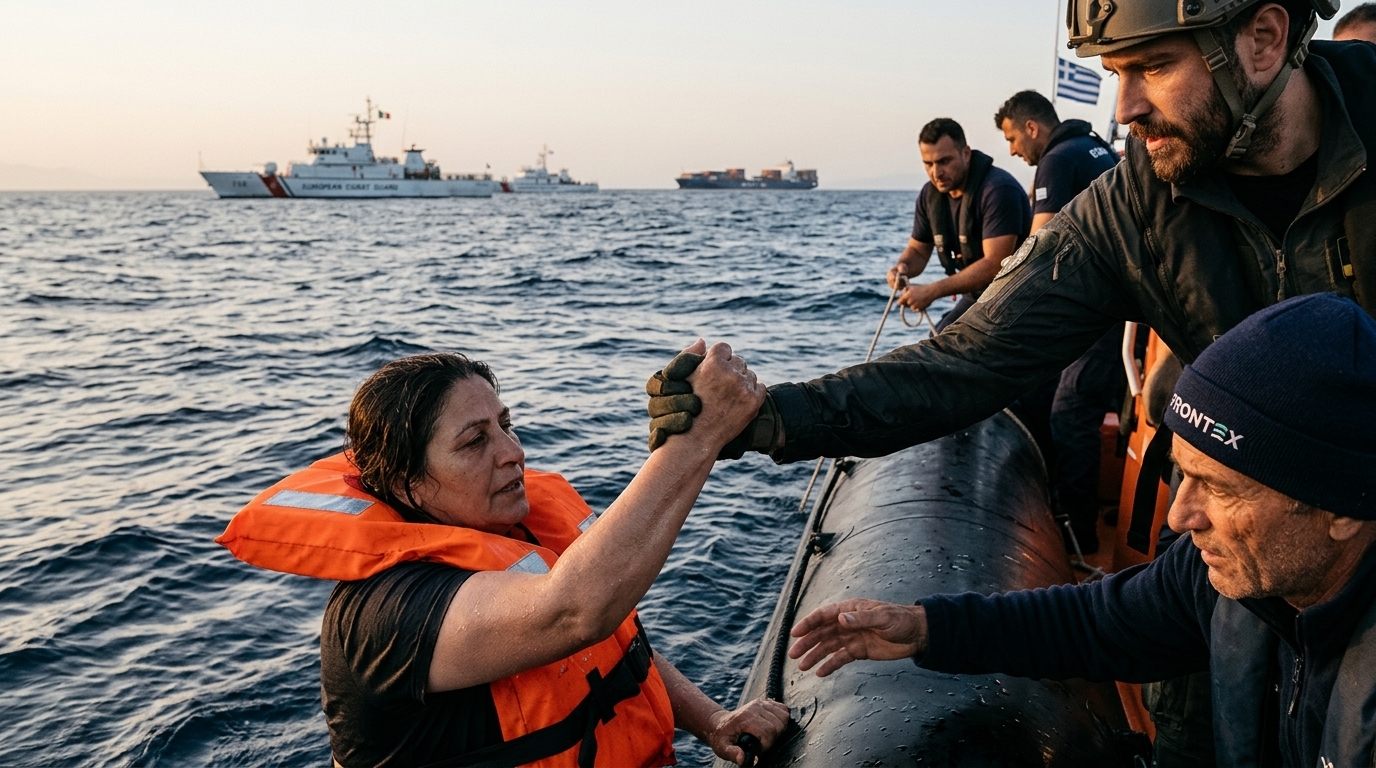
Today, Friday, June 12, 2026, marks one of the most pivotal moments in the history of European integration and common foreign policy. After years of grueling negotiations, political standoffs, and humanitarian crises, the New Pact on Migration and Asylum is officially entering into full force across the European Union. This legislative package aims to replace the long-obsolete 'Dublin' system, which for decades trapped frontline states like Greece, Italy, and Spain in a cycle of disproportionate responsibility.
The new framework is not merely a technical adjustment; it is Europe’s attempt to prove it can collectively manage one of the most divisive issues of our era. Its implementation begins in a geopolitical environment of heightened instability, where migratory flows are frequently used as tools of hybrid warfare, making a unified stance more urgent than ever. However, the transition from theory to practice raises critical questions about the effectiveness of the new mechanisms and the moral footprint of 'Fortress Europe'.
The Five Pillars of the New Architecture
The Pact is built upon five central regulations that reshape an asylum seeker's journey from the moment they set foot on European soil. The first is the Screening Regulation, which mandates rigorous identification, health, and security checks within seven days of arrival. The objective is the immediate categorization of those who need protection versus those deemed unlikely to receive asylum.
Next is the upgraded Eurodac database, which will now include not only fingerprints but also facial images, allowing for the tracking of movements within the EU and the prevention of 'secondary movements.' The Asylum Procedure Regulation introduces the concept of the 'border procedure,' an expedited method for processing applicants from countries with low recognition rates. This process must be completed within 12 weeks, during which applicants will remain in controlled facilities near the borders.
The fourth pillar, the Asylum and Migration Management Regulation, introduces the long-awaited 'mandatory solidarity' mechanism. For the first time, member states not under pressure are legally required to assist frontline countries, either through relocations or financial contributions. Finally, the Crisis Regulation provides for emergency measures in cases of mass arrivals or the instrumentalization of migrants by third countries.
'Mandatory Solidarity' and the Price of Non-Participation
The most controversial aspect of the Pact remains how the EU will ensure the burden does not fall solely on the South. The solidarity mechanism sets a minimum target of 30,000 relocations per year EU-wide. If a member state refuses to accept its allocated number of refugees, it must pay a contribution of approximately €20,000 for each person it rejects. These funds will be directed into a common fund for border management and infrastructure enhancement.
For Greece, this is a double-edged sword. On one hand, the need for assistance is institutionally recognized. On the other, there is a lingering fear that wealthy Northern nations will prefer to 'buy their way out' of their obligations, leaving frontline states to act as permanent jailers of Europe. Critics argue that solidarity is becoming transactional, reducing the humanitarian dimension of seeking refuge to a mere accounting exercise.
Human Rights and the Implementation Challenge
Humanitarian organizations and many MEPs from the Left and the Greens have expressed serious reservations. The expansion of border procedures could lead to the de facto detention of large numbers of people, including families with children, in prison-like conditions. The speed of the procedures also raises concerns about the quality of legal aid and the right to a fair trial.
Furthermore, the concept of a 'safe third country' is being expanded, facilitating the return of migrants to transit states. This could lead to a chain of pushbacks that violate international law. The success of the Pact will be judged in practice: will Europe manage to protect its borders without sacrificing the Enlightenment and humanitarian values that form its core? The answer will be written in the reception centers of Lesvos, Lampedusa, and the Canary Islands in the coming months.