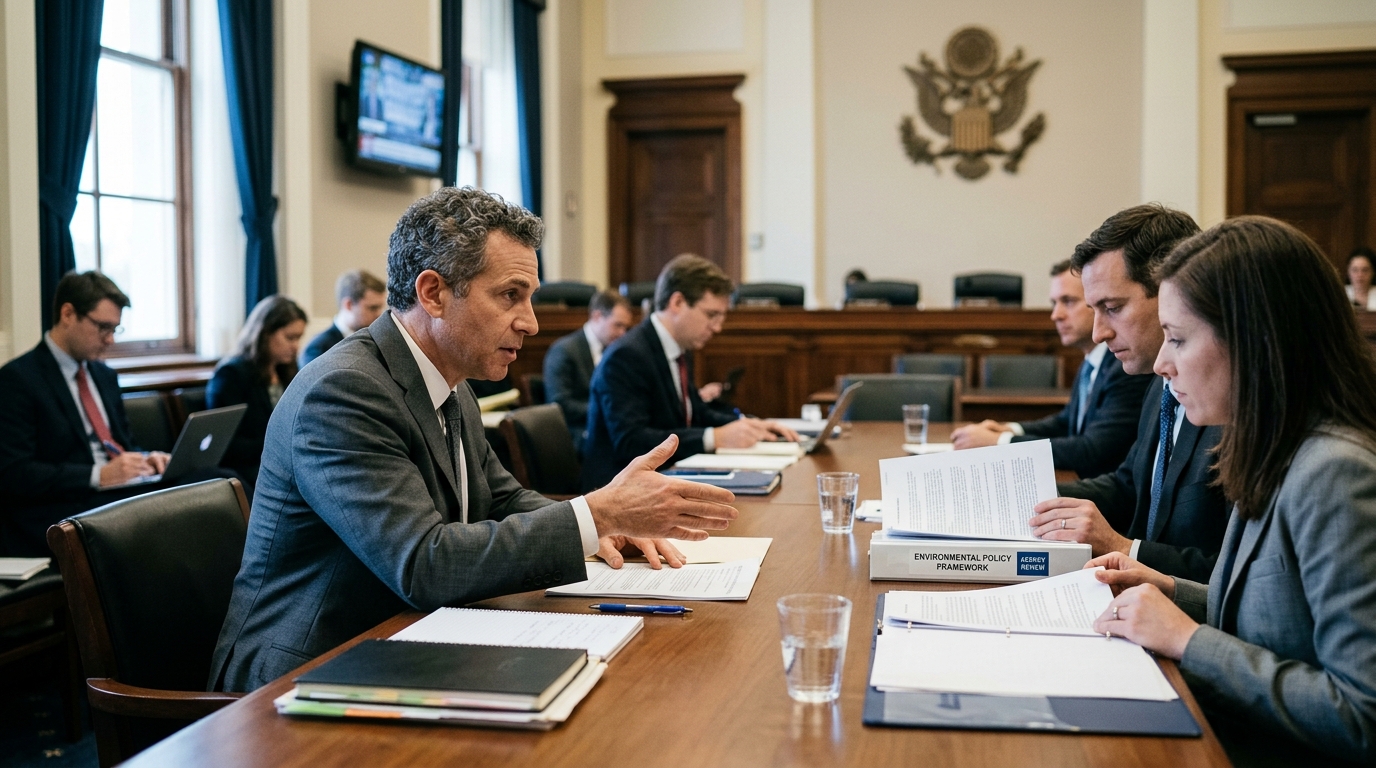
In an era where the climate crisis demands both unprecedented speed and surgical precision, the U.S. Environmental Protection Agency (EPA) has decided to deploy its most potent technological weapon: Artificial Intelligence. According to recent reports and executive briefings, the agency is piloting AI projects across "everything"—from analyzing satellite imagery for air quality monitoring to processing the mountain of public comments that accompany every new regulatory proposal. However, this rapid integration comes with a critical caveat: final accountability for high-level decisions must remain firmly in human hands.
The Strategy of "Universal Adoption"
The EPA does not view Artificial Intelligence merely as a back-office automation tool; it sees it as a force multiplier for its scientific mission. By processing vast amounts of environmental data collected from sensors across the United States, AI can identify pollution patterns that might elude human scrutiny. For instance, machine learning algorithms are now being utilized to predict contamination hotspots in groundwater, allowing the agency to shift from a reactive to a proactive stance in enforcement and remediation.
Furthermore, the implementation of Large Language Models (LLMs) has revolutionized how the EPA manages its administrative burden. During the rulemaking process, the agency often receives hundreds of thousands of comments from citizens, NGOs, and industry groups. AI can categorize, sentiment-analyze, and summarize these diverse viewpoints in a fraction of the time it previously took specialized staff, effectively accelerating a process that used to span years.
The "Human-in-the-Loop" and Machine Limitations
Despite the palpable excitement, the EPA’s leadership remains cautious. The "human-in-the-loop" doctrine is not just an ethical preference; it is a legal and scientific necessity. AI, regardless of its sophistication in 2026, remains prone to "hallucinations" and biases inherent in its training data. In matters concerning public health and environmental justice, an algorithmic error could lead to catastrophic real-world consequences, such as failing to identify toxic levels in a localized water supply.
Experts argue that while AI can suggest optimal solutions based on historical data, it cannot weigh the complex political, social, and ethical dimensions of a policy decision. For example, setting emission limits for a specific industry requires a delicate balance between environmental protection and the economic viability of a community. This value-based judgment is a profoundly human function that no machine can fully replicate or be held legally accountable for.
Challenges and the Need for New Skillsets
The transition toward an "AI-first" EPA also necessitates a radical overhaul of its workforce. The agency is investing heavily in retraining its scientists and policy analysts so they can not only utilize AI tools but also critically challenge their outputs. "Algorithmic literacy" is becoming as vital as a degree in chemistry or biology for an environmental inspector in the current landscape.
- Training staff to detect and mitigate algorithmic bias and errors.
- Ensuring transparency in the models used to justify public policy.
- Establishing rigorous verification protocols for data fed into AI systems.
In conclusion, the EPA stands at the vanguard of a global trend where government agencies strive to modernize through technology. The success of this endeavor will be measured by whether AI remains a reliable assistant or evolves into a "black box" that obscures responsibility and accountability. In the urgent battle to preserve the planet, technology is an indispensable ally, but human wisdom remains the final line of defense.