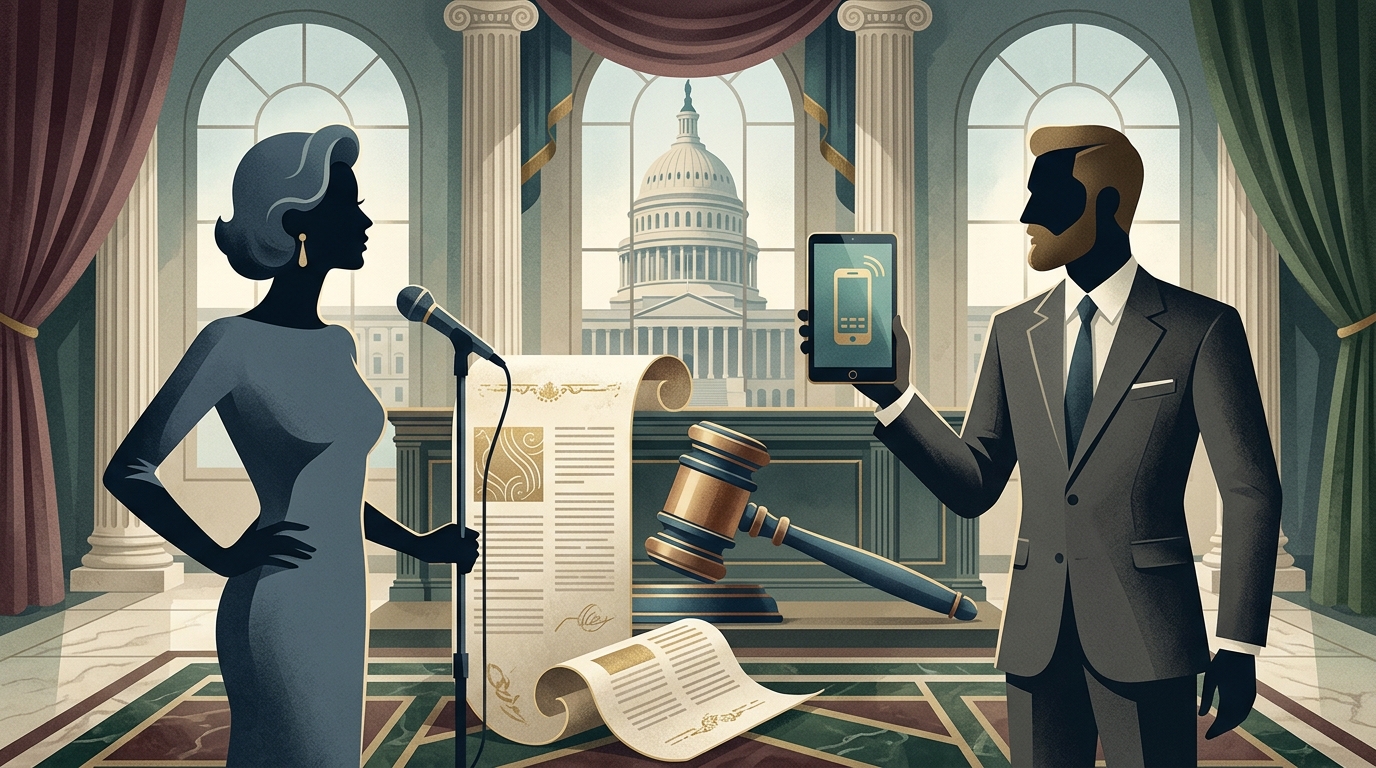
In the glitzy yet ruthless world of global entertainment, an artist's image is not merely a photograph; it is a high-value asset, meticulously cultivated and fiercely protected. The recent news of Dua Lipa's lawsuit against Samsung Electronics in California, seeking $15 million in damages, highlights the clash between corporate technological dominance and individual intellectual property rights. This case is not just a 'misunderstanding' over a photo; it touches upon the core of how multinational corporations leverage celebrity status to lend prestige to their products, often bypassing legal channels.
The Timeline of the Dispute and the Legal Filing
According to documents filed in a U.S. federal court, Dua Lipa alleges that Samsung used her likeness without permission to promote its 'The Frame' television series and other QLED models. The specific photograph, reportedly taken during a high-profile public appearance (likely the Met Gala), was featured on product packaging sold worldwide. The singer's legal team argues that this usage creates a false impression among consumers that the artist is an official brand ambassador, which is factually incorrect.
The lawsuit is built on three primary pillars: the violation of the 'Right of Publicity,' a breach of the Lanham Act regarding false endorsement, and unfair competition. The 'Right of Publicity' is a particularly potent legal mechanism in California, allowing public figures to control the commercial exploitation of their name, voice, and likeness. For an artist of Dua Lipa's magnitude, such a partnership would command an eight-figure fee, and Samsung is accused of attempting to reap this value for free.
The Value of Likeness in the Digital Economy
But why $15 million? The answer lies in Samsung's branding strategy. 'The Frame' series is designed to look like a piece of art when turned off. Linking the product to one of the most influential and aesthetically pioneering artists of our generation is no accident. Dua Lipa's presence on TV boxes in retail aisles from London to Seoul provides immediate visual validation of the product's 'modern' and 'premium' identity.
- The market value of an official Dua Lipa campaign is estimated in the tens of millions.
- The use of her image on a global scale multiplies the perceived damages suffered by the artist.
- The infringement is characterized as 'willful' by her attorneys, given that a company of Samsung's scale possesses extensive legal compliance departments for marketing.
"Samsung misappropriated the plaintiff's global recognition to sell televisions, violating fundamental rules of intellectual property and commercial ethics," the filing states.
Legal Precedents and the Tech Giant's Defense
This is not the first time Samsung or other tech giants have faced similar accusations. Often, companies argue they obtained a license for the photo from the photographer or the agency holding the copyright. However, there is a crucial legal distinction: a photographer's right to sell an image for editorial use is fundamentally different from a company's right to use the subject's face for commercial endorsement. Dua Lipa never sold her 'face' to Samsung.
This case is expected to serve as a benchmark for the industry. In an age where content is produced and distributed at the speed of light, protecting personal identity becomes increasingly complex. If Dua Lipa prevails, it will send a powerful message that the 'digital gods' of tech are not above the law when it comes to exploiting human likeness. Conversely, Samsung may seek an out-of-court settlement to avoid negative publicity and a potential court ruling that could set a dangerous (for them) precedent.
Conclusion: The Battle for Self-Sovereignty
In conclusion, this dispute underscores a deeper truth of our era: our data and our likeness are the new 'oil.' When an artist like Dua Lipa fights for $15 million, she is not just fighting for the money, but for the control of her own narrative. In the digital arena, where algorithms and multinationals often view everything as 'sharable content,' asserting ownership of oneself is the most significant political and legal act.