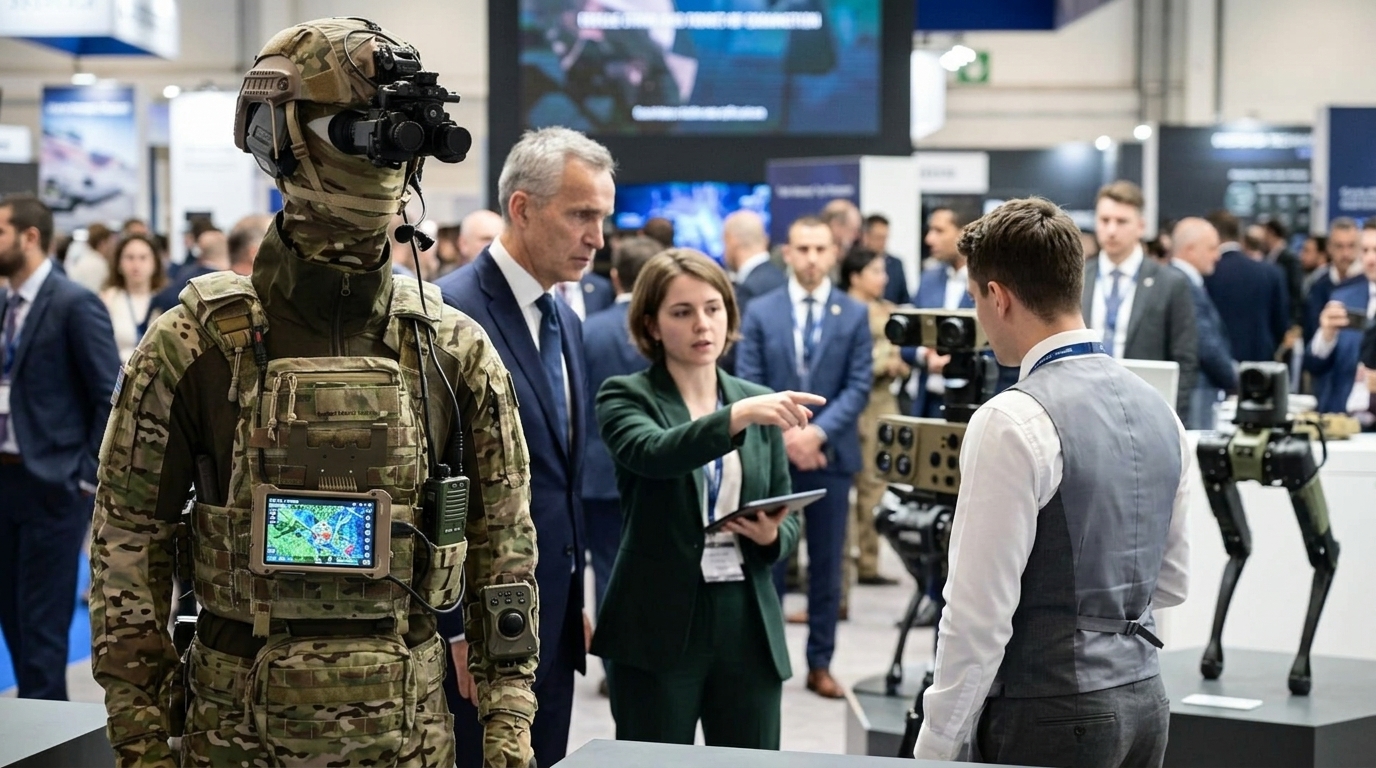
The geopolitical instability of recent years, peaking with conflicts on Europe's doorstep, has forced the European Union to abandon its traditional reluctance toward military spending. Today, the focus is no longer solely on heavy weaponry, but on technological superiority. 'Dual-use' technologies—those with applications in both civilian life and the battlefield—are now at the heart of a new, aggressive investment strategy from Brussels and member states.
Defining Dual-Use and Its Strategic Importance
Dual-use technologies encompass a wide range of innovations, from artificial intelligence and quantum computing to advanced materials and autonomous navigation systems. Their advantage is twofold: on one hand, they enhance a country's defense capabilities, and on the other, they fuel economic growth through commercial applications. For instance, an algorithm developed to detect anomalies in satellite imagery can be used just as effectively for monitoring climate change or identifying enemy movements on the front line.
This shift marks the end of an era where the defense industry operated in isolation. Now, the European Defence Fund (EDF) and the European Investment Bank (EIB) are working closely to fund startups and research centers that would traditionally avoid the military sector. In fact, the EIB recently changed its mandate to allow the financing of defense-related projects, provided they also have a civilian dimension.
Financial Instruments and Strategic Autonomy
The European Commission has made it clear that 'strategic autonomy' is not just a slogan but an economic necessity. Through the ASAP (Act in Support of Ammunition Production) and EDIRPA (European Defence Industry Reinforcement through common Procurement Act) programs, the EU is attempting to unify its fragmented defense market. However, the real revolution is happening in the innovation sector. The NATO Innovation Fund (NIF), the world's first multi-sovereign venture capital fund, is investing €1 billion in cutting-edge technologies that will shape the future of security.
- Artificial Intelligence for real-time decision-making.
- Cybersecurity for the protection of critical infrastructure.
- Space technologies for secure telecommunications.
- Robotics and autonomous systems (drones).
These investments are not just about survival on the battlefield; they are about dominance in the global technology market. Europe realizes that if it does not develop its own solutions, it will remain dependent on the US or, worse, find itself exposed to technological challenges from China.
Opportunities and the Road Ahead
For many European nations, including those in the Mediterranean, this shift offers unique opportunities. The growth of startups specializing in IT, drones, and cybersecurity is creating a new ecosystem. Participation in European Defence Fund consortia has already begun to bear fruit, bringing millions of euros in research funding. Furthermore, the integration of commercial tech into defense procurement is lowering the barrier to entry for innovative SMEs.
"Investing in defense is no longer a sunk cost, but a driver of innovation that diffuses throughout the entire economy," say market analysts.
In conclusion, dual-use technologies represent the bridge between the need for security and the pursuit of prosperity. Europe, albeit late, seems to understand that power in the 21st century is measured not only by the number of soldiers but by the speed of processors and the intelligence of algorithms. The challenge now lies in ensuring these investments lead to a cohesive and resilient European defense architecture.