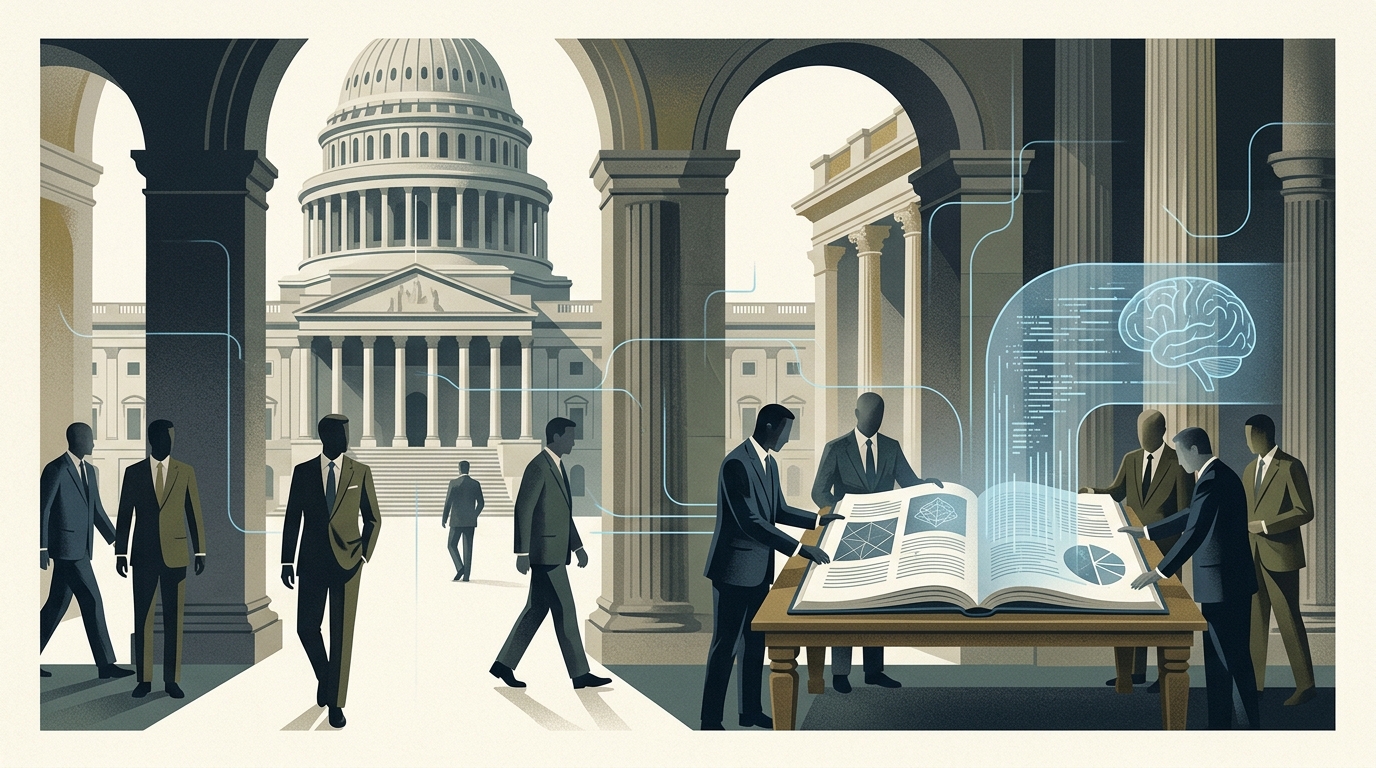
In an era where technological prowess is synonymous with national sovereignty, China is embarking on a strategic pivot reminiscent of the great industrial mobilizations of the past, but with its gaze fixed firmly on the future of algorithms. Beijing's recent pledge to bolster support for Artificial Intelligence (AI) and advanced computing is not merely an economic update; it is a declaration of digital independence. As the United States and its allies tighten export controls on critical components, such as Nvidia’s high-end GPUs, China is responding by constructing a parallel, domestic ecosystem.
The Doctrine of Technological Self-Reliance
The concept of "self-reliance" (zili gengsheng) has deep roots in Chinese political thought, but today it is acquiring a new, digital dimension. The Chinese state, through the Ministry of Industry and Information Technology (MIIT), has prioritized the development of "New Quality Productive Forces." This translates into a coordinated effort to replace every critical link in the Western technological chain—from chip design and lithography to operating systems and Large Language Models (LLMs).
This strategy is not based solely on subsidies. It is a comprehensive market restructuring where state-owned enterprises and national champions like Huawei and Baidu are called upon to lead innovation. China recognizes that dependence on foreign AI foundations is a strategic vulnerability. If the models of the future are trained on Western values and run on Western hardware, China risks being "digitally colonized."
The Semiconductor Battle and Computing Power
The greatest obstacle in China's path remains hardware. Without access to the most advanced 3nm or 2nm processors, Chinese firms are forced to get creative. The new policy emphasizes "computing power as a public utility," creating massive national data centers that allow small and medium-sized enterprises to access AI resources without needing to purchase their own GPUs, which are scarce due to the embargo.
Simultaneously, we are seeing a shift toward the RISC-V architecture, an open-source alternative to Western ARM and x86 technologies. China is investing billions to ensure that the next generation of processors can be manufactured entirely within its borders, utilizing older but optimized lithography methods. It is a race against time and the physical limitations of silicon.
Regulatory Frameworks and Ethics with "Chinese Characteristics"
While the West debates AI safety in terms of existential risk, Beijing focuses on social stability and alignment with state values. New guidelines require AI models to "reflect core socialist values" and not undermine national unity. This creates a unique challenge: how can you have a highly creative and intelligent AI that is simultaneously strictly censored?
China's answer lies in specialization. Instead of general-purpose models that know everything, Beijing is promoting "Industrial AI." These are systems optimized for manufacturing, port management, precision agriculture, and smart cities. In these domains, ideological correctness is less complex than in the social sciences, allowing Chinese AI to bear fruit in the real economy.
Conclusions and Global Implications
China's move toward technological autarky will have profound implications for the global market. First, it will lead to a "digital bipolarity," where countries may have to choose between the American and Chinese technological ecosystems. Second, massive state funding may lead to overcapacity in certain sectors, sparking new trade frictions with Europe and the US.
The stakes for Beijing are high. If it succeeds, China will have proven that a state-directed model can outpace the free market in the most critical technology of the 21st century. If it fails, its economy risks being trapped in technological stagnation, far from the frontiers of global innovation. What is certain is that the era of globalized technology, as we knew it, has come to a definitive end.