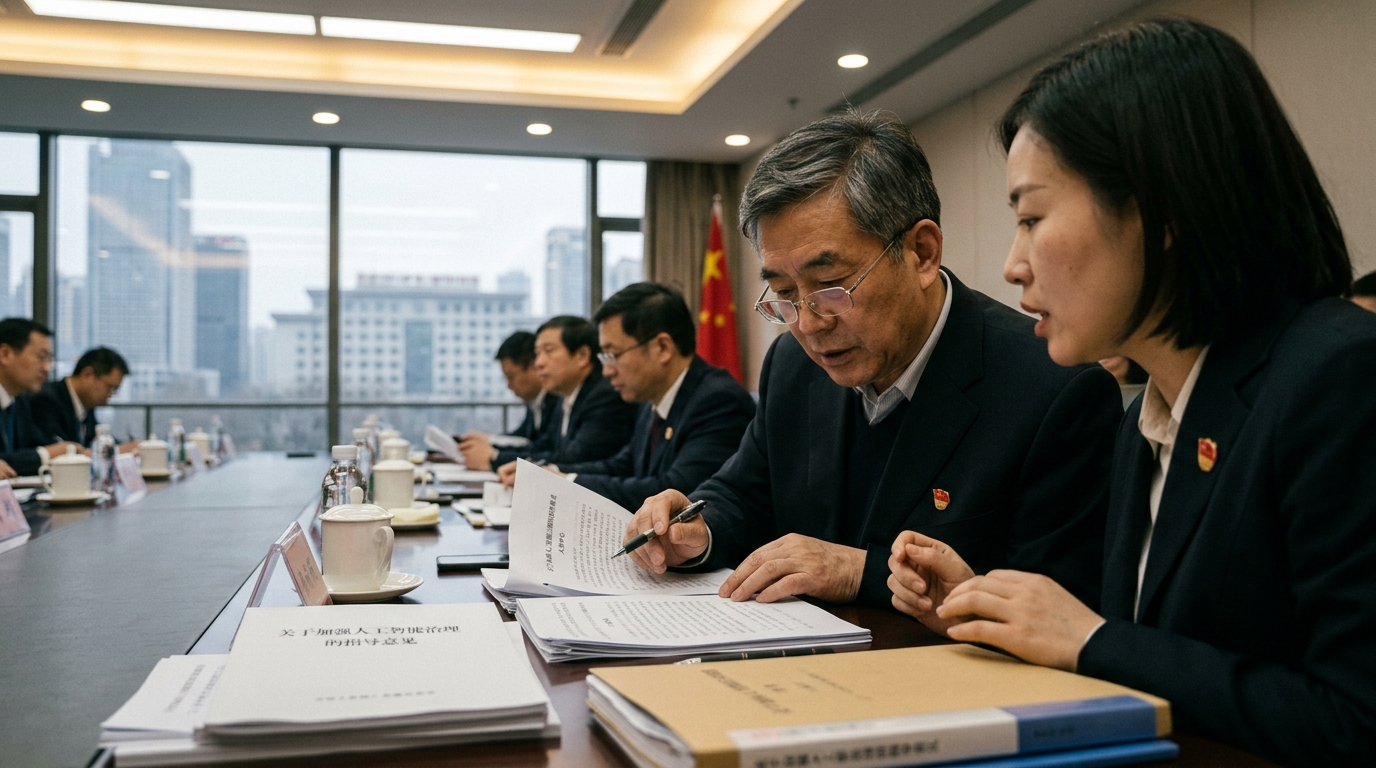
In the heart of a global arms race that is no longer just about raw computing power but also about the ethical framework of its operation, China has moved forward with the publication of a new, ambitious set of guidelines for Artificial Intelligence (AI). Centered on a "human-centric approach," Beijing is attempting to redefine the relationship between the state, technology, and the citizen, at a time when international pressure to regulate algorithms is intensifying. This move, as originally reported by China Daily, is not merely a technical directive but a strategic statement of intent on how the world's second-largest economy envisions the digital future.
Humans as Regulators, Not Objects
The new guidelines focus on the necessity for AI to serve the public interest and protect the fundamental rights of users. According to the text, the development of AI models must be governed by principles of transparency, fairness, and accountability. This means that tech companies are now called upon to ensure that their algorithms do not reinforce discrimination and do not violate the privacy of citizens. The emphasis on "human-centricity" suggests a shift toward protecting the individual from the arbitrariness of automated decision-making systems, an issue that has sparked strong reactions in Chinese society in recent years, particularly in the areas of labor relations and service distribution.
However, the concept of human-centricity in China carries a specific political nuance. While in the West the emphasis is often on individual liberty, in the Chinese context, AI must align with the "common values of humanity" and, simultaneously, with social harmony and stability. This implies that AI systems must be designed to prevent the spread of misinformation that could disrupt social order. The challenge for Chinese developers is now twofold: to innovate technologically while remaining within the strict confines of an ethical and political framework that demands constant oversight.
Technology Diplomacy and International Competition
The release of these guidelines is also a calculated move on the international chessboard. China seeks to take a leading role in shaping global standards for AI, directly competing with the European Union’s AI Act and United States executive orders. By presenting a comprehensive framework that speaks the language of ethics and human rights, Beijing is attempting to convince the rest of the world—and particularly the Global South—that its own model of technology governance is more balanced and secure.
Analysts point out that China wants to avoid the image of a "digital dystopia" often attributed to it in the West. By adopting terms like "human-centric," Beijing is sending a message to international markets that Chinese AI is reliable for global use. This is crucial for technology exports, as Chinese giants like Baidu, Alibaba, and Tencent seek outlets in new markets amidst US-imposed restrictions on semiconductor and advanced technology exports.
Implementation Challenges: From Theory to Practice
Despite the ambitious declarations, the implementation of these guidelines faces significant hurdles. The first is the technical gap: how can one guarantee "human-centricity" in a "black box" model where internal processes are opaque even to their creators? Chinese authorities now require companies to submit their algorithms for security assessments, a process that is time-consuming and could delay the release of new products.
Furthermore, there is an inherent contradiction between the need for massive amounts of data to train AI and the need for privacy protection. The new directives call for stricter control over data collection, which could act as a brake on the development of large language models (LLMs) that compete with GPT-4 or Claude. Balancing the assurance of ethical operation with maintaining competitiveness against Silicon Valley will be the greatest test for the Chinese tech industry in the coming years. In conclusion, human-centric AI in China is an ongoing experiment that will determine not only the country's future but also the global direction of technological evolution.