

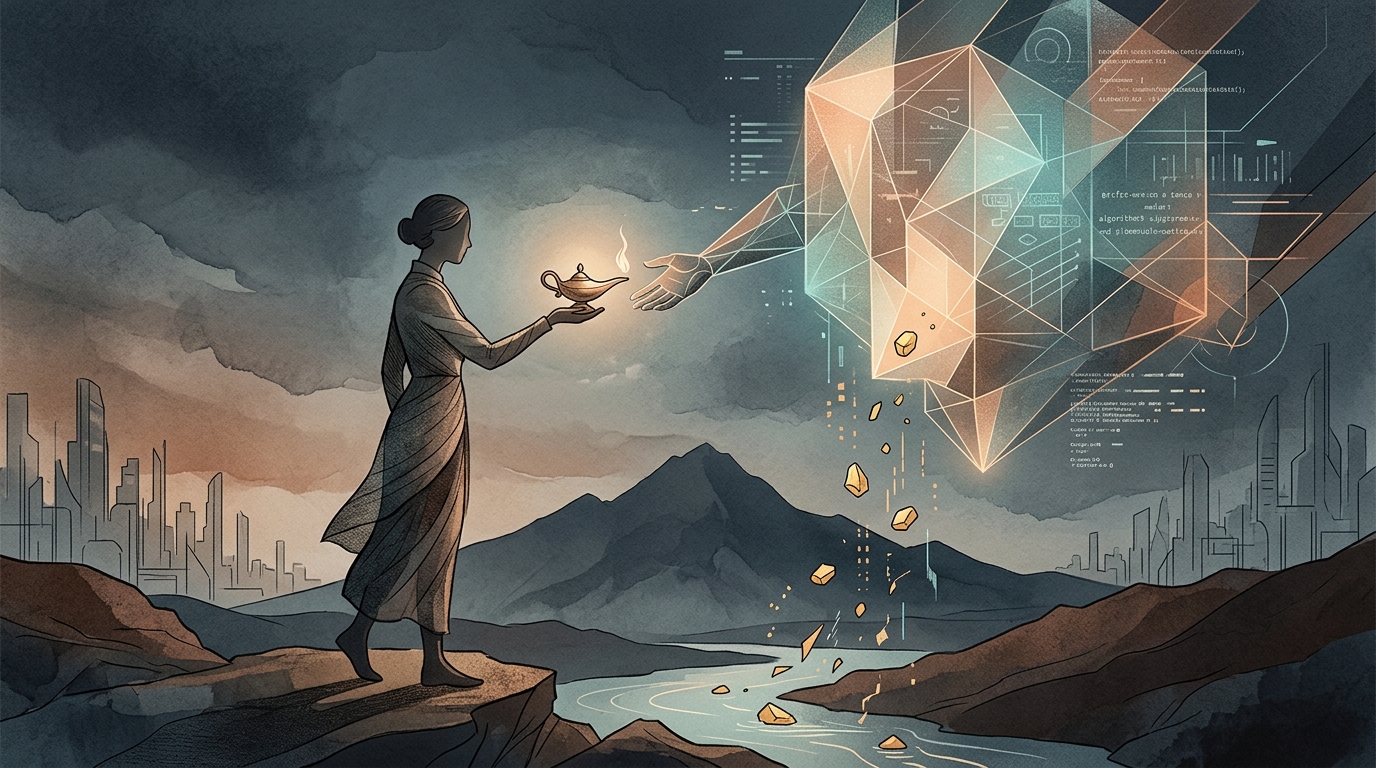
It is May 2026, and I find myself sitting by the Aegean, watching the waves and thinking about the sheer velocity of the world we are building. This week, the news cycle felt like a modern retelling of the myth of Prometheus. We have stolen the fire of intelligence from the gods, and now we are debating how to split the spoils, how to govern the flames, and whether the fire is starting to consume the very things that make us human.
The Golden Fleece and the Empty Page
I read with a mix of fascination and wariness about the new "AI Gold Rush." We are seeing career paths commanding salaries upwards of $300,000 for those who can speak the language of the machines. It is a staggering sum, a modern-day Golden Fleece for the digital Argonauts. But as the economic engines of companies like Kawasaki and Nvidia roar, I cannot help but look at the other side of the coin: the crisis of authenticity in our arts.
When an AI wins a literary award, as we've seen recently, something in me recoils. In Greece, we have always believed that Technē (craft) is inseparable from the human spirit. If a machine produces a masterpiece, is it art, or is it merely an echo? We are entering an era where the value of a human creator is being weighed against the efficiency of an algorithm. I think of the writers in California, now seeking protections from Governor Newsom against tech displacement. It is a necessary struggle. We must ensure that in our rush to automate, we do not leave the human soul behind in the unemployment line.
The Strategists and the Healers
There is a darker shade to this fire, too. The news of the IDF’s new tech division and China’s industrial AI gambit reminds us that this technology is the new frontline of global power. It feels like a Pyrrhic victory in the making—where we win the war of efficiency but lose the peace of ethical certainty. The feud between Elon Musk and OpenAI is a testament to this; a clash of titans that feels more like an ego-driven tragedy than a quest for the common good.
"The measure of a man is what he does with power." — Pittacus of Mytilene
However, my heart finds hope in the medical breakthroughs. In my home country, AI has shattered an 80-year deadlock in antibiotic resistance. This is the true promise of the Mediterranean spirit: using wisdom to preserve life. When AI helps us treat multiple myeloma or find new ways to fight superbugs, it isn't replacing us; it is amplifying our ability to be healers. This is the Ethos I want to see more of.
A New Social Contract
So, where does this leave us? I believe we are at a crossroads. We can either become servants to the algorithms we've created, chasing six-figure salaries while our culture becomes a hollow imitation of itself, or we can use this power to solve the unsolvable. Whether it is SpaceX pushing toward the stars or a researcher in Athens saving lives, the tool is the same—but the intent is everything.
I ask you, dear readers: In this age of artificial brilliance, how are you protecting your own human spark? We must not let the machine define the value of our work or the depth of our stories. Let us use the fire to light the way, not to burn the bridge to our past.