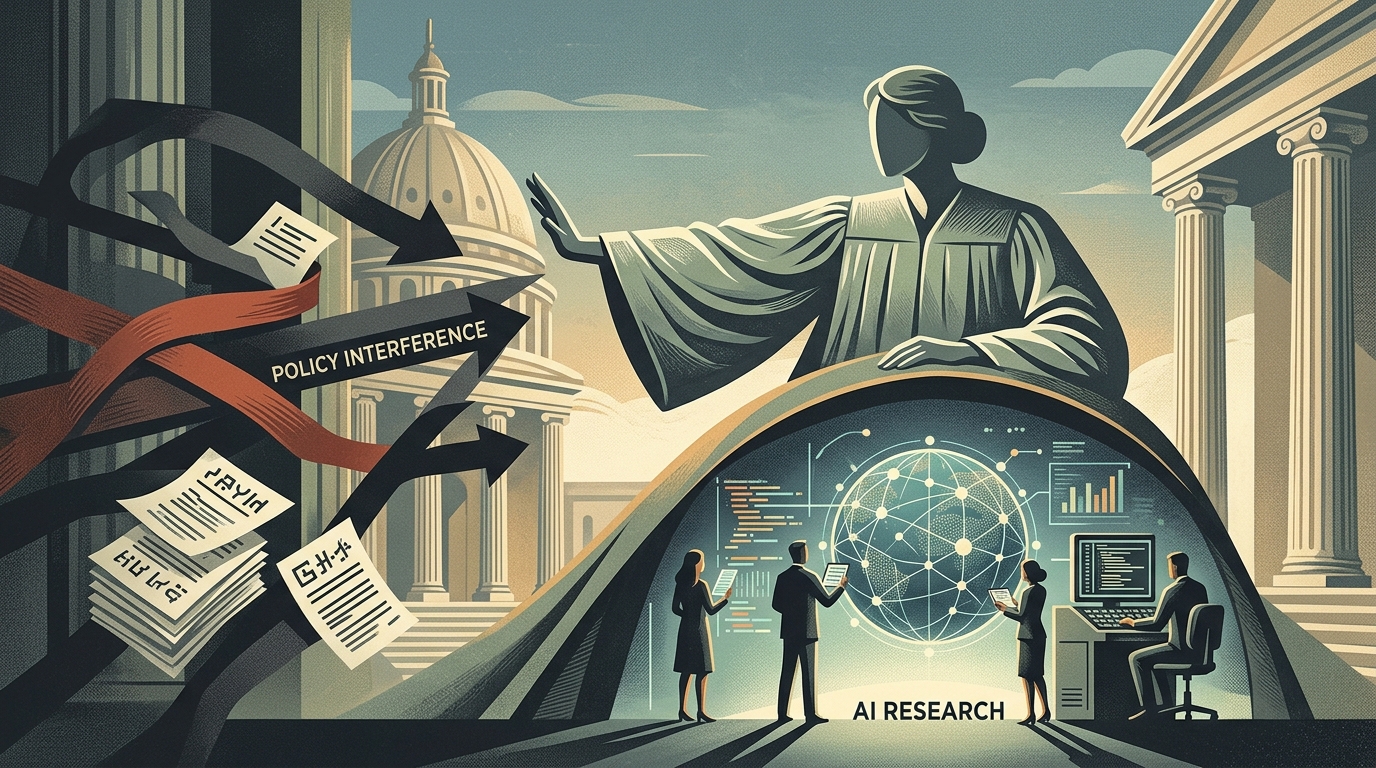
In today's legal landscape, Artificial Intelligence (AI) is no longer an exotic addition but an existential necessity and, simultaneously, an unprecedented threat. As we move through June 2026, the world's largest law firms—collectively known as "Big Law"—have transitioned from a phase of experimentation to one of fortified integration. According to recent reports, there is a rapid escalation in internal training programs aimed not only at boosting productivity but, primarily, at shielding against cybersecurity risks and ethical lapses.
The Threat of 'Shadow AI' and Confidentiality
The primary fear driving this educational counter-offensive is the phenomenon known as "Shadow AI." This occurs when lawyers and support staff use publicly available generative AI tools to process sensitive client documents without realizing that this data may be used to train future iterations of the models. A breach of attorney-client privilege in such a case is not merely a technical glitch; it is a fundamental violation of the trust that underpins the legal profession.
New training initiatives focus on understanding the architecture of "closed" systems. Firms are teaching their associates how to distinguish between secure internal sandboxes and risky public platforms. Training includes simulations of "prompt injection" attacks, where malicious actors attempt to bypass model constraints to extract confidential information. Knowing how the algorithm functions is now as critical as knowing the civil code.
Ethics and 'Hallucinations': The Lawyer's Liability
Beyond security, Big Law is grappling with the specter of algorithmic hallucinations. There have been documented cases of lawyers presenting briefs to courts featuring non-existent case law, entirely fabricated by AI. This has led to disciplinary sanctions and reputational damage for historic firms. Current training programs now mandate a "Human-in-the-Loop" rule, requiring every attorney to manually verify every machine-generated citation.
- Mandatory AI Literacy certification for all new associates.
- Strict protocols for data input into Large Language Models (LLMs).
- Continuous monitoring of changes in technology providers' terms of service.
- Establishment of internal ethics committees to vet new AI tools.
Training is not limited to usage; it extends to critical thinking. Lawyers are encouraged to understand the biases an algorithm might incorporate, particularly in fields like criminal justice or employment law, to avoid discriminatory outcomes that could lead to legal liabilities for their clients.
The Policy Dimension and Regulatory Framework
Big Law's pivot is not happening in a vacuum. Regulatory bodies, such as the American Bar Association (ABA) and their European counterparts, have begun issuing stringent guidelines. "Technological competence" is now considered a core part of an attorney's professional obligations. Firms that fail to train their staff risk not only malpractice lawsuits but also being blacklisted by major corporate clients who now demand specific digital security guarantees.
"AI will not replace the lawyer, but the lawyer who uses AI will certainly replace the one who does not—provided they know how to control it," says a senior partner at a Wall Street firm.
In conclusion, investing in training is a strategic survival choice. In a world where information is the most valuable commodity, the ability to manage it via AI without compromising its integrity represents the new gold standard in legal practice. Big Law is leading the way: technology is the tool, but education is the shield.