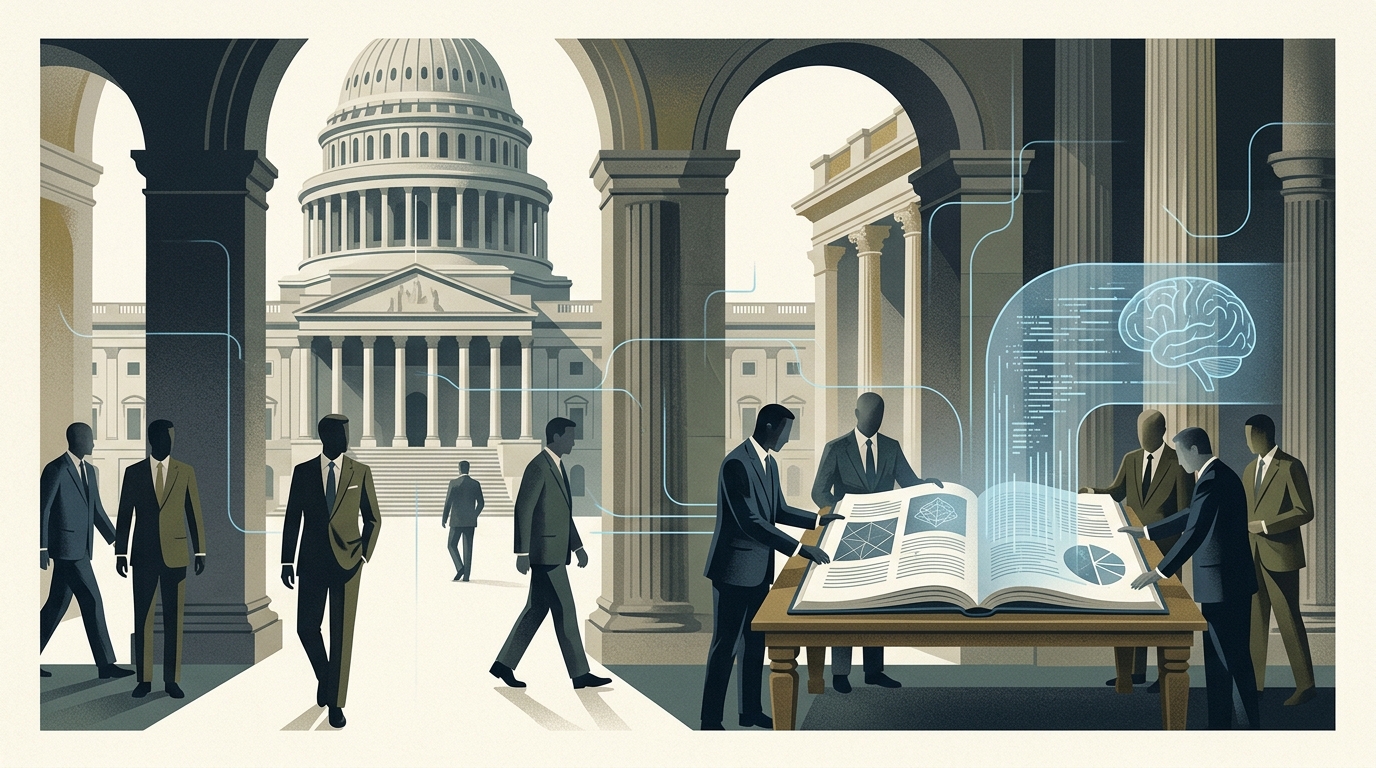
In a move set to reignite the debate over economic inequality in the age of automation, Senator Bernie Sanders has introduced a bold proposal: the creation of public ownership stakes in Artificial Intelligence, yielding a $1,000 annual dividend for every American citizen. The proposal, detailed via The Washington Post, is not merely a new form of welfare but a fundamental challenge to how value generated by cutting-edge digital technologies is distributed.
Sanders argues that the current "AI revolution" is built upon vast amounts of data created by the public, as well as decades of taxpayer-funded research. Consequently, he views it as a moral and economic imperative that the fruits of this technology do not accumulate solely in the hands of a small elite of billionaires but instead return to the society that made it possible.
The Philosophy of Public Ownership
The core of Sanders' argument lies in the idea that AI is not a product created in a vacuum, but the result of collective human effort. "Artificial Intelligence is trained on human knowledge, human creativity, and human history," the Senator stated. "It belongs to all of us." The proposal envisions that the government should hold equity stakes or levy a specific contribution on AI companies that exceed a certain threshold of profitability or market capitalization.
This approach differs from traditional Universal Basic Income (UBI). While UBI is often proposed as a safety net funded by general taxation, Sanders' "AI Dividend" functions more like the Alaska Permanent Fund. In Alaska, residents receive an annual payment from the state's oil revenues, based on the principle that natural resources belong to the citizens. Sanders translates this model to the digital realm, replacing oil with data and computational power.
Economic Implications and the "New Gilded Age"
Sanders' analysis highlights the risk of a new "Gilded Age," where productivity soars due to AI, but wages remain stagnant or decline due to job displacement. Historically, technological revolutions promised fewer working hours and better quality of life, but often resulted in greater wealth concentration. With the $1,000 annual dividend, the goal is to ensure that automation does not lead to mass impoverishment, but to a new era of shared prosperity.
- Productivity Redistribution: If AI can do the work of ten people, the profits must support all ten, not just the owner of the machine.
- Demand Stabilization: In an economy where jobs are threatened, the dividend acts as an economic stabilizer, maintaining the purchasing power of citizens.
- Data Compensation: It recognizes the value of data "scraped" or used without permission to train Large Language Models (LLMs).
Opposition and Political Hurdles
Unsurprisingly, the proposal has met with fierce resistance from the tech sector and free-market advocates. Critics argue that "public ownership" of AI will stifle innovation, discourage investment, and lead to bureaucratic management of technology. Furthermore, serious questions arise regarding implementation: How will an AI company's value be appraised? How will global giants operating across multiple jurisdictions be taxed?
"We cannot allow the few to own the future of humanity. If technology is going to change everything, then the way we share its wealth must change as well," Sanders emphasized in his intervention.
Despite the backlash, the idea is gaining traction at a time when trust in Big Tech is at an all-time low. Political analysts note that even if the bill does not pass immediately, it sets the stage for future labor demands. The conversation is shifting from "how will we survive AI" to "how will we own AI."
Conclusion: A Moral Choice
Bernie Sanders' proposal forces us to look beyond codes and algorithms. It calls us to decide whether Artificial Intelligence will be the tool that widens the gap between rich and poor or the bridge to a more equitable society. At the end of the day, the question is not technical, but deeply political and ethical: Who owns progress?