Global shipping, the silent backbone of international trade responsible for moving over 90% of the world's goods, is currently facing the most significant challenge in its modern history: full decarbonization. As the climate crisis accelerates, the industry is being called upon to abandon the fossil fuels that have powered it for over a century and transition into a new era of zero emissions. However, this transition is not a simple technological upgrade but an economic and geopolitical puzzle that threatens to reshape the balance of the global economy.
The Alternative Fuel Paradox
The primary challenge facing the sector is the availability and scaling of so-called 'green' fuels. While the industry is experimenting with green methanol, ammonia, and hydrogen, none of these solutions are yet available in the quantities required to power a global fleet of thousands of ocean-going vessels. The production of green methanol, for instance, requires vast amounts of renewable energy and biogenic carbon dioxide—resources that are already in short supply across other industrial sectors.
Furthermore, the cost of these fuels remains prohibitive. Market analysts suggest that green fuels could cost anywhere from two to five times more than traditional Very Low Sulfur Fuel Oil (VLSFO). This 'green premium' creates immense financial uncertainty for shipowners, who are being asked to invest billions in dual-fuel vessels without guarantees regarding future fuel prices or availability. As the Union of Greek Shipowners frequently points out, shipping does not produce fuel; it is a fuel user. The responsibility for the availability of new energy solutions lies primarily with energy producers and suppliers.
The Regulatory Maze and Energy Geopolitics
Another critical dimension is the regulatory landscape, which is characterized by increasing fragmentation. On one hand, the International Maritime Organization (IMO) is working to implement global rules for reducing emissions by 2050. On the other hand, the European Union has already moved forward with its own, more stringent measures, such as including shipping in the Emissions Trading System (EU ETS) and the FuelEU Maritime regulation.
"The lack of a single, global rulebook creates conditions for unfair competition. Ships calling at European ports face costs that do not exist in other regions, which could lead to trade diversion and increased prices for consumers," industry stakeholders note.
The need for a global 'Market Based Measure' (MBM), such as a global carbon levy, is seen by many as the only way to bridge the price gap between polluting and clean fuels. However, negotiations within the IMO are notoriously slow and are influenced by the diverging priorities of developed and developing nations, with the latter fearing that the cost of decarbonization will disproportionately harm their economies and trade competitiveness.
Greek Shipping at the Forefront
For Greece, which controls over 20% of the world's merchant fleet in terms of deadweight tonnage (dwt), this challenge is existential. Greek shipowners, historically adept at adapting to market shifts, are already investing in new technologies but are simultaneously pushing for realistic timelines. The Greek maritime community emphasizes that the technological maturity of certain solutions, such as the use of ammonia as a fuel, carries safety risks that have not yet been fully mitigated—most notably its extreme toxicity.
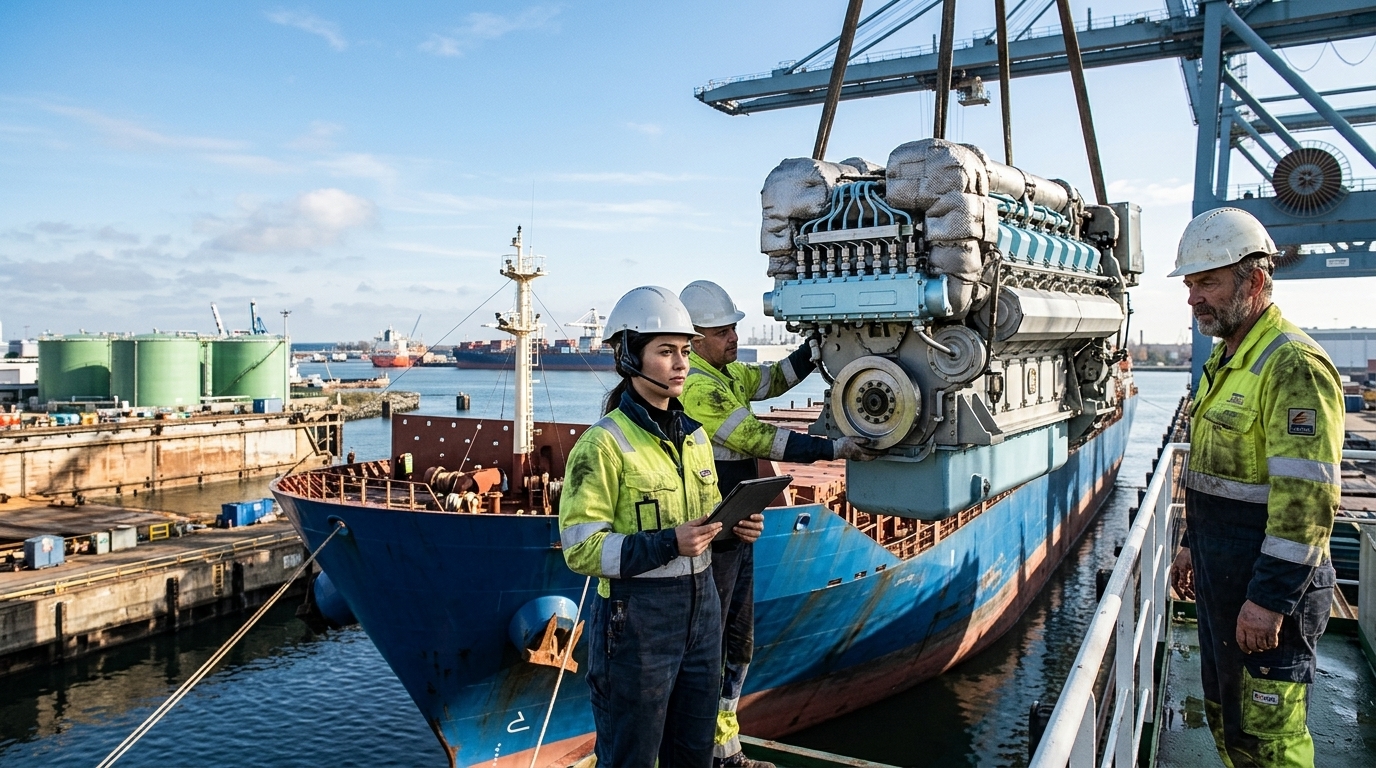
The transition also requires a radical upgrade of port infrastructure. It is not enough to build 'green' ships; there must also be corresponding bunkering networks worldwide. This necessitates trillions of dollars in investment, a burden that shipowners cannot carry alone. Collaboration between shipyards, engine manufacturers, fuel producers, and financial institutions is now the only path forward. The financial sector, through initiatives like the Poseidon Principles, is already beginning to link ship financing to environmental performance, further tightening the pressure on the industry.
Conclusion: A Voyage of No Return
The decarbonization of shipping is not merely an environmental necessity; it is a total transformation of global commerce. The challenges are daunting: from technological uncertainty and staggering costs to regulatory fragmentation. However, inertia is not an option. An industry that once transitioned from sails to steam and then to oil must now find the next energy source that will allow global trade to flourish without destroying the planet. The success of this endeavor will be judged not only by technological innovation but by the political will to ensure a fair, global, and economically viable transition.