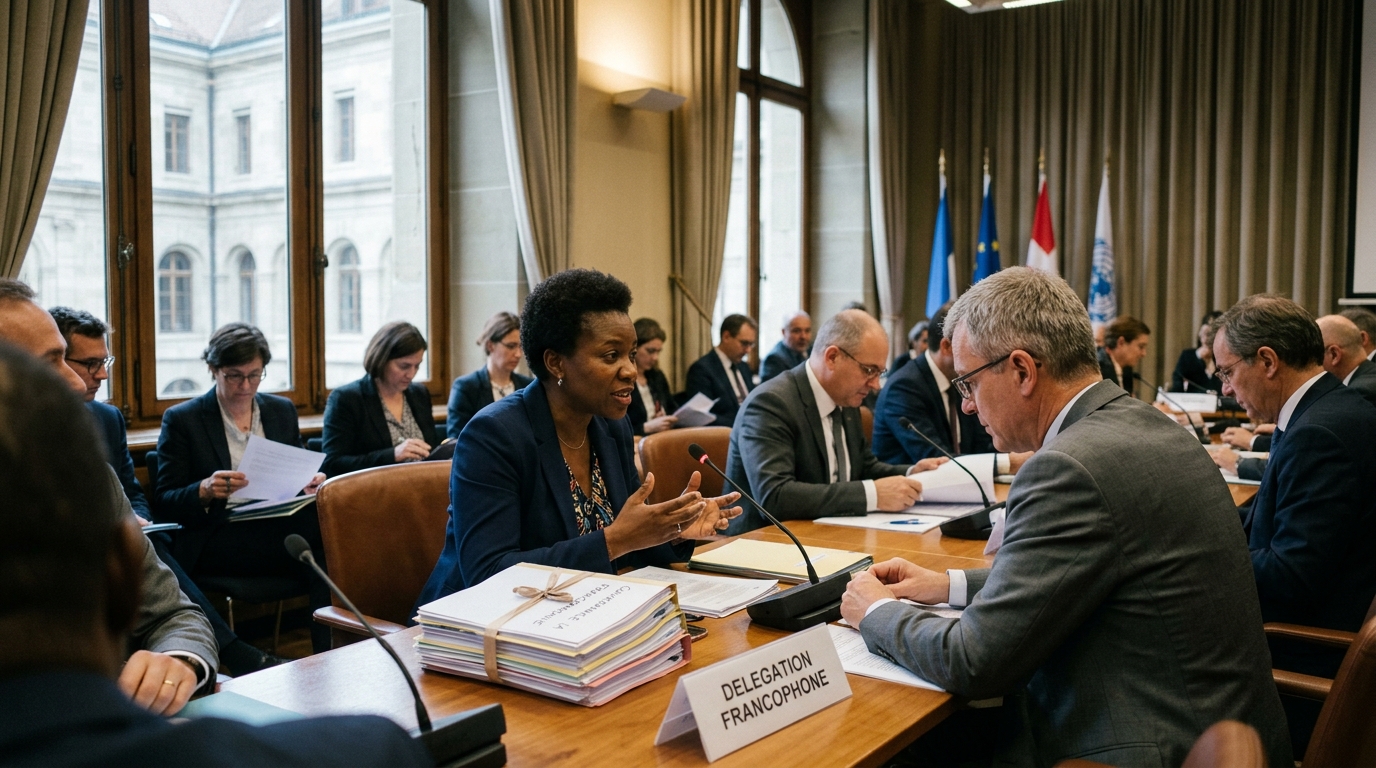
In the heart of Geneva, a city that has historically served as the crossroads of global diplomacy, the 2nd Francophone Forum on Digital Governance and Artificial Intelligence marks a critical turning point for the developing world. The active participation of the Ivorian Telecommunications Regulatory Authority (ARTCI) is not merely a formal presence but a strategic move to claim a seat at the table where global technological decisions are made.
The African Perspective on AI Regulation
Ivory Coast, through ARTCI, is emerging as a leading force in West Africa regarding digital policy. At the Geneva forum, the delegation emphasized that Artificial Intelligence (AI) should not be treated as an "off-the-shelf" product imported from the West or the East, but as a tool that must be adapted to local socio-economic realities. AI governance in Africa faces unique challenges, ranging from a lack of data infrastructure to the need for personal data protection in environments where digital literacy is still evolving.
ARTCI highlighted the importance of creating a regulatory framework that encourages innovation without sacrificing ethics. This involves ensuring that algorithms used in public services—from healthcare to agriculture—are transparent and free from biases often embedded in models trained exclusively on Western datasets.
Linguistic Sovereignty and the Future of Large Language Models
One of the central themes of the forum was "digital Francophonie." In a world where AI is dominated by the English language, French-speaking countries, particularly those in Africa, face the risk of a new kind of cultural exclusion. ARTCI and its partners discussed the need to develop Large Language Models (LLMs) that understand not only official French but also the local dialects and cultural contexts of African nations.
- Promoting multilingualism in AI systems to avoid linguistic homogenization.
- Collaboration among Francophone member states to create shared data pools.
- Strengthening local content production to feed into algorithms.
Linguistic sovereignty is directly linked to economic sovereignty. If businesses in Ivory Coast are forced to use AI tools that do not understand local nuances, the cost of adaptation and the loss of productivity will be significant.
Ethics and International Cooperation: The Geneva Model
The forum served as a bridge between the European Union's stringent regulations (AI Act) and the needs of developing economies. The involvement of the International Telecommunication Union (ITU) lent necessary weight to the discussions, focusing on "AI for Good." ARTCI argued that international cooperation should not be a one-way transfer of technology but an exchange of expertise.
"Digital governance is not a destination, but a continuous process of adapting to the needs of our citizens," a representative of the authority stated during the proceedings.
Ivory Coast's strategy includes the creation of "regulatory sandboxes," where new AI technologies can be tested in a controlled environment before full market release. This allows ARTCI to assess risks in real-time, protecting consumers without stifling entrepreneurship.
Conclusions and Outlook for 2026
As we move into the second half of 2026, the Geneva initiative highlights that the future of AI will be decided by the ability of nations to collaborate across geopolitical divides. For ARTCI, the challenge remains translating the Geneva declarations into tangible policies that will improve the daily lives of citizens in Abidjan and beyond. Digital governance is the new frontier of national sovereignty, and Africa is showing that it does not intend to remain a spectator.