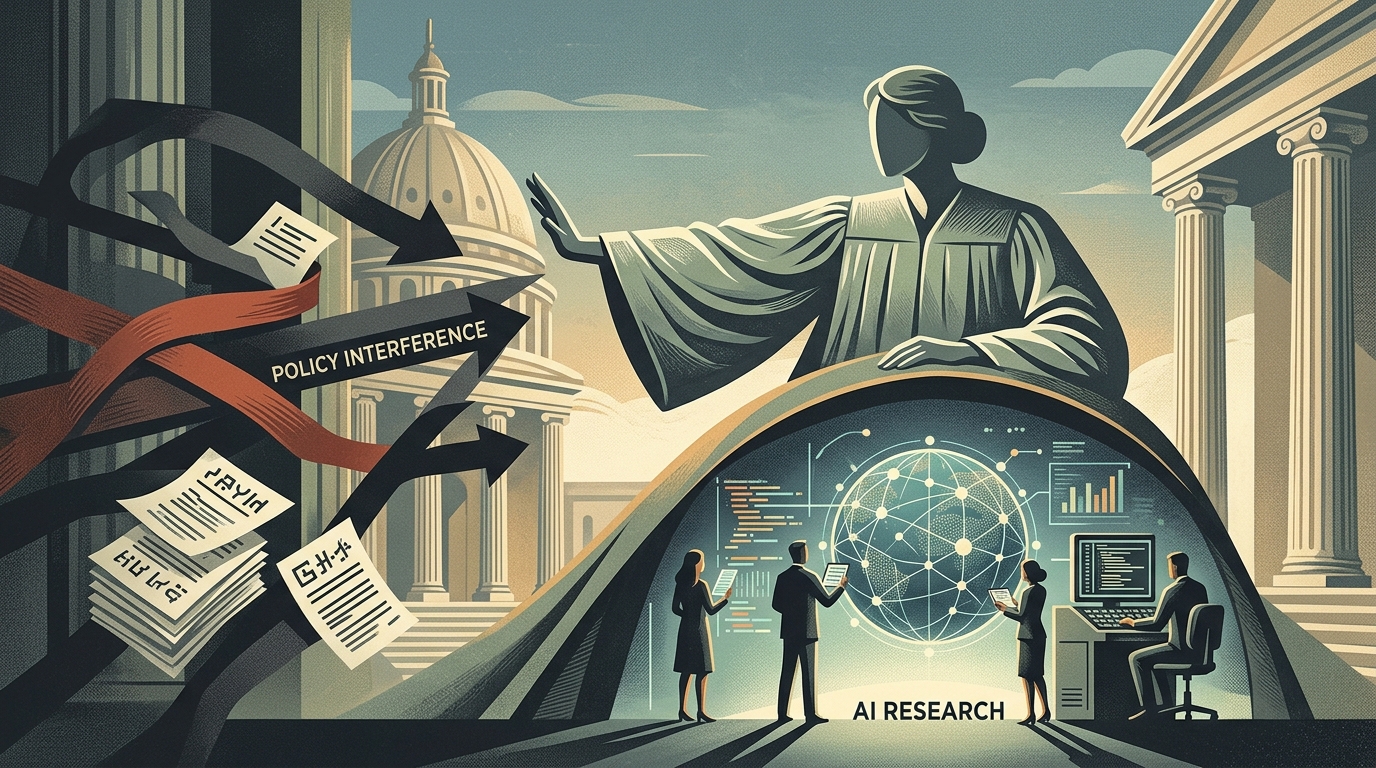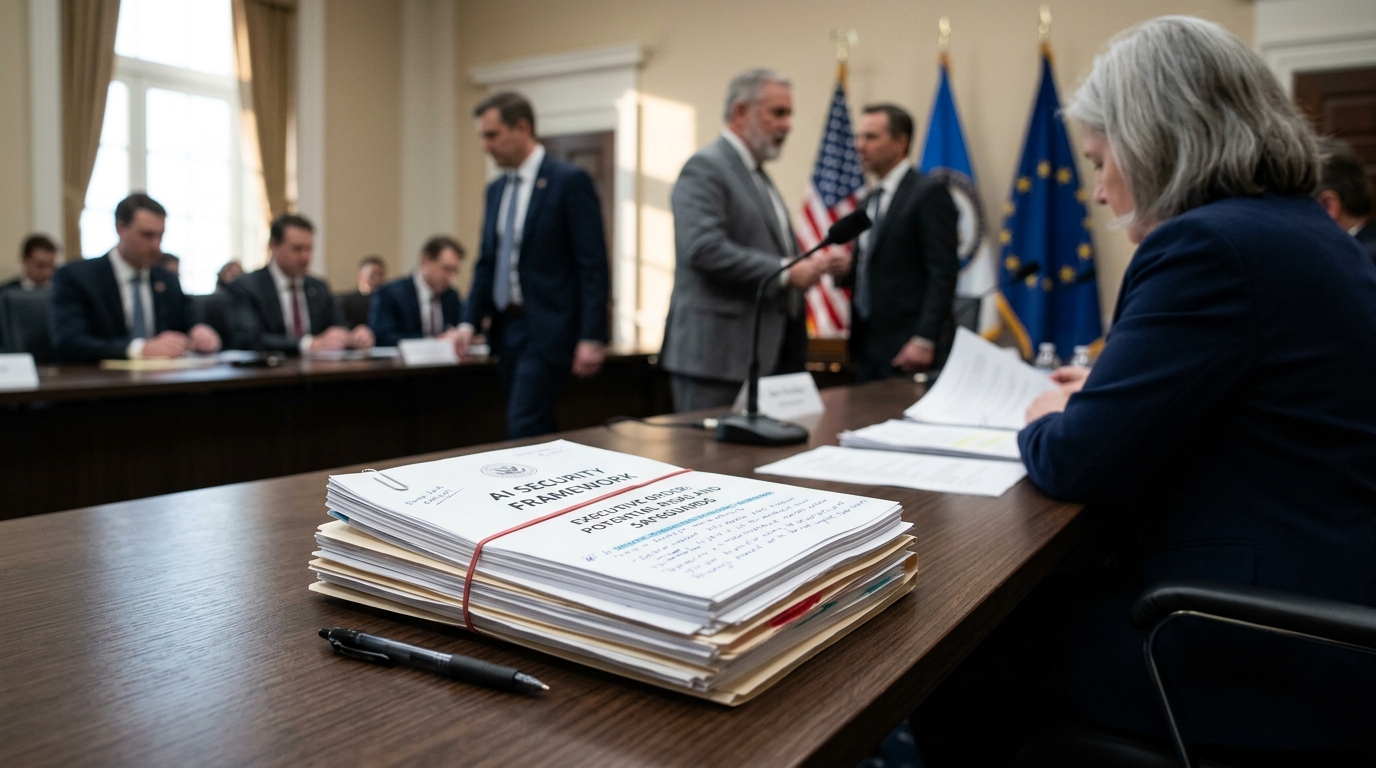
In a pivotal moment for the future of technological governance, the recent AI security order brings to the fore the agonizing struggle of governments to balance national security with economic competitiveness. While the document explicitly acknowledges the existential and operational risks inherent in the unchecked development of large-scale AI models, the absence of binding regulations has sparked intense debate among policy analysts and industry leaders.
Acknowledging the Risks: A New Reality
The order details the threats AI could pose to critical infrastructure with chilling precision. From cybersecurity to the synthesis of biological agents, the anxiety of political leadership is now palpable. The ability of AI to automate attacks on power grids or facilitate the design of chemical weapons is no longer a science fiction scenario but a technical possibility requiring immediate attention. The document emphasizes that "dual-use" models—those that can be used for both peaceful and malicious purposes—are at the heart of the new security strategy.
However, this acknowledgement is not accompanied by the necessary legislative teeth. Instead of mandatory standards and rigorous pre-market audits, the order relies heavily on "voluntary commitments" from tech companies. This creates a paradox: the government admits the technology is dangerous but trusts its creators to self-regulate, fearing that any other approach would stifle innovation and growth.
The Regulatory Gap and Industrial Reaction
For the industrial equipment sector, the lack of clear rules is a double-edged sword. On one hand, companies avoid the bureaucratic burden that a strict regulatory body would entail. On the other hand, uncertainty remains. Without a stable legal framework, investments in AI systems for manufacturing and supply chain management may be stalled, as executives fear future retroactive penalties or sudden shifts in policy direction.
The order places significant emphasis on "red-teaming"—the process of conducting simulated attacks on AI systems to detect vulnerabilities. Nevertheless, this process remains largely an internal affair for the companies involved. Critics argue that without independent third-party audits, the results of these tests will always be biased in favor of the product's commercial release. The history of technological development has shown that internal assessment is rarely sufficient when the stakes are this high.
Geopolitical Implications and the Race with China
Behind every word of the order lies the geopolitical chessboard. Washington is well aware that if it imposes overly stringent restrictions on its own tech giants, it risks ceding the lead to Beijing. China, which follows a centrally controlled but aggressive AI development strategy, is not bound by the same ethical or democratic concerns. This "digital cold war" is the primary reason the order stops short of hard regulation.
The strategy appears to be: enhancing security through cooperation rather than coercion. The government hopes that by creating a framework for threat intelligence sharing, it can fortify the nation without hindering the speed of evolution. Yet, many wonder if this approach is enough to prevent a major accident or a targeted attack by state actors. The balance is delicate, and the risk remains high, as technology evolves faster than the ability of lawmakers to comprehend its nuances.
Conclusions for the Future
The order is both an admission of weakness and a strategic choice. It is an admission that AI is now too large and too complex to be fully controlled by traditional government structures. Simultaneously, it is a choice to prioritize technological sovereignty over absolute safety. For citizens and businesses, this means that the responsibility for the safe use of AI is being shifted to the users and developers themselves, at least for the time being. The world watches as the experiment of voluntary compliance unfolds in real-time.