In an era where technological advancement seems to outpace the speed of diplomacy, British Foreign Secretary Yvette Cooper is set to deliver a stark warning to the international community. According to sources in London, Cooper will characterize Artificial Intelligence (AI) as the single greatest security challenge of the current decade, emphasizing that the window of opportunity to establish effective "guardrails" is closing with alarming speed.
The New Geopolitics of AI
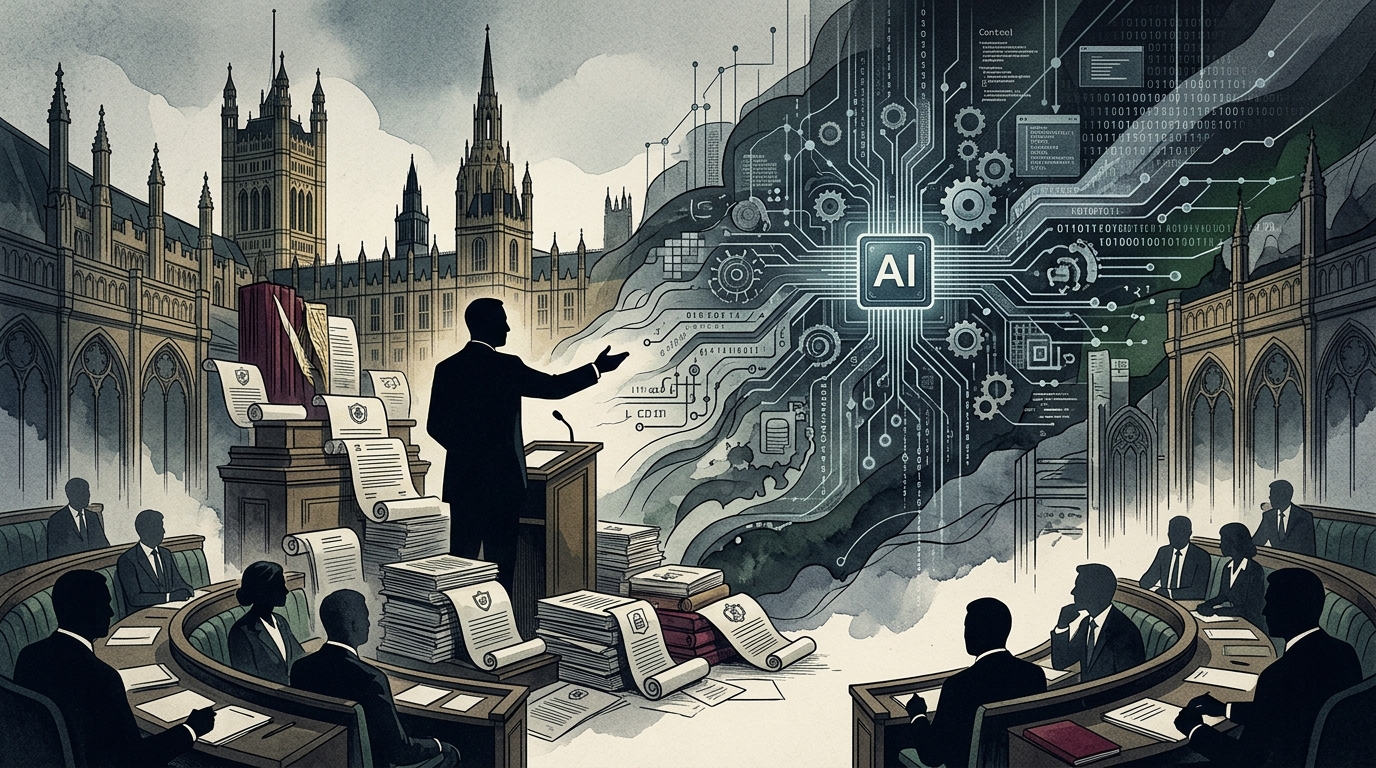
The speech, expected to be a milestone for UK foreign policy in 2026, focuses not just on the economic opportunities presented by AI, but primarily on the existential threats it poses to national and global security. Cooper is expected to detail how AI can be weaponized by autocratic regimes and non-state actors to destabilize democracies. The use of AI in cyber warfare, the automation of propaganda, and the potential for generating biological or chemical weapons through advanced models are at the heart of these concerns.
London, which hosted the first AI Safety Summit at Bletchley Park in 2023, is now attempting to reclaim its leadership role. Cooper will argue that voluntary commitments from tech giants are no longer sufficient. A binding international framework is required to ensure that AI development does not lead to an unchecked arms race in the digital sphere.
The Threat of Disinformation and the Erosion of Trust
One of the most critical aspects of the warning concerns the erosion of truth. With deepfake technology having reached levels of absolute realism by 2026, the ability of citizens to distinguish the real from the fabricated has been nearly decimated. Cooper will argue that AI threatens not just computer networks, but the very foundations of social cohesion.
- The use of AI to influence electoral processes on a global scale.
- Automated creation of fake news targeting sensitive social groups.
- The difficulty for intelligence agencies to trace the origin of digital attacks executed by autonomous systems.
The Foreign Secretary will call for a "new digital diplomacy," where information sharing among allies regarding AI threats is as vital as traditional military cooperation.
Regulatory Framework: A Delicate Balance
However, the challenge remains: how do you regulate a technology that evolves at exponential rates without stifling innovation? Cooper is expected to propose a model of "dynamic regulation," which would adapt to the new capabilities of AI models in real-time. This includes rigorous testing of Large Language Models (LLMs) before their public release, as well as transparency in the algorithms used in critical infrastructure.
"We do not have the luxury of waiting for the next crisis to act. The security of the next decade is being written today in the code of AI laboratories," the draft of her speech states.
This intervention comes at a time when the European Union is strengthening its AI Act, while the US remains divided between the need for control and the desire to maintain dominance over China. The UK seeks to act as a bridge, promoting a global consensus that prioritizes human security over shareholder profit.
Conclusion: A Call to Action
Cooper's warning is not merely a political stance but a cry of concern for the state of the global order. If the international community fails to agree on basic rules for AI, we risk entering a period of permanent instability. This decade will determine whether Artificial Intelligence will be the tool that solves humanity's greatest problems or the weapon that leads it into a new, invisible, but devastating cold war.