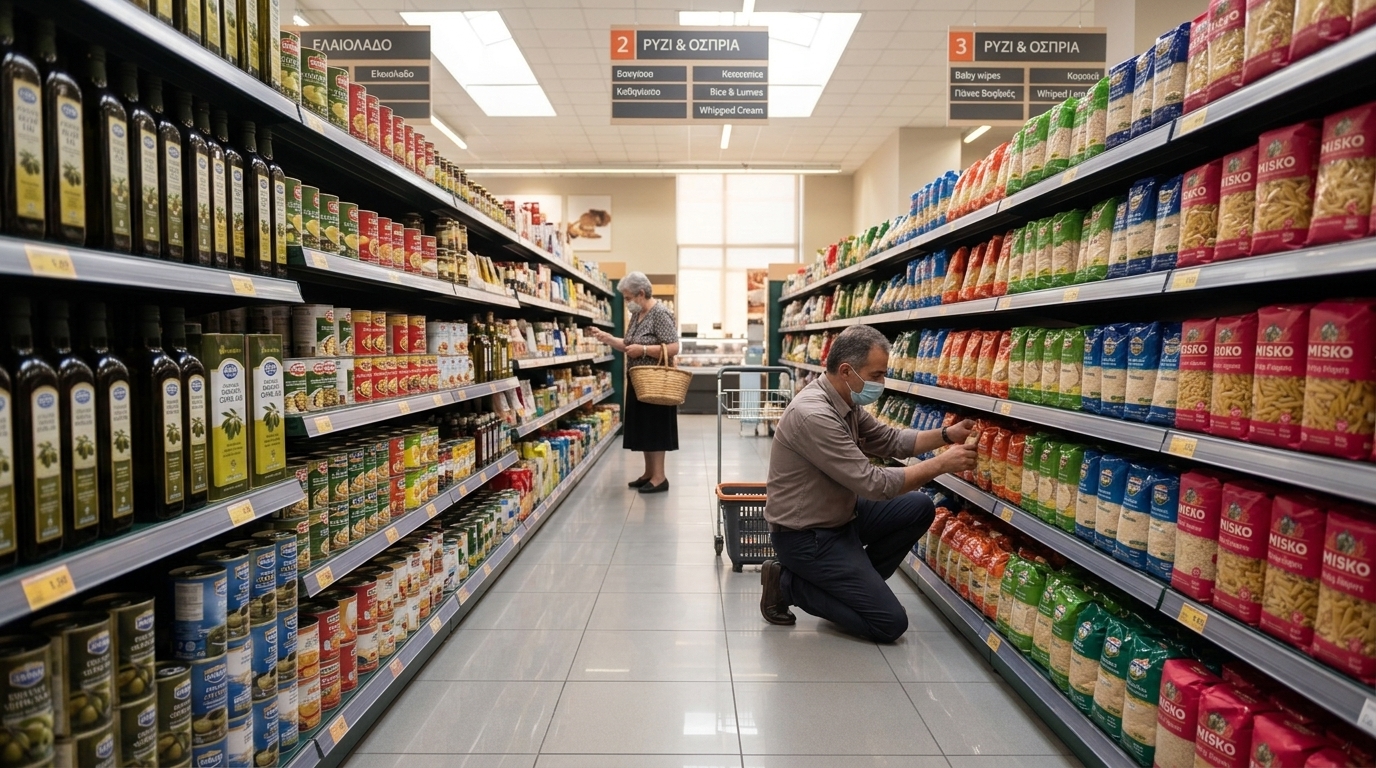
The Greek retail market is entering a critical new phase following the official expiration of the profit margin cap on 63 categories of essential goods. The measure, which was established as a bulwark against 'greedflation,' is now giving way to a period of voluntary commitments and targeted discounts, sparking intense debate over how the cost of living for households will evolve until the end of the year.
The Transition Phase and the 2,000 Products
According to the plan developed in collaboration with the Ministry of Development, major supermarket chains have committed to keeping prices stable on approximately 2,000 product codes until the end of August. This is a 'goodwill' move by the market, aimed at avoiding sudden price hikes during the peak tourist season when demand is at its highest.
- Commitment to zero increases in basic food items.
- Enhanced promotional offers such as 'Buy 1 Get 1 Free' or '2+1'.
- Close monitoring of prices via the e-Katanalotis digital platform.
However, the market is looking forward to September with great interest, as it is traditionally the month for major shifts in corporate pricing policies. Food industries and suppliers are already in consultations with retailers on how to absorb production cost increases without passing them entirely onto the final consumer.
The 'Permanent Price Reduction' Strategy
One of the key tools remaining on the table is the 'Permanent Price Reduction' initiative. The Ministry of Development aims to expand this measure, encouraging companies to proceed with price cuts of at least 5% for a period of six months. The logic behind this is to create a psychological and economic fortress for consumers who have seen their disposable income shrink over the past two years.
'The transition from state interventionism to market self-regulation is a bet that must be won to avoid a new wave of inflation in the autumn,' market insiders note.
Meanwhile, inspections by the Interagency Market Control Unit (DIMEA) will not cease. Instead, the focus will now shift to preventing unfair commercial practices and misleading discount labeling, as the government seeks to demonstrate that the end of the cap does not mean a 'blank check' for arbitrary pricing.
Supply Chain Challenges
The discussion on supermarket prices cannot be isolated from the international environment. Raw material prices, energy costs, and logistics remain volatile factors. The climate crisis is directly affecting the production of olive oil, fruits, and vegetables—sectors where Greece traditionally has high consumption but also high prices.
Analysts point out that the real test for the Greek economy will be keeping food inflation in single digits. While general inflation shows signs of decelerating, 'shelf inflation' remains stubborn, primarily affecting lower-income groups.
Conclusion: Towards a New Normal
The end of the cap marks a return to a form of normalcy, but with the rules of the game fundamentally changed. The consumer is now more informed and selective, while technology (through price comparison apps) provides tools that did not exist in the past. The success of the new plan will be judged by the sincerity of the cooperation between the state, industry, and retail, with the ultimate goal of social cohesion and economic stability.