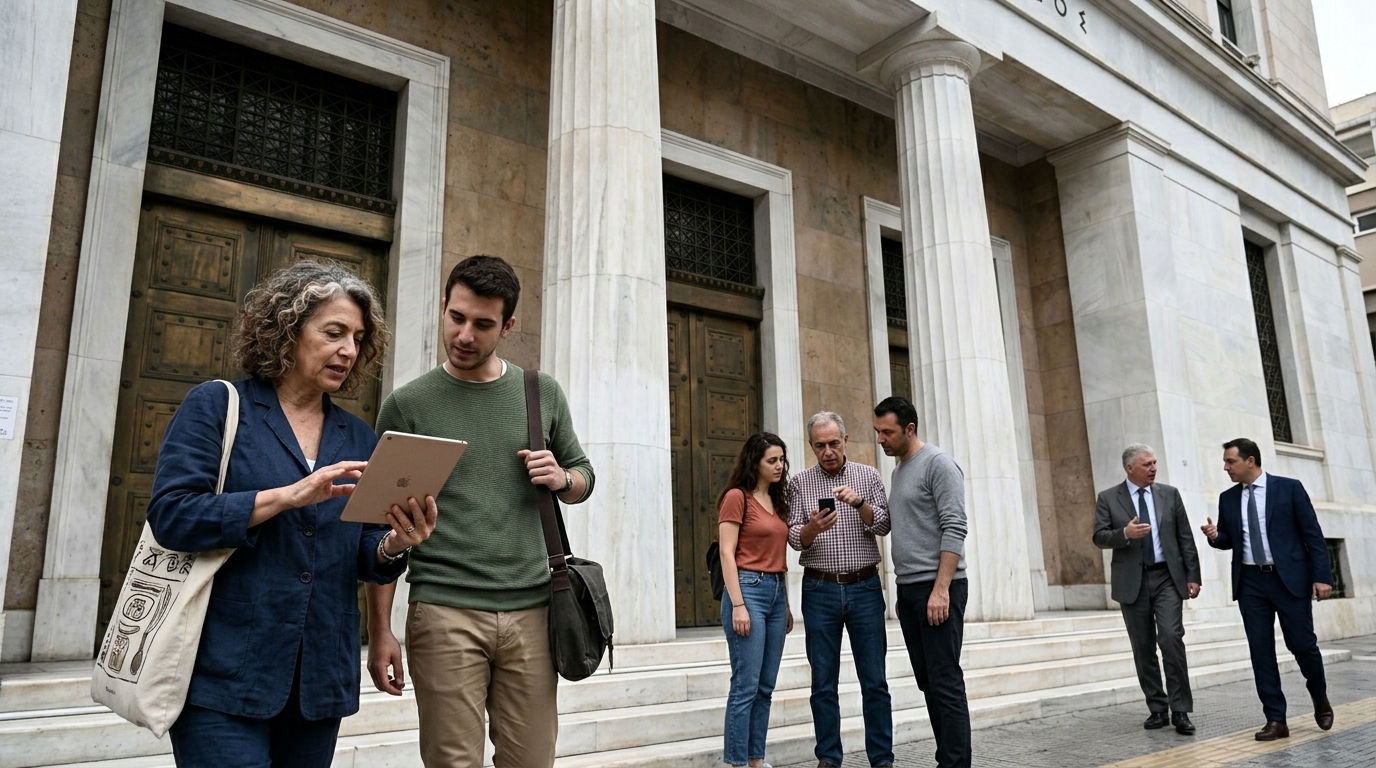
In an era where the complexity of global markets and persistent inflationary pressures test the resilience of households, the Bank of Greece (BoG) has taken a significant step with a profound social and educational impact. The new website weconomy.gr is not merely another government information portal; it is a holistic effort to bolster financial literacy in a country that has traditionally lagged behind, according to OECD metrics.
The Anatomy of a Chronic Deficiency
For decades, economic education in Greece was confined to university lecture halls or specialized seminars. The average citizen was often forced to make critical decisions—from taking out a mortgage to managing life savings—without the necessary conceptual tools. The consequences of this gap became painfully evident during the economic crisis of the last decade, when the inability to grasp basic concepts like compound interest or the risk-reward ratio led thousands of households into financial ruin.
The launch of weconomy.gr aims to fill this void, operating on the principle that knowledge is the primary line of defense against financial exploitation and mismanagement. The platform is structured to appeal to all age groups, from primary school students learning the value of saving to adults trying to understand how inflation erodes their purchasing power.
A Platform for Everyone: The Structure of weconomy.gr
The Bank of Greece chose an approach that blends scientific rigor with modern pedagogy. The website is divided into distinct sections:
- Children and Teenagers: Through interactive games and simple narratives, younger users are introduced to the concepts of money, labor, and responsible consumption.
- Parents and Educators: Providing materials and guidance on how to discuss financial matters with children, breaking the taboo that "economics is not for minors."
- Adults: A comprehensive library of guides on budgeting, banking transactions, investments, and insurance.
A particular emphasis is placed on the glossary of economic terms, which translates complex "banking-speak" into plain language, allowing citizens to read the fine print of contracts with greater confidence.
The Institutional Role of the Bank of Greece
This initiative marks a shift in how the central bank perceives its role. Under the leadership of Governor Yannis Stournaras, the BoG is investing in the "soft power" of education. As has been repeatedly emphasized, a central bank's duty is not just to ensure price stability; it must also ensure that citizens are equipped to function effectively within the economic system.
"Financial literacy is a core life skill in the 21st century. It is not just about wealth; it is about the freedom and security of every citizen," BoG officials state.
Challenges and Future Outlook
Despite these noble intentions, the success of weconomy.gr will be judged by its penetration into daily life. Creating a website is only the first step. The second, and more difficult, step is the integration of these tools into the official school curriculum and their constant updating. In the digital age, risks—such as cryptocurrency scams or "quick loans" via fintech apps—evolve faster than traditional education models can keep up.
In conclusion, weconomy.gr is a necessary investment in Greece's human capital. If it succeeds in transforming economics from a "dismal science" into an understandable tool for the citizen, it will have provided the country with a service more valuable than any monetary intervention.