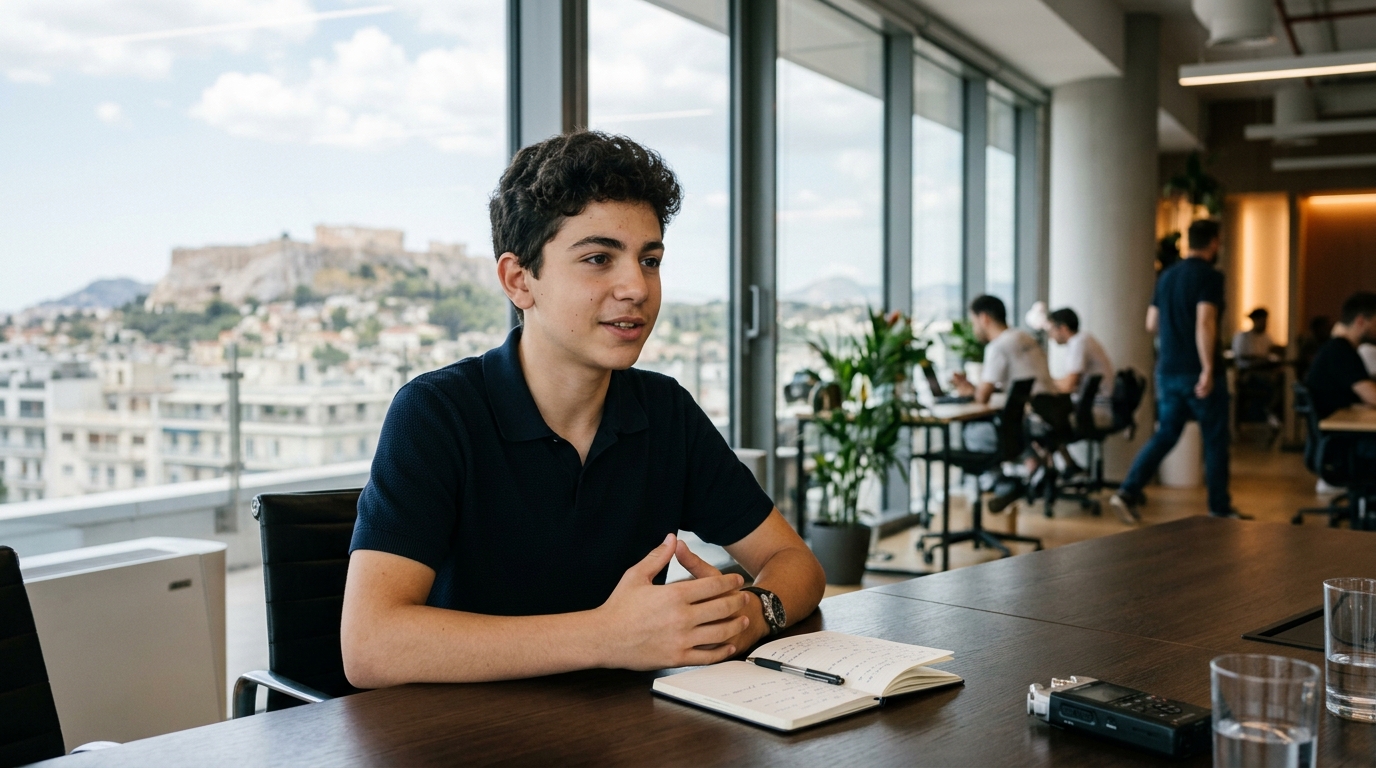
In an era where Artificial Intelligence (AI) is evolving at speeds that often outpace the ability of legislators to comprehend it, a voice from the new generation has emerged to address the core of the issue. Viktoras Giannikopoulos, a 15-year-old student from Greece, is no ordinary teenager. His collaboration with NASA on programs involving data analysis and the application of algorithms to detect exoplanets has placed him at the forefront of the global scientific community. However, he does not limit himself to technocratic enthusiasm; instead, he sounds the alarm regarding the unchecked development of AI.
The Philosophy of Boundaries: Ethical, Legal, and Scientific Safeguards
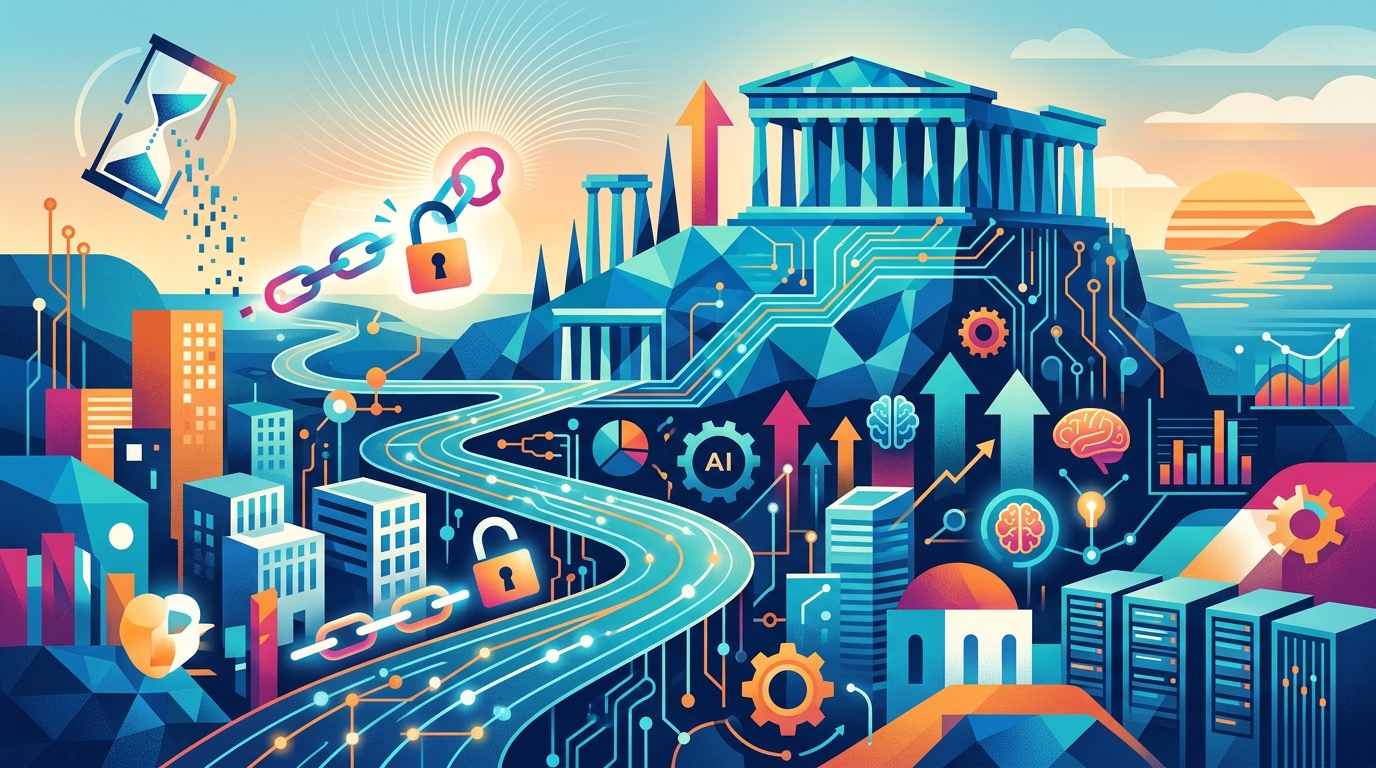
According to Giannikopoulos, Artificial Intelligence is the most powerful tool humanity has ever created, but also the most unpredictable. His position is clear: "We must set strict ethical, legal, and scientific boundaries for Artificial Intelligence." This triple approach is not accidental. Ethical boundaries concern the prevention of biases that can perpetuate social injustices. Legal boundaries concern accountability—who is responsible when an algorithm fails? Finally, scientific boundaries concern the "explainability" of AI, ensuring it does not become a "black box" that makes decisions without us knowing why.
"Technology without an ethical compass is like a ship without a rudder in a data storm. My generation will be called to live with the consequences of our current decisions," he states, highlighting the responsibility of today's leaders.
From the Classroom to NASA: A Journey Beyond Borders
Viktoras's involvement with NASA began through his passion for astrophysics and programming. Participating in programs like "Exoplanet Watch," he used Artificial Intelligence to filter the "noise" in signals received by telescopes, allowing for the detection of planets in distant solar systems. This experience gave him a unique perspective: he saw AI solving problems that the human brain would need decades to process. Nevertheless, his contact with the American space agency also taught him the importance of precision and control. In space, an algorithmic error doesn't just mean a wrong advertisement on Facebook; it means the failure of a billion-dollar mission or the loss of critical scientific data.
Greece as a Talent Hub and the Challenge of Brain Drain
The case of Giannikopoulos brings back to the forefront the discussion about the Greek educational system and its ability to support gifted children. While he managed to distinguish himself internationally, his success is largely due to his personal quest and extroversion. Greece, despite its economic recovery in recent years, still struggles with bureaucracy and a lack of infrastructure for research at the secondary education level. Viktoras serves as an example of the "Brain Gain" that can be achieved if the country invests in technological education and the connection of schools with international organizations.
- Development of a national strategy to support students with a talent for STEM sciences.
- Creation of ethical codes for the use of AI in Greek universities and schools.
- Strengthening cooperation between the private sector and public education.
In conclusion, the 15-year-old researcher reminds us that Artificial Intelligence should not be treated as a threat, but as a "co-pilot." The challenge is to ensure that humans always remain the ones defining the course. The wisdom Giannikopoulos displays at such a young age is perhaps the best proof that the future of technology is in good hands, provided we listen to those who will inhabit it.