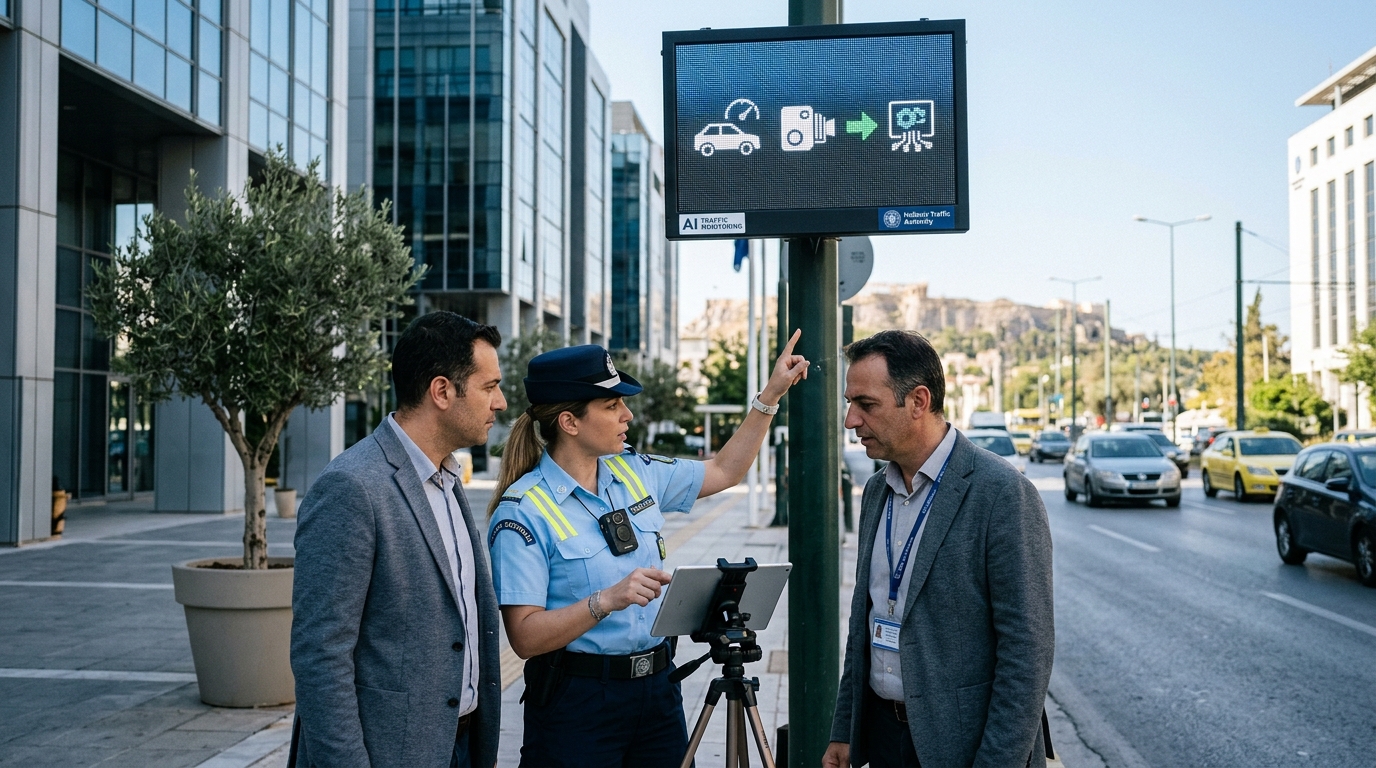
The image of a traffic officer manually scribbling a ticket on a paper pad is fast becoming a relic of the past. Within the framework of Greece’s comprehensive digital transformation, the state is now deploying advanced Artificial Intelligence (AI) systems to manage road violations. This move promises to revolutionize the speed, transparency, and efficiency of law enforcement on Greek roads. The new initiative, a collaboration between the Ministry of Digital Governance and the Ministry of Citizen Protection, goes beyond automated fine issuance; it introduces a digital "assistant" to guide citizens through the administrative appeal process.
Precision Enforcement: The Role of Algorithmic Verification
The core of the new system lies in integrating machine learning algorithms into both existing and new traffic cameras. Instead of mere video recording, the AI system can now identify violations in real-time, such as running red lights, mobile phone use while driving, failure to wear a seatbelt or helmet, and illegal use of bus lanes. Optical Character Recognition (OCR) technology allows for the immediate identification of license plates, cross-referencing data with the Independent Authority for Public Revenue (AADE) and the Ministry of Transport databases.
The primary advantage of this approach is the elimination of human error and subjectivity. Violation verification is handled digitally, and the fine is sent almost instantly to the offender’s MyWallet app. This drastically reduces administrative costs and the time required for traffic services and municipalities to process tickets. Furthermore, the strict adherence to rules through continuous surveillance is expected to act as a powerful deterrent, significantly improving road safety levels in urban centers and across the national network.
The Digital Advocate: Navigating the Appeals Labyrinth
Perhaps the most innovative aspect of this system is the introduction of a digital assistant (chatbot) based on Generative AI, accessible via the gov.gr portal. This assistant is designed to simplify the often labyrinthine process of filing an objection. Citizens who believe a fine was unjustly issued can converse with the system, which informs them of their rights, deadlines, and the necessary documentation required for an appeal.
The digital assistant serves not only as an information source but also as a tool for preparing the appeal itself. By analyzing the specifics of a case, it can suggest the legal basis on which a citizen’s objection might stand, ensuring that appeals are properly structured and documented. This reduces the workload for administrative officers reviewing the applications, as incomplete or invalid submissions are filtered out. However, the final decision to accept or reject an appeal remains in human hands, maintaining a necessary safeguard against "algorithmic rigidity."
Efficiency vs. Ethics: The Constitutional Question
Despite the obvious benefits, the use of AI in policing raises significant questions regarding data privacy and algorithmic transparency. The Hellenic Data Protection Authority is closely monitoring the implementation of these systems, ensuring that the processing of images and citizen data complies fully with GDPR. There are also concerns about the AI "black box"—the possibility of an algorithm making an erroneous decision without a clear explanation of its reasoning.
Moreover, the digitalization of fines brings social justice issues to the fore. While the system is impartial, the rigor of enforcement could disproportionately affect lower-income individuals unless accompanied by broader educational policies and infrastructure improvements. The government maintains that the goal is not revenue generation but the establishment of a safety culture; however, critics remain wary of the risk of turning public roads into zones of constant surveillance.
Conclusion: Toward Smart and Safe Mobility
Integrating AI into vehicle monitoring is a critical step toward creating "Smart Cities" in Greece. By reducing bureaucracy and accelerating processes, the state demonstrates that technology can be harnessed to become fairer and more efficient. The success of this venture will be judged by the balance achieved between technological power and the protection of civil liberties. In any case, the digital path has been set, and drivers must adapt to a reality where violations will no longer go unnoticed.