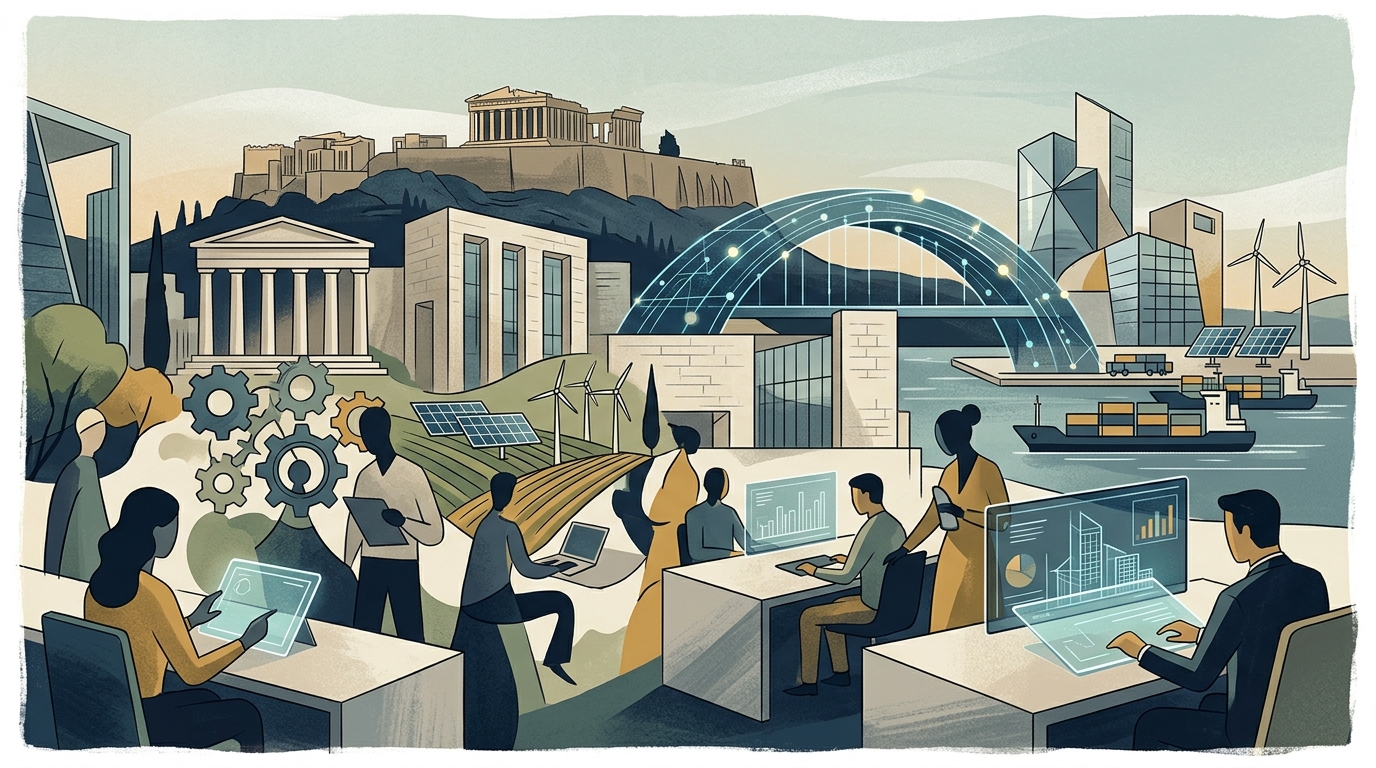
As we navigate the second quarter of 2026, the global conversation surrounding Artificial Intelligence (AI) has matured from the wide-eyed wonder of early experimentation to the cold, hard reality of economic data. Recent reports, mirrored in the Greek press via In.gr, highlight a chilling trend: automation is no longer confined to the factory floor; it is striking at the very heart of the middle class and white-collar professions.
The Digital Onslaught and the White-Collar Crisis
The narrative that AI would only replace repetitive, manual labor has been thoroughly debunked. In 2026, we are witnessing the "Automation of Intellect." From legal research to financial auditing and software development, AI systems are now performing tasks that once required years of specialized university training. In Greece, a country characterized by a high density of small and medium-sized enterprises (SMEs), the impact is particularly acute. Companies are finding that AI agents can handle administrative tasks, customer relations, and even basic marketing at a fraction of the cost of a human employee.
This shift is creating a structural vacuum. Junior roles, traditionally the entry point for graduates into the workforce, are being cannibalized by Large Language Models and specialized AI agents. This "ladder-kicking" effect means that while senior professionals become more productive, the next generation struggles to find the ground to start their careers.
The Productivity Paradox: Growth Without Jobs?
We are entering an era of "jobless productivity growth." Corporations are reporting record margins as they shed human capital in favor of silicon-based labor. However, this creates a fundamental macroeconomic paradox: if AI does all the work, who will have the purchasing power to buy the products and services being generated? This is not just a technological challenge; it is a systemic threat to the capitalist model as we know it.
"We are witnessing the decoupling of productivity from human employment, a shift that necessitates a new social contract," analysts warn.
In the Greek context, this is exacerbated by a brain drain that has already depleted the country of much of its youth. If the remaining high-skill jobs are automated, the incentive for young Greeks to remain in the country further diminishes. The government's focus on "digital transformation" must therefore expand beyond mere infrastructure to include robust social safety nets and aggressive reskilling initiatives.
Reskilling: A Lifeline or a Mirage?
The standard policy response to AI-induced displacement is "reskilling." While noble in intent, the reality is more complex. Can a 50-year-old bank clerk realistically be retrained as a prompt engineer or an AI ethics auditor? The speed of AI evolution is currently outpacing the speed of human learning. This discrepancy suggests that education systems need a radical overhaul—moving away from rote memorization and toward fostering innate human qualities like empathy, complex problem-solving, and strategic leadership.
Policy Responses and the Path Forward
To mitigate the negative impacts of the AI onslaught, several key areas must be addressed by policymakers in Athens and Brussels:
- Implementation of "Automation Taxes" to fund social transition programs.
- Shortening the work week to redistribute available labor among more people.
- Investment in "Human-Centric" sectors like healthcare, elder care, and education, where AI serves as a tool rather than a replacement.
The rise of AI is an epochal shift, comparable to the Industrial Revolution but moving at ten times the speed. It offers the promise of a world without drudgery, but it also carries the risk of unprecedented social stratification. As we look toward the late 2020s, the goal must be to ensure that the dividends of AI productivity are shared broadly, rather than being hoarded by a handful of tech conglomerates. The future of work is not yet written, but the ink is drying fast.