In the history of science, there are moments when humanity transcends the boundaries of observation and enters the realm of creation. The announcement of the creation of 'SpudCell', the first fully synthetic cell built 'from scratch' (de novo), is undoubtedly one such moment. It is not merely another development in genetic engineering, but a redefinition of what we consider 'life'. This experimental creation, which can grow, feed, and divide, marks the coming of age of synthetic biology, transforming it from a theoretical pursuit into an applied technology with colossal implications.
The Architecture of Synthetic Life
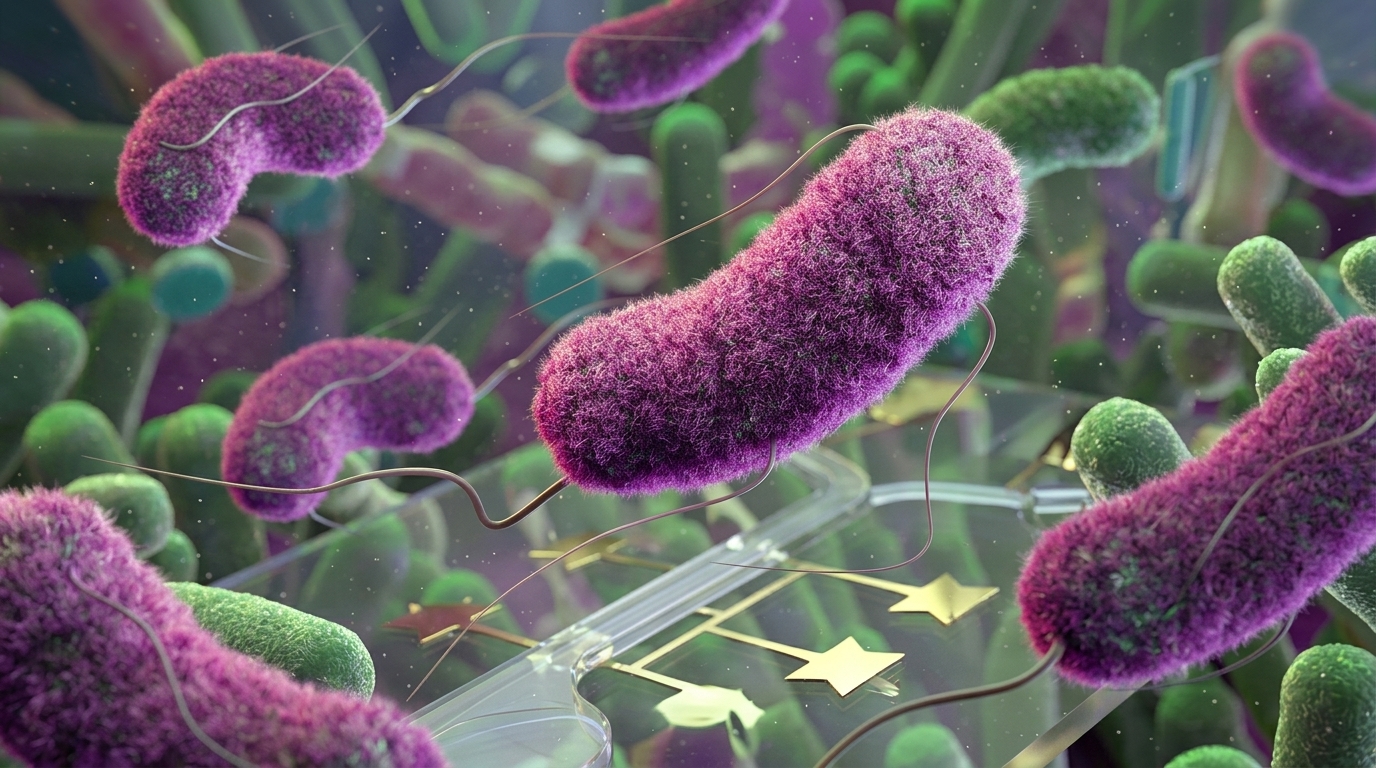
The creation of SpudCell was not based on modifying an existing organism, as was the case with previous experiments by the Craig Venter Institute. Instead, scientists followed a 'bottom-up' approach. They used lipids to create the cell membrane and introduced a minimal set of synthetic genes, capable of encoding the necessary proteins for metabolism and reproduction. The name 'SpudCell' derives from the cell's ability to store energy in a manner similar to plant tissues, although its structure is far simpler than any natural cell.
The most impressive feature of SpudCell is its autonomy. While previous synthetic models required constant external intervention to maintain their structure, SpudCell exhibits a rudimentary form of homeostasis. It can absorb nutrients from its environment and convert them into chemical energy, fueling the process of cell division. This process, though slower and less precise than natural mitosis, proves that the fundamental principles of life can be reproduced in a laboratory setting.
From the Lab to Industrial Production
The applications of this technology extend far beyond academic curiosity. In the pharmaceutical sector, synthetic cells could function as 'living factories' for drug production. Unlike traditional bacteria that often produce unwanted byproducts or require complex purification processes, SpudCell can be programmed to produce a single specific substance, such as insulin or anticancer antibodies, with absolute purity.
Furthermore, the biofuel and environmental protection industries see a powerful ally in SpudCell. We could design synthetic cells specialized in capturing carbon dioxide from the atmosphere or cleaning oceans of microplastics. The ability to 'program' life allows for the creation of biological systems that do not exist in nature, optimized for tasks that natural organisms cannot perform efficiently.
Ethical Dilemmas and Global Governance
Like any technological milestone that touches the foundations of existence, SpudCell raises serious ethical and philosophical questions. Who defines the limits of creation? What happens if such an organism escapes into the environment? The need for a strict international regulatory framework is more urgent than ever. Bioethics must keep pace with developments before commercial applications make control impossible.
This breakthrough serves as a reminder that the boundary between biology and information technology is blurring. We are entering an era where biological components are treated as modular parts in a larger engineering puzzle. While the scientific community celebrates, the public remains cautious, rightfully demanding transparency and safety protocols that match the magnitude of the invention.
Conclusions for the Future
SpudCell is not the end of the road, but the starting point. We are on the threshold of an era where biology will be treated as software and cells as the hardware that executes it. The transition from reading DNA to writing it, and now to constructing the 'operating system' of life, promises solutions to some of humanity's greatest problems. However, the wisdom with which we manage this power will determine whether SpudCell will be remembered in history as the tool of a new renaissance or as a dangerous deviation from the natural order. The future of synthetic biology is no longer a matter of 'if', but 'how' and 'under what conditions'.